Post by : Avinab Raana
Photo : X / Reuters
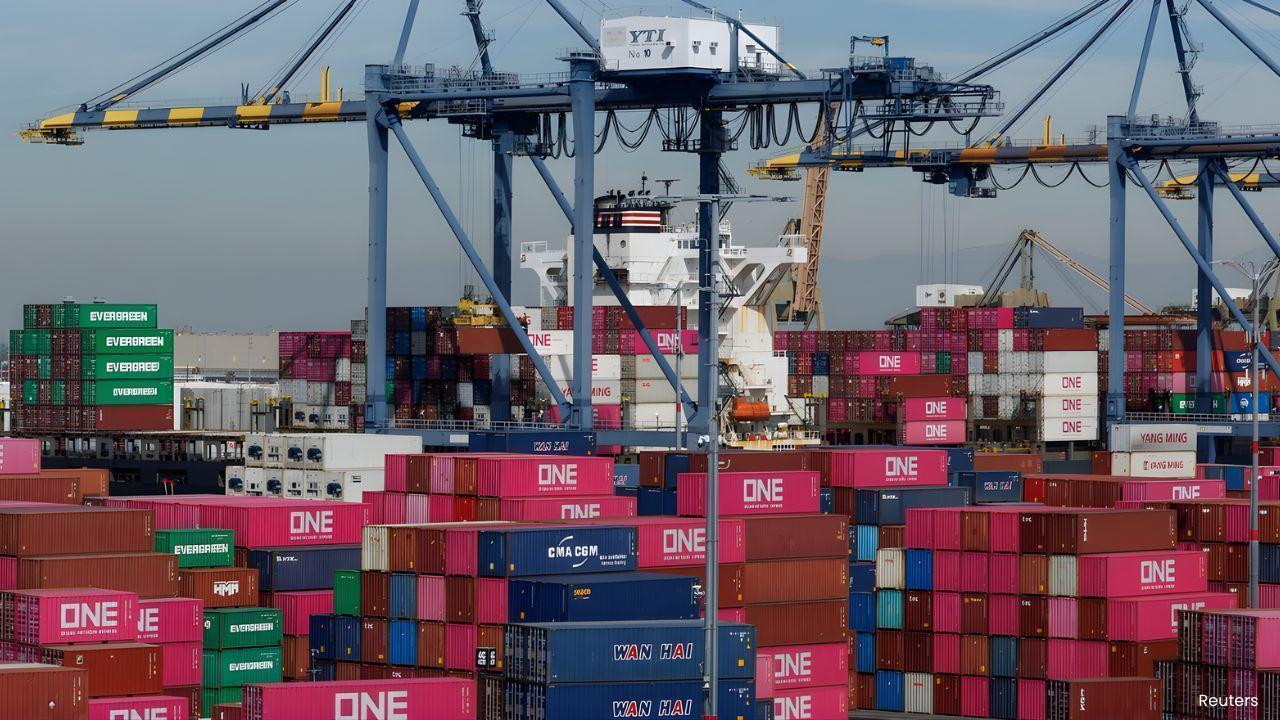
In a striking twist to early 2026 trade dynamics, the United States witnessed its trade deficit widen sharply in February, even as exports touched record highs. The widening gap highlights a deeper structural imbalance in global trade flows, where surging imports driven by industrial demand and energy needs continue to outpace export growth. For global transportation, shipping, and logistics sectors, this shift signals a renewed wave of cargo movement, supply chain pressure, and evolving trade dependencies that could reshape market strategies in the months ahead.
February data reveals that the US trade deficit expanded by nearly 5% to approximately $57.3 billion, reflecting a significant rebound in imports. Imports climbed to around $372.1 billion, while exports rose to a record $314.8 billion. Although export performance remained strong driven by industrial supplies like natural gas and gold. It was overshadowed by a stronger surge in imports, particularly in capital goods such as semiconductors, computers, and pharmaceuticals. This imbalance underscores a critical reality: domestic demand and industrial expansion are currently outpacing global export gains, intensifying pressure on trade balance stability.
The composition of imports reveals a deeper story about where the global economy is headed. A major portion of the import surge came from high-value technology inputs and energy commodities, reflecting growing investments in AI infrastructure, data centers, and industrial production. At the same time, crude oil and pharmaceutical imports surged, pointing toward both energy insecurity and healthcare demand. For transportation and logistics sectors, this translates into increased shipping volumes, port congestion risks, and heightened reliance on efficient cargo handling systems across global routes.
Beyond economic factors, geopolitical tensions are adding another layer of complexity. Disruptions in key maritime corridors, particularly around the Strait of Hormuz, are already impacting global shipping routes and trade reliability. These tensions have triggered shifts in cargo flows, with countries increasingly diversifying supply chains and sourcing routes. For the maritime and freight industries, this evolving landscape is not just a challenge, it is a strategic turning point requiring agility, resilience, and infrastructure readiness to manage volatile trade patterns.
While trade volumes remain robust, the widening deficit poses a potential drag on overall economic growth. Economists suggest that despite strong export performance, the imbalance could weigh on GDP contributions in the first quarter of 2026. Growth projections remain modest, with estimates hovering below long-term averages. The contradiction is clear high trade activity does not necessarily translate into economic strength when imports significantly outpace exports.
For the transportation and logistics ecosystem, this development signals both opportunity and caution. Increased imports mean higher cargo volumes, port throughput, and shipping demand, particularly across trans-Pacific and energy trade routes. However, the imbalance also raises concerns around cost pressures, supply chain inefficiencies, and dependency risks. Ports, freight operators, and logistics providers must now adapt to a landscape where volume growth is coupled with unpredictability and geopolitical sensitivity.
The February trade data paints a compelling yet complex picture record exports, surging imports, and a widening deficit that reflects deeper global economic shifts. As trade routes evolve and demand patterns change, the coming months will be critical in determining whether this imbalance stabilizes or intensifies. For industry stakeholders, the message is clear: growth opportunities are expanding, but so are the risks, making adaptability the defining factor in navigating the future of global trade.
#trending #latest,#USTradeDeficit #GlobalTrade #ImportsVsExports #SupplyChainTrends #EconomicOutlook









Advances in Aerospace Technology and Commercial Aviation Recovery
Insights into breakthrough aerospace technologies and commercial aviation’s recovery amid 2025 chall

Defense Modernization and Strategic Spending Trends
Explore key trends in global defense modernization and strategic military spending shaping 2025 secu

Tens of Thousands Protest in Serbia on Anniversary of Deadly Roof Collapse
Tens of thousands in Novi Sad mark a year since a deadly station roof collapse that killed 16, prote

Canada PM Carney Apologizes to Trump Over Controversial Reagan Anti-Tariff Ad
Canadian PM Mark Carney apologized to President Trump over an Ontario anti-tariff ad quoting Reagan,

The ad that stirred a hornets nest, and made Canadian PM Carney say sorry to Trump
Canadian PM Mark Carney apologizes to US President Trump after a tariff-related ad causes diplomatic

Bengaluru-Mumbai Superfast Train Approved After 30-Year Wait
Railways approves new superfast train connecting Bengaluru and Mumbai, ending a 30-year demand, easi



