Post by : Saif
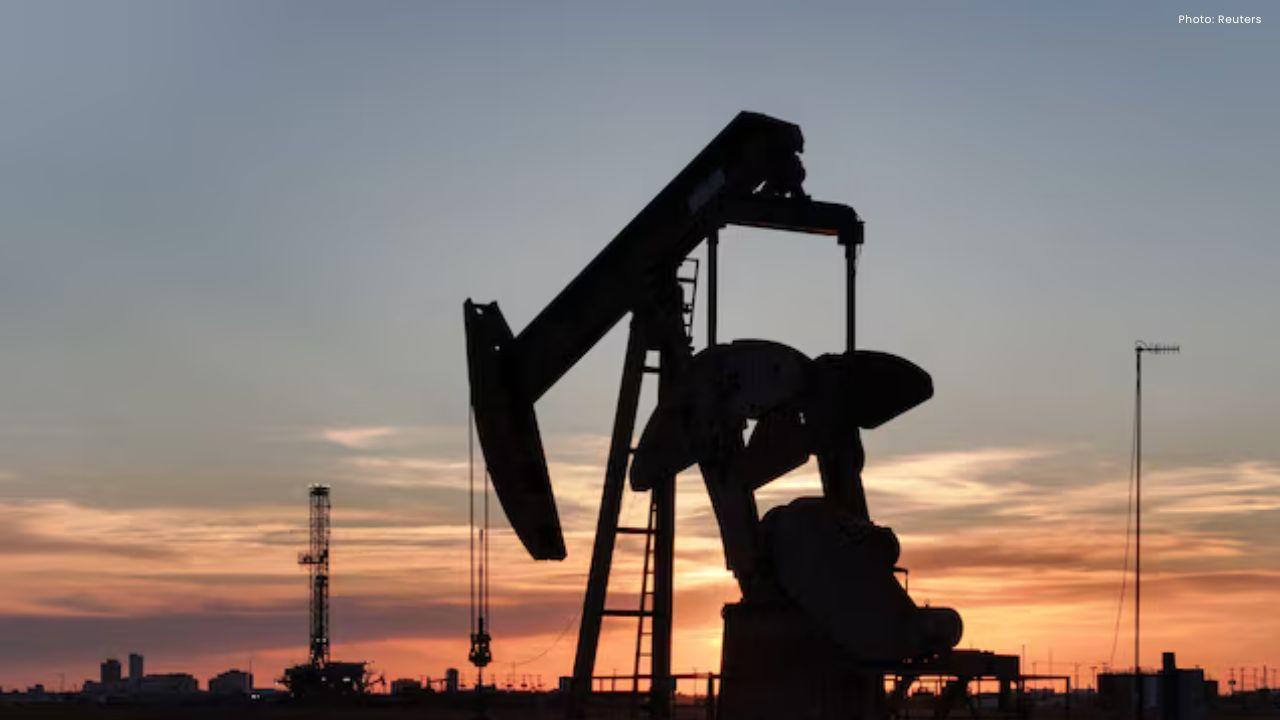
The global oil market is once again facing serious pressure as rising tensions in the Middle East push energy prices higher. Oil prices in the United States recently climbed by nearly 3%, reflecting growing fears that the conflict in the region could disrupt global fuel supplies.
Energy markets reacted quickly to new developments in the Middle East, where attacks on ships and energy facilities have raised concerns about the stability of key oil transport routes. These fears caused oil traders to push prices higher as they worried that supply could become tighter in the coming weeks.
According to market data, Brent crude, the global oil benchmark, rose to about $91.98 per barrel, while U.S. West Texas Intermediate (WTI) crude climbed to around $87.25 per barrel. The increase reflects strong concern among investors that oil shipments from the Gulf region could be disrupted.
The situation is closely linked to the growing conflict involving Iran and its impact on shipping in the Persian Gulf. The Strait of Hormuz, one of the most important energy shipping routes in the world, has become a major point of concern. Roughly 20% of the world’s oil supply normally passes through this narrow waterway, making it a critical artery for global energy trade.
In recent weeks, several oil tankers traveling through the region have been attacked, and shipping activity has slowed significantly. Reports indicate that at least 14 vessels have been struck since the start of the conflict, adding to fears that oil transport could be interrupted on a larger scale.
Such disruptions can have a major impact on oil markets because global supply depends heavily on the steady flow of shipments from the Middle East. When traders believe that supply might be reduced, oil prices often rise quickly as buyers compete to secure available supplies.
Energy experts say the current crisis has already reduced oil flows from the Gulf region by millions of barrels per day. Some estimates suggest that the conflict could remove around 15 million barrels per day from global markets, which would be a significant shock to the world’s energy system.
At the same time, attacks on energy infrastructure have added to the uncertainty. For example, a refinery complex in the United Arab Emirates was forced to shut down after a fire triggered by a drone strike. Such incidents highlight the growing risks facing oil production and transport in the region.
Governments and international organizations are trying to respond to the crisis. The International Energy Agency (IEA) has proposed releasing a large amount of oil from emergency reserves in order to calm the market. The plan could involve releasing up to 400 million barrels of oil from global stockpiles, the largest such move in history.
However, many analysts believe that even such a massive release may not be enough if the conflict continues. The proposed reserve release would only cover a few days of global oil demand, which means it may provide temporary relief but not a long-term solution.
Financial institutions are also warning that the energy market could face weeks of instability. Some analysts say that even if the conflict ends quickly, supply disruptions and shipping delays could continue to affect markets for some time.
The impact of rising oil prices goes far beyond the energy industry. When crude oil becomes more expensive, the cost of gasoline, diesel and jet fuel also increases. This can raise transportation costs, increase inflation and make everyday goods more expensive.
For consumers, higher oil prices often lead to higher fuel costs at gas stations. Businesses that rely heavily on transportation, such as airlines and shipping companies, may also face rising expenses.
In fact, the aviation sector has already begun to feel the pressure from rising fuel prices. Airlines in several regions have started adjusting fares and flight schedules as they deal with higher jet fuel costs. These changes show how quickly events in global energy markets can affect other industries.
The economic effects of the crisis may also spread across international markets. Rising oil prices can increase inflation, slow economic growth and make it harder for governments to manage economic stability.
Countries that depend heavily on imported energy could be particularly vulnerable. Large oil-importing economies in Asia, including China, India, Japan and South Korea, rely heavily on supplies from the Middle East. Any disruption in shipping routes could force these countries to search for alternative sources of energy at higher prices.
The uncertainty surrounding oil supplies has also caused volatility in financial markets. Investors are closely watching developments in the Middle East, as the conflict could reshape global energy trade.
Energy experts say the next few weeks will be critical. If shipping through the Strait of Hormuz remains disrupted or if attacks on energy infrastructure continue, oil prices could rise even further. Some forecasts warn that prices could reach $150 per barrel if the supply shock becomes severe.
Such a scenario would have serious consequences for the global economy. Higher fuel prices could push inflation upward in many countries and place additional pressure on households already facing rising living costs.
For now, markets remain highly sensitive to every development in the region. Each new report of attacks on ships, refineries or pipelines has the potential to move oil prices sharply.
The current situation serves as a reminder of how closely global energy markets are connected to geopolitical events. A conflict in one region can quickly influence fuel prices, transportation costs and economic conditions across the world.
As governments, companies and investors watch the situation unfold, the stability of the global oil supply remains one of the most important economic concerns of the moment.
#trending #latest #OilPrices #EnergyCrisis #MiddleEastConflict #GlobalEnergy #CrudeOil #OilMarket #FuelPrices #EnergySecurity #WorldEconomy #OilSupply #armustnews








Advances in Aerospace Technology and Commercial Aviation Recovery
Insights into breakthrough aerospace technologies and commercial aviation’s recovery amid 2025 chall

Defense Modernization and Strategic Spending Trends
Explore key trends in global defense modernization and strategic military spending shaping 2025 secu

Tens of Thousands Protest in Serbia on Anniversary of Deadly Roof Collapse
Tens of thousands in Novi Sad mark a year since a deadly station roof collapse that killed 16, prote

Canada PM Carney Apologizes to Trump Over Controversial Reagan Anti-Tariff Ad
Canadian PM Mark Carney apologized to President Trump over an Ontario anti-tariff ad quoting Reagan,

The ad that stirred a hornets nest, and made Canadian PM Carney say sorry to Trump
Canadian PM Mark Carney apologizes to US President Trump after a tariff-related ad causes diplomatic

Bengaluru-Mumbai Superfast Train Approved After 30-Year Wait
Railways approves new superfast train connecting Bengaluru and Mumbai, ending a 30-year demand, easi



