Post by : Avinab Raana
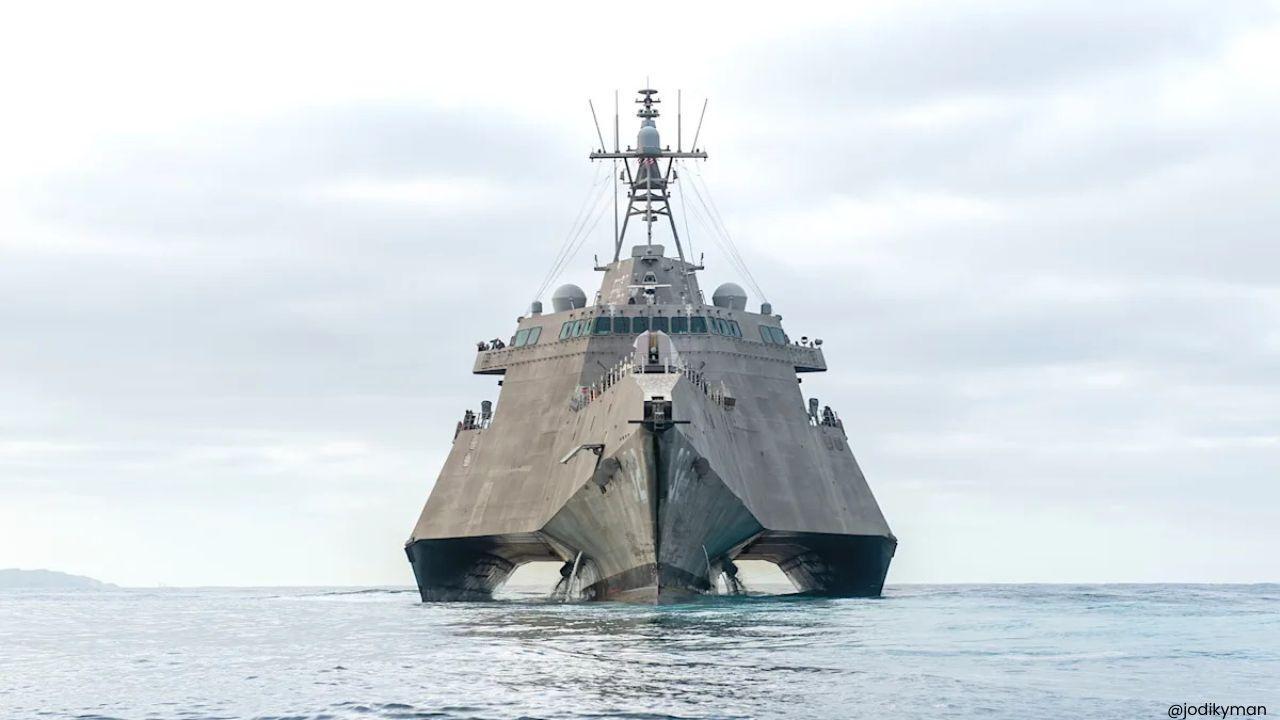
Photo : X / @jodikyman
In a move that is already stirring global debate, the United States has quietly expanded its focus on seabed mining in the Pacific Ocean, marking a significant shift in how nations are approaching the race for critical minerals. While the expansion may appear technical on the surface, it represents a deeper transformation—where the ocean floor is no longer just an ecological frontier, but a strategic resource battleground shaping the future of energy, technology, and global supply chains.
The expansion comes as part of a broader push to unlock domestic sources of critical minerals such as nickel, cobalt, and copper—materials essential for electric vehicles, renewable energy systems, and advanced electronics. Federal agencies have initiated early-stage processes to evaluate new offshore areas, with plans to explore leasing opportunities and assess industry interest. This reflects a growing urgency within the US to reduce dependence on foreign supply chains and secure strategic resources that are increasingly central to economic and national security priorities.
As part of the expansion, authorities have launched an environmental assessment to study the potential impact of exploration activities, including seabed sampling, geophysical surveys, and oceanographic research. While this marks only the initial phase of a long regulatory process, it is a critical step that will determine whether commercial mining can proceed in the future. Officials have indicated that any full-scale mining activity would require additional approvals and public consultation, underscoring the complexity and sensitivity of operating in largely unexplored marine ecosystems.
The growing interest in deep-sea mining is driven by a global scramble for minerals that power modern technologies, particularly as demand for electric vehicles and clean energy infrastructure accelerates. The Pacific seabed is believed to contain vast deposits of polymetallic nodules rich in essential metals, making it a highly attractive target for extraction. For the US, expanding into this space is not just about economic opportunity, it is also about positioning itself competitively in a geopolitical landscape where control over resources increasingly defines global influence.
Despite its strategic appeal, deep-sea mining remains one of the most controversial frontiers in resource extraction. Scientists and environmental advocates warn that disturbing the ocean floor could have long-lasting and potentially irreversible impacts on marine biodiversity. The deep sea is one of the least understood ecosystems on Earth, and large-scale industrial activity could disrupt habitats, create sediment plumes, and affect species that have yet to be fully studied. These concerns are intensifying calls for stricter oversight and, in some cases, a complete pause on mining activities until more scientific evidence is available.
The expansion of seabed mining efforts in the Pacific marks a pivotal moment where economic ambition meets environmental responsibility. As nations race to secure the minerals that will power the future, the question is no longer whether deep-sea mining will happen, but how it will be governed. The decisions made today will not only shape global supply chains but also determine the fate of one of the planet’s last untouched frontiers.
Pacific seabed mining US, deep sea mining expansion, Trump seabed minerals policy, ocean mining environmental impact, critical minerals supply chain, Pacific mining exploration, marine ecosystem risk




Advances in Aerospace Technology and Commercial Aviation Recovery
Insights into breakthrough aerospace technologies and commercial aviation’s recovery amid 2025 chall

Defense Modernization and Strategic Spending Trends
Explore key trends in global defense modernization and strategic military spending shaping 2025 secu

Tens of Thousands Protest in Serbia on Anniversary of Deadly Roof Collapse
Tens of thousands in Novi Sad mark a year since a deadly station roof collapse that killed 16, prote

Canada PM Carney Apologizes to Trump Over Controversial Reagan Anti-Tariff Ad
Canadian PM Mark Carney apologized to President Trump over an Ontario anti-tariff ad quoting Reagan,

The ad that stirred a hornets nest, and made Canadian PM Carney say sorry to Trump
Canadian PM Mark Carney apologizes to US President Trump after a tariff-related ad causes diplomatic

Bengaluru-Mumbai Superfast Train Approved After 30-Year Wait
Railways approves new superfast train connecting Bengaluru and Mumbai, ending a 30-year demand, easi



