Post by : Avinab Raana
Photo : X / Naval News
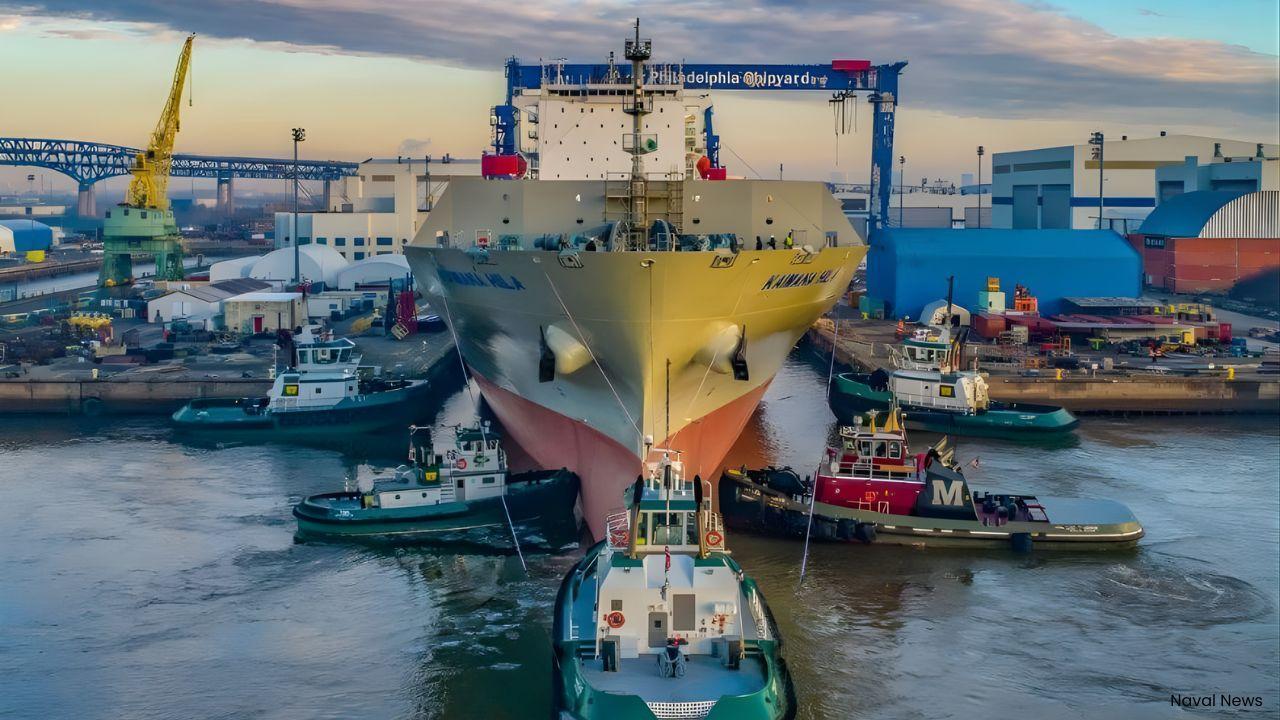
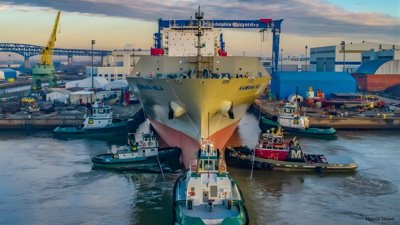
America’s long-standing shipbuilding crisis has finally burst into mainstream attention, as a recent 60 Minutes investigation brings into sharp focus what industry insiders have been warning for years, a dramatic decline in domestic shipbuilding capability that now threatens both economic competitiveness and national security. What was once a symbol of industrial strength has quietly eroded over decades, and the consequences are now unfolding in a world where maritime power is once again central to global influence.
The scale of the problem becomes stark when comparing output between the United States and global leaders like China and South Korea, where shipyards operate at a level of efficiency and scale that American facilities struggle to match. While Asian shipbuilders are capable of producing vessels at an industrial pace, US shipyards are often limited to delivering only a handful of ships each year, revealing a structural gap that goes far beyond individual companies and reflects a systemic decline in industrial capacity.
One of the most critical challenges highlighted is the cost and time required to build ships domestically, which can be significantly higher than in competing markets. Ships that can be constructed in months in Asia often take far longer in the United States, while costs can multiply several times over due to labour, materials, and fragmented supply chains. This imbalance makes it difficult for US-built vessels to compete globally, forcing reliance on protected markets and limiting commercial viability.
The crisis is not confined to shipyards alone but reflects a broader breakdown across the maritime ecosystem, including workforce shortages, limited industrial scale, and weak supply chain integration. Experts point out that shipbuilding is only one part of a much larger system that includes ports, logistics networks, and trade flows, and without strengthening these interconnected elements, rebuilding capacity will remain a long and complex challenge.
What elevates this issue beyond an industrial concern is its growing relevance to national security, with policymakers increasingly warning that reliance on foreign-built vessels could create vulnerabilities during geopolitical conflicts. The inability to rapidly produce commercial and military vessels domestically raises concerns about supply chain resilience, defence readiness, and the country’s ability to sustain maritime operations in times of crisis.
Efforts are now underway to reverse the decline, with policy initiatives and foreign investments aiming to modernise shipyards, increase production capacity, and rebuild workforce skills. New investments are focused on scaling output and introducing advanced manufacturing techniques, but closing a gap that has widened over decades will require sustained commitment and coordination across government and industry.
The renewed spotlight on America’s shipbuilding crisis marks a critical turning point, where awareness is no longer the challenge, execution is. As global trade routes become more contested and maritime dominance regains strategic importance, the ability to rebuild industrial capacity will define not just economic competitiveness, but national strength in the years ahead. The real question now is not whether the crisis exists, but whether it can be solved before the gap becomes irreversible.
US shipbuilding crisis, 60 Minutes shipbuilding report, global shipbuilding gap, China shipbuilding dominance, maritime industry decline US, shipyard capacity issues, naval industrial strategy






Advances in Aerospace Technology and Commercial Aviation Recovery
Insights into breakthrough aerospace technologies and commercial aviation’s recovery amid 2025 chall

Defense Modernization and Strategic Spending Trends
Explore key trends in global defense modernization and strategic military spending shaping 2025 secu

Tens of Thousands Protest in Serbia on Anniversary of Deadly Roof Collapse
Tens of thousands in Novi Sad mark a year since a deadly station roof collapse that killed 16, prote

Canada PM Carney Apologizes to Trump Over Controversial Reagan Anti-Tariff Ad
Canadian PM Mark Carney apologized to President Trump over an Ontario anti-tariff ad quoting Reagan,

The ad that stirred a hornets nest, and made Canadian PM Carney say sorry to Trump
Canadian PM Mark Carney apologizes to US President Trump after a tariff-related ad causes diplomatic

Bengaluru-Mumbai Superfast Train Approved After 30-Year Wait
Railways approves new superfast train connecting Bengaluru and Mumbai, ending a 30-year demand, easi



