Post by : Saif
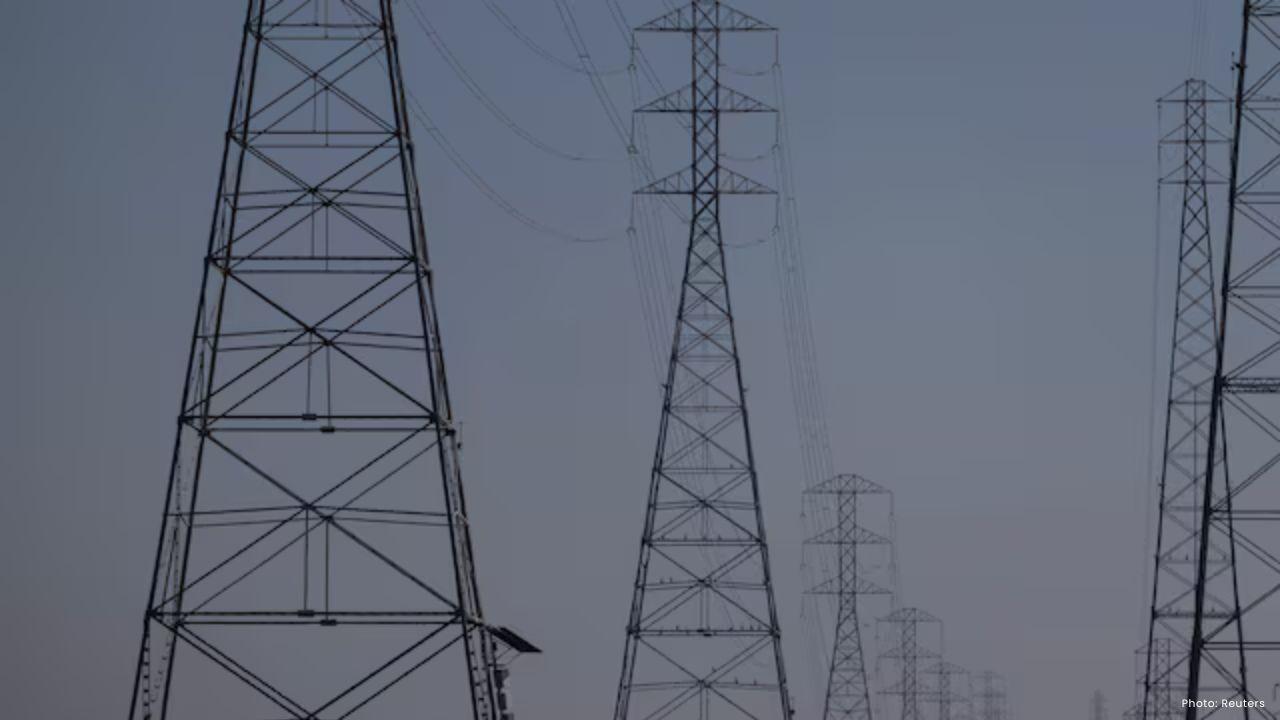
The United States government has announced a major plan to invest $1.9 billion to upgrade and modernize the country’s power grid. The funding will be provided by the U.S. Department of Energy to strengthen electricity networks and prepare the system for rapidly rising energy demand across the nation.
Officials say the investment will help improve the reliability of the power grid while allowing it to carry more electricity. The project comes at a time when the United States is facing a new surge in electricity consumption driven by growing industries such as artificial intelligence, cryptocurrency data centers, and the electrification of transportation and heating systems.
The Department of Energy explained that the funding will support projects designed to upgrade existing transmission lines rather than build entirely new ones. This method is faster and less expensive. By replacing old wires with modern, higher-capacity conductors, utilities can transmit more electricity through the same infrastructure.
Energy experts say this approach could significantly increase the amount of power the grid can handle without waiting years for new transmission projects to be approved and constructed.
Electricity demand in the United States is expected to grow strongly over the next several years. Government forecasts show that power consumption could reach record highs in 2026 and 2027 as technology companies expand their data centers and as more homes and vehicles switch to electric power.
These changes are creating new pressure on the country’s energy infrastructure. For many years, electricity demand in the United States remained mostly stable. But the rapid expansion of digital technology and electrified transportation is now pushing the grid closer to its limits.
Data centers, in particular, are becoming a major driver of electricity use. Artificial intelligence systems require large amounts of computing power, which in turn needs large amounts of electricity to operate servers and cooling equipment.
As technology companies build more data centers, utilities must supply significantly more energy to support these operations.
The Department of Energy believes that upgrading existing transmission lines can help solve part of this problem. Modern conductors can carry more electricity with lower energy loss, which makes the system more efficient and reliable.
In addition to increasing capacity, grid upgrades can also help protect the power system from extreme weather events. Storms, heat waves, and wildfires have caused power outages in several parts of the United States in recent years. Modern grid technology can help utilities respond faster to disruptions and reduce the risk of large-scale blackouts.
Officials say the investment will also help lower electricity costs over time. A stronger grid can move power more efficiently across regions, allowing utilities to balance supply and demand more effectively. This can help keep prices stable for households and businesses.
Another goal of the program is to support the growth of renewable energy. Solar and wind power are expanding rapidly across the United States, but many renewable energy projects cannot connect to the grid because existing transmission systems are already full.
By increasing the capacity of power lines, the upgraded grid will make it easier for renewable energy projects to deliver electricity to cities and industrial areas.
Globally, investment in electricity networks has been rising as countries attempt to modernize their energy systems. In 2023 alone, about $310 billion was invested in power grid infrastructure worldwide, reflecting the growing need to support renewable energy and new electricity demand.
The United States is already one of the world’s largest investors in grid infrastructure. However, experts say much more investment will be needed in the coming years to keep pace with rising energy consumption.
The Department of Energy’s latest funding initiative is part of a broader strategy to modernize the country’s energy infrastructure. Previous federal programs have also supported transmission projects, clean energy development, and improvements to power system resilience.
Energy analysts say the challenge ahead is not only building more power generation but also ensuring the grid can move that electricity where it is needed.
Without stronger transmission networks, new energy projects may struggle to connect to the grid, and regions with high demand could face power shortages.
For now, the $1.9 billion investment represents an important step toward strengthening the country’s electricity system. By upgrading existing power lines and improving grid technology, the United States hopes to prepare its energy infrastructure for a future shaped by digital technology, electric transportation, and cleaner energy sources.
As electricity demand continues to rise, the strength and flexibility of the power grid will play a critical role in supporting economic growth and maintaining energy security across the country.
#trending #latest #EnergyInfrastructure #PowerGrid #USDepartmentOfEnergy #ElectricityDemand #EnergyTransition #CleanEnergy #GridModernization #EnergySecurity #GlobalEnergy #armustnews










Advances in Aerospace Technology and Commercial Aviation Recovery
Insights into breakthrough aerospace technologies and commercial aviation’s recovery amid 2025 chall

Defense Modernization and Strategic Spending Trends
Explore key trends in global defense modernization and strategic military spending shaping 2025 secu

Tens of Thousands Protest in Serbia on Anniversary of Deadly Roof Collapse
Tens of thousands in Novi Sad mark a year since a deadly station roof collapse that killed 16, prote

Canada PM Carney Apologizes to Trump Over Controversial Reagan Anti-Tariff Ad
Canadian PM Mark Carney apologized to President Trump over an Ontario anti-tariff ad quoting Reagan,

The ad that stirred a hornets nest, and made Canadian PM Carney say sorry to Trump
Canadian PM Mark Carney apologizes to US President Trump after a tariff-related ad causes diplomatic

Bengaluru-Mumbai Superfast Train Approved After 30-Year Wait
Railways approves new superfast train connecting Bengaluru and Mumbai, ending a 30-year demand, easi



