Post by : Saif
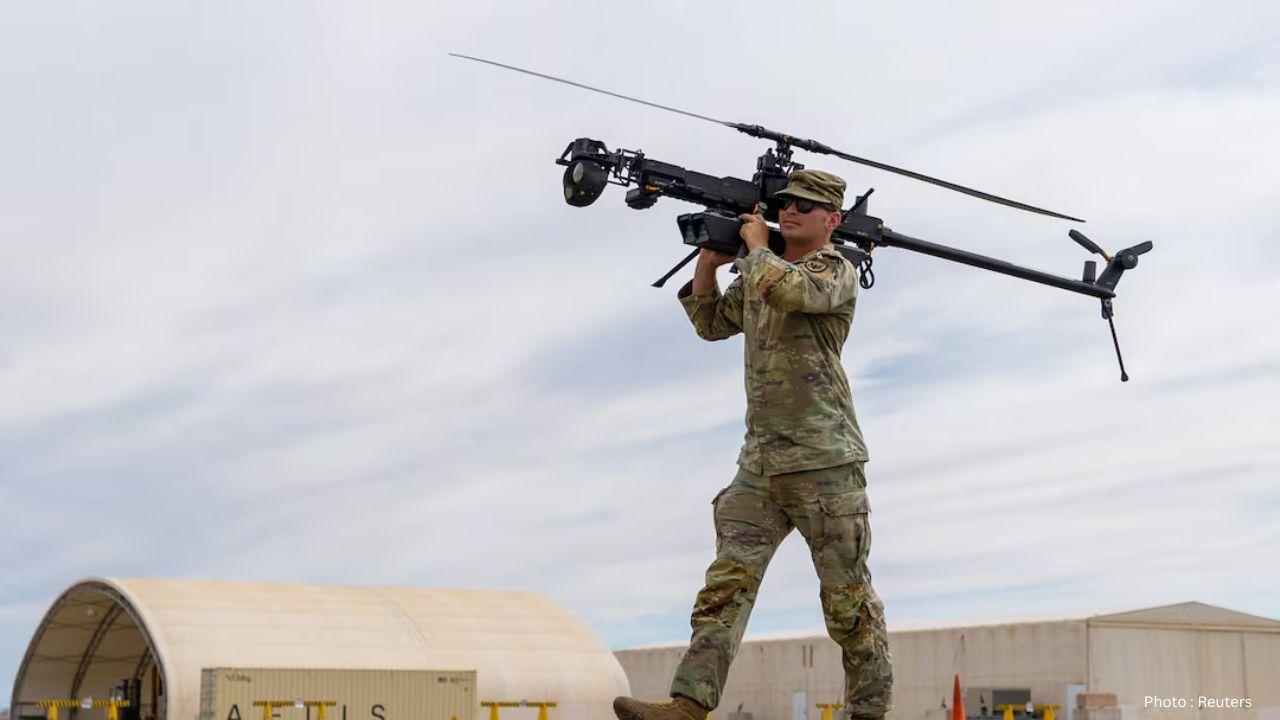
US Army units are testing advanced counter-drone technology along the Mexico border as authorities report a rise in drone activity linked to criminal groups. The military is using the border region to evaluate systems that can detect, track and stop small unmanned aircraft.
During the Falcon Peak exercise at the Yuma Proving Grounds in Arizona in September, defense companies demonstrated several counter-drone systems. The technology included radar equipment, interceptor drones, autonomous gun systems and other tools designed to identify and neutralize small drones.
Military officials said the exercise is also helping soldiers gain experience with technology that could be used against evolving drone threats.
Brigadier General Brian Filler, deputy commander for operations at Joint Task Force Southern Border, said the US military detected 378 drone incursions during the previous 30 days.
He said the number of incidents was increasing and that most of the drones were commercially available models.
According to military officials, criminal groups use these drones mainly for surveillance connected to smuggling and human trafficking operations. Many of the aircraft carry cameras and are observed near cross-border movements.
The US military has already deployed laser technology along the southern border. Officials previously said the system had been used to bring down 11 cartel drones since its deployment in August.
Read more: Australia Sends Missiles to UAE and Deploys Surveillance Aircraft as Middle East Tensions Rise
The growing drone activity at the border is also giving the US military an opportunity to study technology and tactics developed during the war in Ukraine.
Drones have become a major part of modern warfare, with both sides using unmanned aircraft for surveillance, targeting and attacks. The rapid development of counter-drone systems in Ukraine has encouraged military planners in the United States to find ways to improve their own capabilities.
US officials acknowledge that cartel drones are generally much less sophisticated than military drones used in Ukraine and other conflict zones. However, they say the border provides a practical environment for testing equipment under real-world conditions.
The experience can help soldiers understand how systems perform outside controlled testing facilities.
Falcon Peak also highlighted the growing role of private defense technology companies in the US military sector.
Companies including Anduril, Shield AI, Saronic and other emerging firms have attracted significant investment as demand for drone and counter-drone technology has increased.
Anduril's Ghost drone was among the systems demonstrated during the exercise. Other equipment included detection technology from Teledyne FLIR, the Bullfrog automated counter-drone machine gun from Allen Control Systems and an interceptor drone from Powerus.
These systems are designed to address different stages of the counter-drone process, including detection, tracking and interception.
Military planners are increasingly interested in using real-world environments to test new defense technology. The US-Mexico border provides an operational setting where soldiers can study drone activity and evaluate how quickly different systems can respond.
The exercise also reflects a broader effort within the US military to speed up the development and deployment of defense technology.
Brigadier General Matt Ross said the military is closely watching Ukraine because of how quickly Ukrainian forces have adapted their drone technology during the war.
The ability to make frequent improvements has become an important lesson for US military planners.
The increase in drone activity near the southern border has created new security challenges for US authorities. Small commercial drones are relatively accessible and can provide criminal groups with an inexpensive way to monitor movements across difficult terrain.
Counter-drone systems can help authorities detect suspicious aircraft and respond before they can support criminal operations.
The US Army's testing at the Mexico border is therefore part of a wider effort to understand how drones are being used outside traditional battlefields and how new technology can provide faster and more effective defenses.
#trending #latest #USArmy #CounterDrone #MexicoBorder #BorderSecurity #DroneTechnology #Cartels #USMexicoBorder #MilitaryTechnology #DefenseTechnology #DroneThreat #UkraineWar #NationalSecurity #YumaArizona








Advances in Aerospace Technology and Commercial Aviation Recovery
Insights into breakthrough aerospace technologies and commercial aviation’s recovery amid 2025 chall

Defense Modernization and Strategic Spending Trends
Explore key trends in global defense modernization and strategic military spending shaping 2025 secu

Tens of Thousands Protest in Serbia on Anniversary of Deadly Roof Collapse
Tens of thousands in Novi Sad mark a year since a deadly station roof collapse that killed 16, prote

Canada PM Carney Apologizes to Trump Over Controversial Reagan Anti-Tariff Ad
Canadian PM Mark Carney apologized to President Trump over an Ontario anti-tariff ad quoting Reagan,

The ad that stirred a hornets nest, and made Canadian PM Carney say sorry to Trump
Canadian PM Mark Carney apologizes to US President Trump after a tariff-related ad causes diplomatic

Bengaluru-Mumbai Superfast Train Approved After 30-Year Wait
Railways approves new superfast train connecting Bengaluru and Mumbai, ending a 30-year demand, easi



