Post by : Saif
Australia has announced a new military support plan for the United Arab Emirates as tensions continue to rise in the Middle East. The Australian government said it will send air-to-air missiles to the UAE and deploy a military surveillance aircraft to help monitor the region’s airspace. The move comes as the conflict in the Gulf region grows more dangerous and several countries face missile and drone threats.
Prime Minister Anthony Albanese said the decision was taken to help protect civilians, support regional allies, and ensure the safety of Australians living or working in the Middle East. Officials stressed that the action is defensive and that Australia will not send ground troops into the conflict.
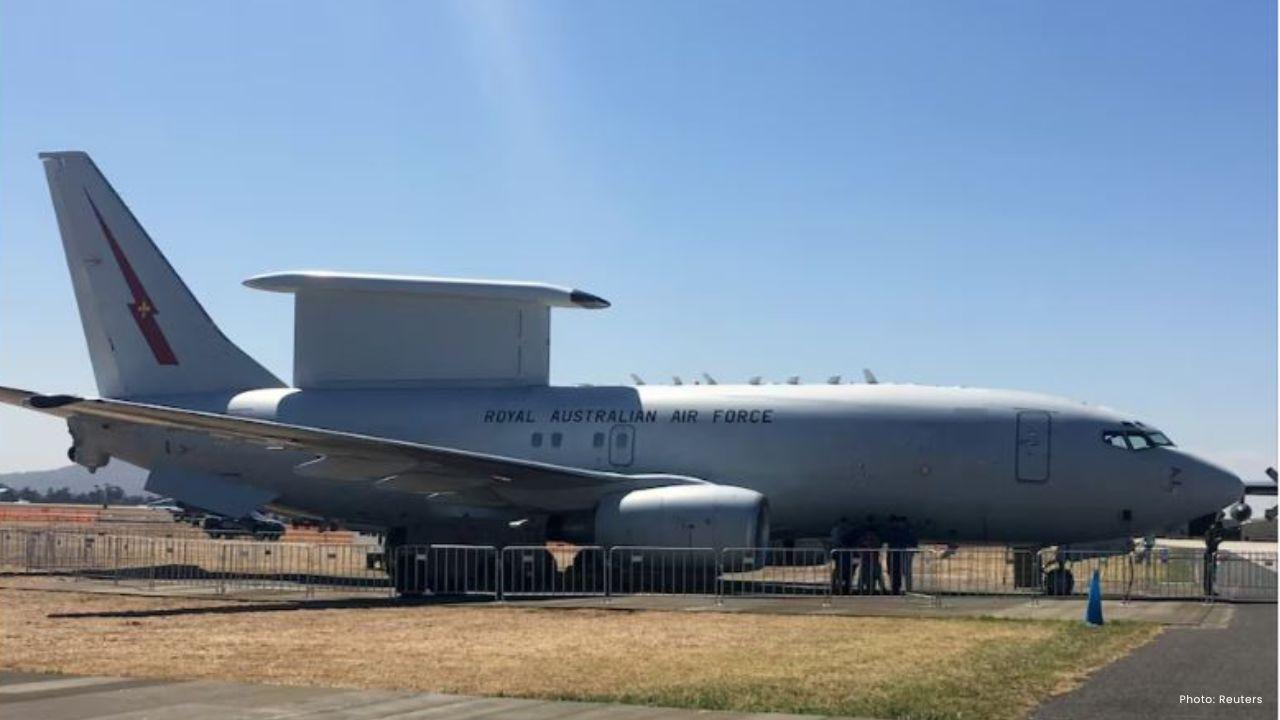
Under the plan, Australia will deploy a Boeing E-7A Wedgetail surveillance aircraft to the Middle East. This aircraft is designed to detect aircraft, missiles, and drones from long distances using advanced radar technology. It can track multiple targets in the sky and share real-time information with military forces on the ground and in the air.
The surveillance aircraft will operate in the region for an initial period of about four weeks, helping Gulf countries monitor threats in their airspace.
In addition to the aircraft, Australia will also send medium-range air-to-air missiles to the UAE. These weapons are intended to strengthen the country’s ability to defend itself against aerial threats such as hostile aircraft, drones, or missiles.
The decision followed discussions between Australian leaders and UAE President Sheikh Mohammed bin Zayed Al Nahyan. Australian officials said the support is part of a cooperative effort among allies to stabilize the region during a period of growing insecurity.
The Middle East has been experiencing increased military tensions in recent weeks. Missile and drone attacks have been reported across several countries, raising fears that the conflict could spread further across the region.
Australia has thousands of citizens in the Gulf area, including in the United Arab Emirates, Qatar, and Saudi Arabia. When the crisis began, there were around 115,000 Australians in the region. Since then, thousands have returned home as governments monitor the situation closely.
Officials said protecting these citizens was one of the key reasons behind the new military deployment.
Australian Defence Minister Richard Marles said the Wedgetail aircraft will mainly focus on monitoring airspace and identifying potential threats, rather than participating in direct combat operations. The aircraft works like an airborne command center, collecting information from radar and sharing it with allied defence systems.
Military experts say such surveillance aircraft play an important role during times of conflict because they provide early warning of missile launches or drone attacks. This gives defence systems more time to respond and protect civilians and critical infrastructure.
Reports also indicate that some Gulf countries have already faced large numbers of aerial attacks during the conflict. Defence officials say many missiles and drones have been intercepted by air defence systems, but the continuing attacks show how serious the situation has become.
Australia’s government emphasized that it does not intend to send combat troops to Iran or participate in offensive military operations. The deployment is limited to surveillance and defensive support.
Prime Minister Albanese said the goal is to assist allies while avoiding a deeper military involvement in the conflict.
However, the decision has also sparked debate inside Australia. Some political leaders and analysts worry that sending military equipment to the region could slowly pull the country into a larger international conflict.
Critics argue that Australia should focus on diplomacy and humanitarian assistance rather than military involvement. They fear that even limited support could increase tensions or create new risks for Australian personnel abroad.
Supporters of the move say it is a reasonable and measured response to a dangerous situation. They believe helping allies defend themselves is important for maintaining regional stability and protecting international security.
The Gulf region is strategically important for the global economy. It is home to some of the world’s largest oil and gas exporters, and key shipping routes such as the Strait of Hormuz, where a large portion of global energy supplies pass each day.
If the conflict disrupts shipping in this area, it could affect energy markets and global trade.
Because of these risks, several countries have increased military monitoring and security cooperation in the region. Surveillance aircraft, naval patrols, and missile defence systems are being used to track threats and prevent attacks.
Australia has previously taken part in international missions in the Middle East. In past years, its forces participated in operations against extremist groups and contributed to regional security efforts.
The latest deployment reflects how international alliances continue to shape security responses during global crises.
As the conflict continues, governments around the world are closely watching the situation and preparing for possible escalation. Diplomatic efforts are also underway to reduce tensions and prevent the conflict from spreading further.
For now, Australia’s decision to send missiles and surveillance aircraft signals its commitment to helping allies defend themselves while trying to avoid direct involvement in combat operations.
Whether this strategy will help stabilize the region remains uncertain. But it shows how nations are balancing security concerns with the desire to prevent a wider war.
#trending #latest #armustnews #AustraliaNews #MiddleEastConflict #UAE #GlobalSecurity #MilitaryDeployment #DefenseNews #Geopolitics #AirDefense #WorldNews







Advances in Aerospace Technology and Commercial Aviation Recovery
Insights into breakthrough aerospace technologies and commercial aviation’s recovery amid 2025 chall

Defense Modernization and Strategic Spending Trends
Explore key trends in global defense modernization and strategic military spending shaping 2025 secu

Tens of Thousands Protest in Serbia on Anniversary of Deadly Roof Collapse
Tens of thousands in Novi Sad mark a year since a deadly station roof collapse that killed 16, prote

Canada PM Carney Apologizes to Trump Over Controversial Reagan Anti-Tariff Ad
Canadian PM Mark Carney apologized to President Trump over an Ontario anti-tariff ad quoting Reagan,

The ad that stirred a hornets nest, and made Canadian PM Carney say sorry to Trump
Canadian PM Mark Carney apologizes to US President Trump after a tariff-related ad causes diplomatic

Bengaluru-Mumbai Superfast Train Approved After 30-Year Wait
Railways approves new superfast train connecting Bengaluru and Mumbai, ending a 30-year demand, easi



