Post by : Saif
Germany’s plan to build its own military satellite network has raised serious concerns across Europe. While the project aims to improve national security, many leaders in the European Union fear it could weaken unity and create unnecessary duplication.
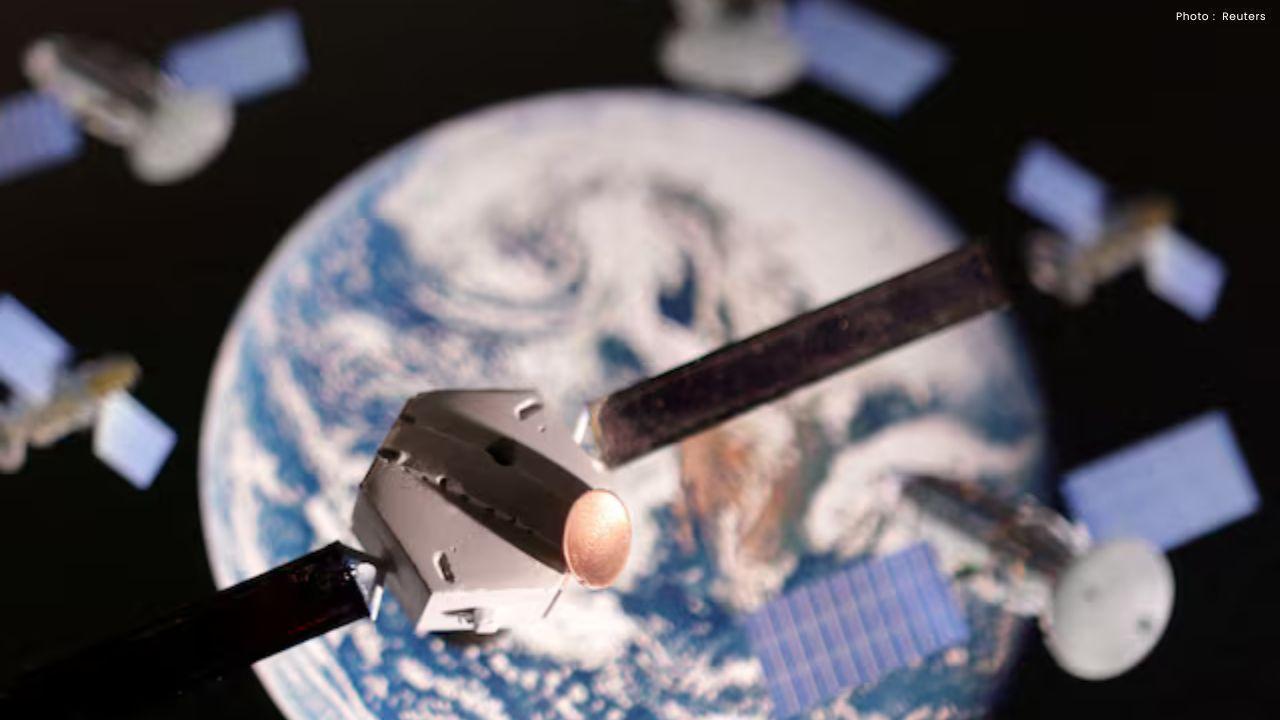
The German government is planning to invest around €10 billion to build a new satellite system designed mainly for military communication. The project could include about 100 satellites in low-Earth orbit, focusing on secure and fast communication for defense operations.
This plan is separate from the European Union’s own satellite program called IRIS². The EU project, which is worth about €10.6 billion, aims to create a shared communication network using around 290 satellites by 2029.
The main concern is that having two similar systems could divide efforts instead of strengthening them. Some EU lawmakers worry that Germany’s independent approach may lead to wasted money and weaker cooperation among member countries.
Marie-Agnes Strack-Zimmermann, a senior European lawmaker, warned that building separate systems could reduce the overall strength of Europe’s defense. She stressed that cooperation and integration are important for long-term security.
Experts also say that duplication of projects can create technical problems. If systems are not fully connected or compatible, it may reduce efficiency. Instead of working together, countries may end up building parallel systems that do not fully support each other.
However, Germany has defended its plan. Officials say that the national system is designed to meet specific military needs that are different from the broader goals of the EU project. They argue that a dedicated system can provide better performance and security for their armed forces.
Supporters of the plan also believe that having multiple systems can increase safety. In military terms, this is called “redundancy.” If one system fails or is attacked, another can continue to operate. Some politicians see this as a necessary step in a world where space is becoming a key area for defense.
The debate reflects a larger issue within Europe. Countries are trying to balance national interests with collective goals. While the EU is pushing for stronger joint defense systems, some nations still prefer to maintain control over their own security projects.
This tension has become more visible in recent years. Changes in global politics, including uncertainty about long-term support from the United States, have pushed European countries to rethink their defense strategies.
Italy is also said to be exploring its own satellite system, although it is still in early stages. If more countries follow this path, it could increase fragmentation within the EU’s defense efforts.
Another concern is cost. Large projects like satellite networks require huge investments. Some lawmakers worry that spending money on separate systems could put pressure on national budgets and reduce funds available for other important needs.
At the same time, the importance of space in modern warfare is growing quickly. Satellites are used for communication, navigation, intelligence, and even defense operations. This makes them a key part of national security planning.
The EU has been trying to build a more unified defense system to reduce dependence on external partners and improve coordination among member states. Projects like IRIS² are part of this effort.
Germany’s move shows that the path toward a unified European defense is not simple. Different countries have different priorities, and finding a balance between national control and shared systems remains a major challenge.
The coming years will show whether Europe can combine these efforts into a stronger, unified system or whether separate projects will lead to further division. For now, the debate highlights how technology, security, and politics are deeply connected in shaping the future of Europe’s defense.
#trending #latest #armustnews #Germany #EUSecurity #SatelliteTechnology #DefenseNews #SpaceDefense #EuropeanUnion #GlobalSecurity #TechNews #WorldNews








Advances in Aerospace Technology and Commercial Aviation Recovery
Insights into breakthrough aerospace technologies and commercial aviation’s recovery amid 2025 chall

Defense Modernization and Strategic Spending Trends
Explore key trends in global defense modernization and strategic military spending shaping 2025 secu

Tens of Thousands Protest in Serbia on Anniversary of Deadly Roof Collapse
Tens of thousands in Novi Sad mark a year since a deadly station roof collapse that killed 16, prote

Canada PM Carney Apologizes to Trump Over Controversial Reagan Anti-Tariff Ad
Canadian PM Mark Carney apologized to President Trump over an Ontario anti-tariff ad quoting Reagan,

The ad that stirred a hornets nest, and made Canadian PM Carney say sorry to Trump
Canadian PM Mark Carney apologizes to US President Trump after a tariff-related ad causes diplomatic

Bengaluru-Mumbai Superfast Train Approved After 30-Year Wait
Railways approves new superfast train connecting Bengaluru and Mumbai, ending a 30-year demand, easi



