Post by : Avinab Raana
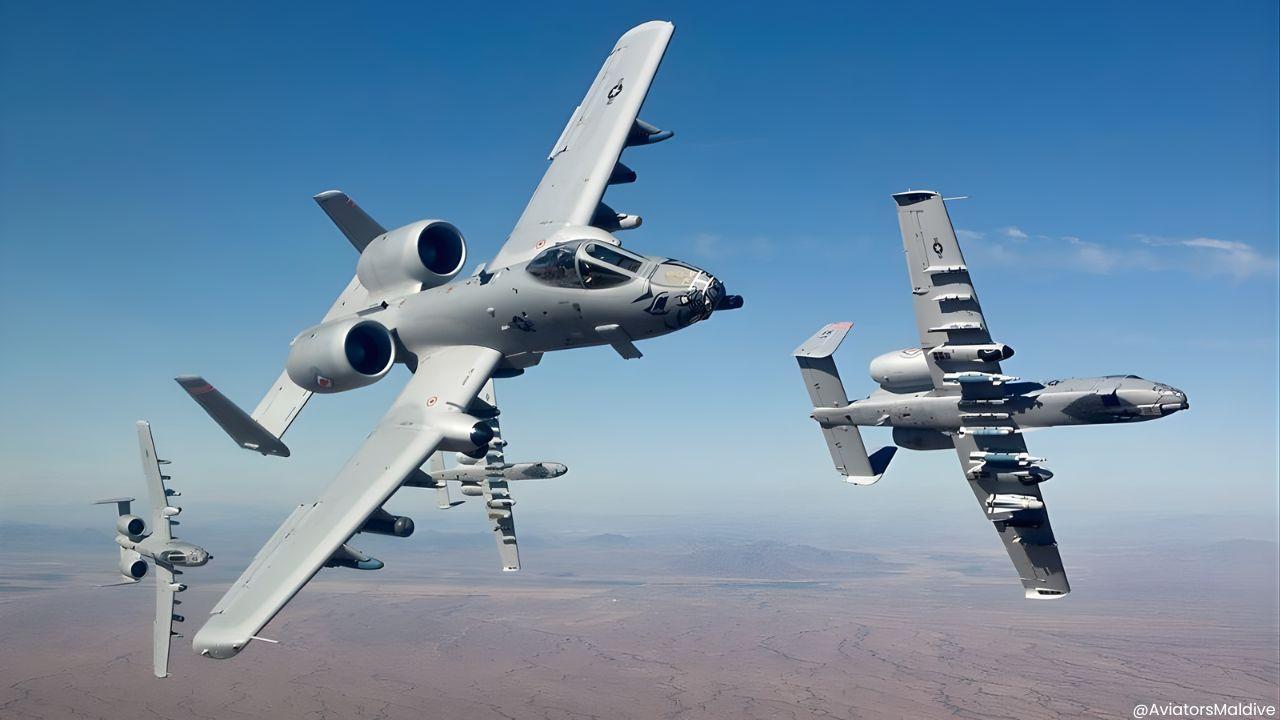
In an era dominated by stealth fighters, drones, and next-generation air combat systems, one of the most rugged and battle-proven aircraft in history is once again proving its relevance. The United States Air Force has decided to extend the operational life of the iconic A-10 Warthog until at least 2030, a move that underscores both the aircraft’s unmatched battlefield capabilities and the complex realities of modern warfare. Known for its distinctive design and devastating close air support (CAS) role, the A-10’s continued service signals that even as airpower evolves rapidly, certain platforms remain irreplaceable when it comes to ground combat effectiveness, troop protection, and precision engagement in high-risk environments.
The decision to extend the A-10’s service life comes amid a broader transformation within the US Air Force, which is increasingly prioritizing advanced systems like fifth-generation fighters and autonomous technologies. However, despite ongoing efforts to retire older fleets, the A-10 has consistently resisted phase-out due to its unique operational niche. Unlike multi-role fighters, the Warthog is purpose-built for close air support, equipped with heavy armor, long loiter times, and the legendary GAU-8 Avenger cannon capable of delivering precise, high-impact firepower against ground targets. This extension reflects a strategic compromise maintaining legacy capabilities that still deliver exceptional battlefield value while gradually transitioning toward future-focused air combat systems.
The enduring relevance of the A-10 lies in its ability to perform in environments where newer aircraft may face limitations. In low-intensity conflicts, counterinsurgency operations, and scenarios requiring prolonged aerial presence, the Warthog offers a level of reliability and effectiveness that is difficult to replicate. Its ability to operate from austere airfields, absorb significant damage, and continue flying makes it a critical asset for supporting ground forces. Moreover, its pilot visibility and precision targeting capabilities provide unmatched support in complex combat situations, where distinguishing between friendly and hostile forces is crucial. These attributes have made the A-10 a favorite among ground troops, who often view it as a lifeline in high-pressure combat zones.
While the A-10’s strengths are undeniable, its extension also raises questions about long-term sustainability. Aging airframes, increasing maintenance requirements, and evolving threat environments particularly advanced air defense systems pose significant challenges. The aircraft was not designed to operate in highly contested airspace dominated by sophisticated missile systems, which limits its effectiveness in near-peer conflict scenarios. However, defense planners appear to be taking a pragmatic approach, recognizing that not all future conflicts will require high-end stealth capabilities and that a balanced fleet is essential for addressing diverse operational needs.
The extension of the A-10 program carries broader implications for the defense and aerospace industry. It reinforces the importance of lifecycle management, upgrade programs, and sustainment strategies in military aviation. For manufacturers, suppliers, and MRO providers, this decision translates into continued demand for parts, maintenance services, and technological upgrades aimed at keeping legacy platforms mission-ready. It also highlights a growing trend within defense planning maximizing the value of existing assets while investing in future technologies, rather than pursuing an immediate and complete transition to next-generation systems.
The US Air Force’s decision is likely to resonate beyond American borders, offering a blueprint for other nations grappling with similar modernization challenges. Many air forces operate aging fleets that still deliver operational value, and the A-10’s extension demonstrates that strategic longevity can coexist with technological advancement. It emphasizes the importance of mission-specific platforms in a world where versatility often comes at the cost of specialization.
As the A-10 Warthog prepares to fly well into the next decade, its story becomes more than just a tale of an aircraft, it becomes a reflection of how warfare itself is evolving. The decision to extend its service to 2030 is not merely about keeping an old platform in the sky; it is about acknowledging that effectiveness on the battlefield is not always dictated by cutting-edge technology alone. In a rapidly changing defense landscape, the Warthog stands as a powerful reminder that sometimes, the most enduring solutions are those built with a singular purpose and proven through decades of combat. And as long as ground troops continue to rely on its unmistakable roar overhead, the A-10’s legacy will remain firmly entrenched in the future of airpower.
#trending #latest#A10Warthog #USAirForce #MilitaryAviation #DefenseStrategy #Airpower










Advances in Aerospace Technology and Commercial Aviation Recovery
Insights into breakthrough aerospace technologies and commercial aviation’s recovery amid 2025 chall

Defense Modernization and Strategic Spending Trends
Explore key trends in global defense modernization and strategic military spending shaping 2025 secu

Tens of Thousands Protest in Serbia on Anniversary of Deadly Roof Collapse
Tens of thousands in Novi Sad mark a year since a deadly station roof collapse that killed 16, prote

Canada PM Carney Apologizes to Trump Over Controversial Reagan Anti-Tariff Ad
Canadian PM Mark Carney apologized to President Trump over an Ontario anti-tariff ad quoting Reagan,

The ad that stirred a hornets nest, and made Canadian PM Carney say sorry to Trump
Canadian PM Mark Carney apologizes to US President Trump after a tariff-related ad causes diplomatic

Bengaluru-Mumbai Superfast Train Approved After 30-Year Wait
Railways approves new superfast train connecting Bengaluru and Mumbai, ending a 30-year demand, easi



