Post by : Avinab Raana
Photo : X / @researchUSAI
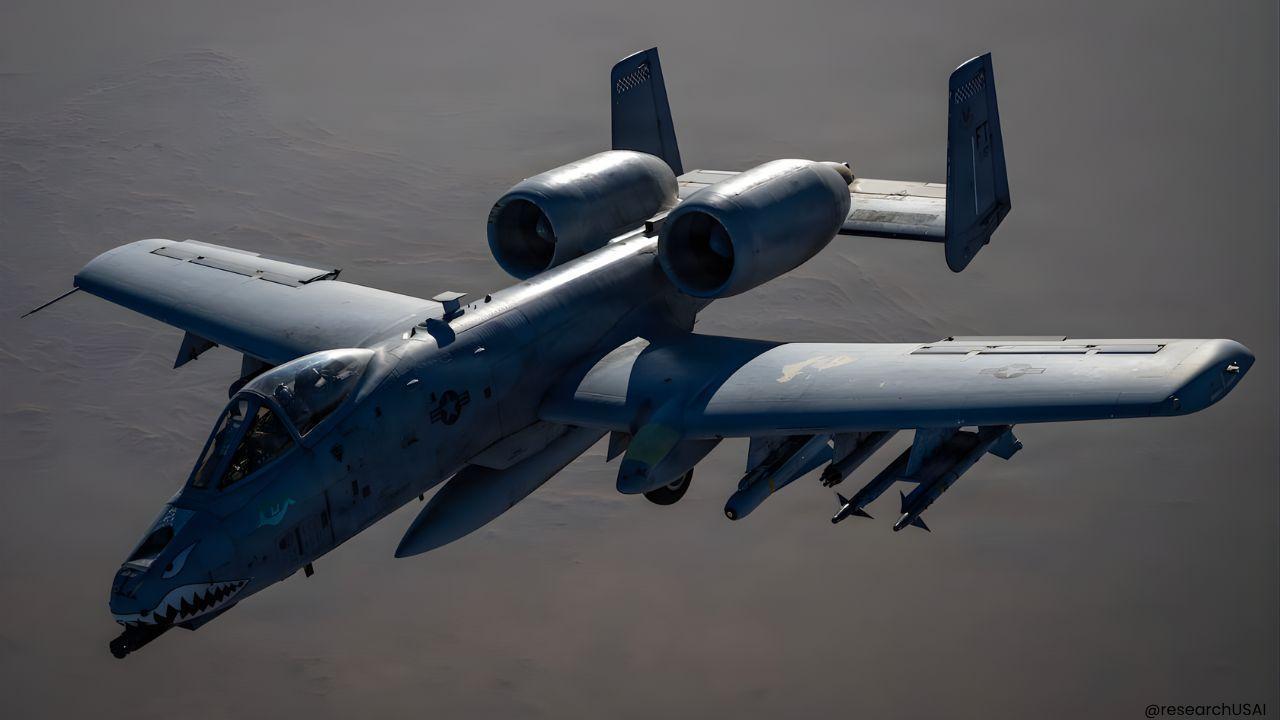
In a powerful display of military intent, the United States has deployed its legendary A-10 Warthog aircraft to actively hunt Iranian boats in the Strait of Hormuz, marking a sharp escalation in one of the world’s most sensitive conflict zones. The move signals a shift from deterrence to direct action as tensions between Washington and Tehran reach a critical point.
Originally designed to destroy tanks on land, the A-10 Warthog is now proving its versatility in maritime warfare. Flying low and slow over the waters of the strait, the aircraft is being used to track and eliminate fast-moving Iranian attack boats that pose a threat to commercial shipping.
Its iconic 30mm cannon and ability to loiter for extended periods make it uniquely suited for targeting small, agile vessels something more advanced fighter jets often struggle to do with the same efficiency.
The Strait of Hormuz is not just a regional chokepoint, it is a lifeline for the global economy, carrying a significant share of the world’s oil supply. Any disruption here has immediate ripple effects across energy markets, trade routes, and geopolitical stability.
With Iran accused of deploying fast attack boats and attempting to disrupt shipping lanes, the situation has already triggered volatility in global oil prices. The US intervention is aimed at restoring safe passage, but it also raises the risk of broader military confrontation.
The deployment of A-10 Warthogs is part of a larger, coordinated offensive involving helicopters, naval forces, and precision strikes. Together, these assets are targeting Iranian vessels, drones, and coastal infrastructure in an effort to dismantle threats and reopen the waterway. This multi-layered strategy reflects a more aggressive posture, with US forces moving deeper into contested zones and increasing operational intensity.
Despite repeated plans to retire the A-10, the aircraft is experiencing a surprising resurgence. Its rugged design, survivability, and unmatched close-range firepower have made it indispensable in this evolving conflict. The current operations highlight a broader lesson in modern warfare—that legacy platforms, when used strategically, can outperform newer technologies in specific scenarios.
As the skies over the Strait of Hormuz grow more crowded with military aircraft, the stakes extend far beyond the region. This is not just a battle for control of a waterway—it is a test of global energy security and geopolitical balance. The return of the A-10 Warthog to active combat is symbolic of a larger reality: in today’s world, even aging war machines can become central players in shaping the future of international conflict.
A-10 Warthog deployment, Strait of Hormuz conflict, US Iran tensions 2026, Iranian fast attack boats, global oil crisis, US airpower strategy, maritime security, Middle East war






Advances in Aerospace Technology and Commercial Aviation Recovery
Insights into breakthrough aerospace technologies and commercial aviation’s recovery amid 2025 chall

Defense Modernization and Strategic Spending Trends
Explore key trends in global defense modernization and strategic military spending shaping 2025 secu

Tens of Thousands Protest in Serbia on Anniversary of Deadly Roof Collapse
Tens of thousands in Novi Sad mark a year since a deadly station roof collapse that killed 16, prote

Canada PM Carney Apologizes to Trump Over Controversial Reagan Anti-Tariff Ad
Canadian PM Mark Carney apologized to President Trump over an Ontario anti-tariff ad quoting Reagan,

The ad that stirred a hornets nest, and made Canadian PM Carney say sorry to Trump
Canadian PM Mark Carney apologizes to US President Trump after a tariff-related ad causes diplomatic

Bengaluru-Mumbai Superfast Train Approved After 30-Year Wait
Railways approves new superfast train connecting Bengaluru and Mumbai, ending a 30-year demand, easi



