Post by : Avinab Raana
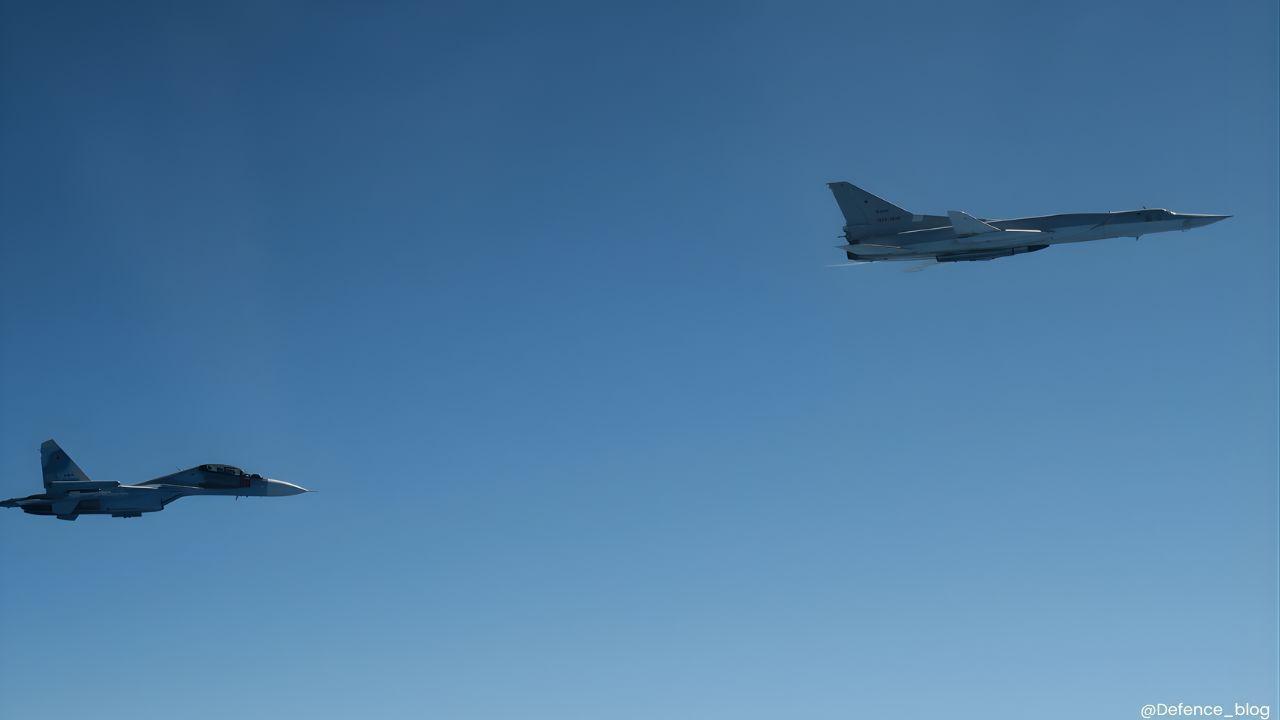
In a dramatic display of military readiness and strategic signaling, Swedish Gripen fighter jets were scrambled to intercept Russian Tu-22M3 strategic bombers flying over the Baltic Sea, an incident that once again highlights the growing tension and heightened vigilance across Europe’s eastern flank. The encounter, which unfolded in one of the most closely monitored air corridors in the world, was not an isolated event but part of a broader pattern of increasingly frequent military activity in the region. As advanced combat aircraft from both sides navigate the same skies, these interceptions are becoming critical moments of real-time deterrence, where every maneuver carries both operational significance and geopolitical weight. For Sweden, now more deeply integrated with NATO’s security framework, such missions are no longer routine, they are a reflection of a rapidly evolving defense landscape where preparedness and precision are paramount.
The Swedish Air Force activated its Quick Reaction Alert (QRA) system after detecting the Russian formation, which included Tu-22M3 long-range bombers escorted by fighter aircraft. Gripen jets were immediately deployed to identify and shadow the aircraft, ensuring that their flight path remained within international airspace and posed no direct threat to Swedish or allied territory. The mission was conducted in close coordination with NATO allies, reinforcing a unified approach to monitoring and managing aerial activity in the Baltic region.This type of interception is a standard but critical procedure designed to maintain situational awareness, assert airspace integrity, and prevent escalation. While no violation of national airspace was reported, the operation underscores the importance of rapid response capabilities in maintaining regional stability.
The Baltic Sea has emerged as one of the most strategically sensitive regions in Europe, serving as a corridor for both NATO and Russian military operations. Russian long-range aviation missions, often involving Tu-22M3 bombers, are frequently conducted over international waters as part of planned exercises. At the same time, NATO and partner nations maintain constant surveillance to ensure these flights do not escalate into potential threats.Recent reports indicate that such missions can last several hours and involve multiple aircraft, including fighter escorts, creating complex aerial scenarios that demand constant monitoring. The proximity of these operations to NATO airspace has made interceptions a near-regular occurrence, reflecting a broader pattern of strategic signaling and military posturing in the region.
The encounter between Sweden’s JAS 39 Gripen and Russia’s Tu-22M3 bomber represents a clash of two very different aviation philosophies. The Gripen, known for its agility, advanced avionics, and rapid deployment capabilities, is designed for quick interception and airspace control. In contrast, the Tu-22M3 is a long-range strategic bomber capable of carrying heavy payloads, including anti-ship and cruise missiles, making it a key asset in Russia’s strategic aviation arsenal. While the bomber itself is not designed for dogfighting, its presence in contested airspace, especially when accompanied by fighter escorts, introduces a complex dynamic that requires careful handling. The role of the intercepting aircraft is not to engage but to identify, shadow, and ensure compliance with international aviation norms, a delicate balance between deterrence and de-escalation.
The interception also highlights the growing importance of NATO’s integrated air policing network. Sweden, working alongside allies such as Denmark and other European nations, is playing an increasingly active role in maintaining security over the Baltic region. Joint operations ensure that responses are swift, coordinated, and consistent, reducing the risk of miscommunication or unintended escalation. This collaborative approach is particularly crucial given the frequency of such encounters. Reports suggest that multiple interceptions of Russian aircraft have taken place within short timeframes, underscoring the persistent nature of military activity in the area and the need for continuous readiness.
Although interceptions like these are often described as routine, their significance cannot be understated. Each mission serves as a real-world test of readiness, coordination, and technological capability. For Sweden, it demonstrates the effectiveness of its air defense systems and its ability to operate seamlessly within a broader NATO framework.At the same time, these encounters send a clear message about deterrence. By maintaining a visible and responsive presence in the skies, NATO and its partners reinforce their commitment to safeguarding airspace and preventing potential incursions.
As Swedish Gripen jets continue to patrol and protect one of Europe’s most sensitive airspaces, the Baltic Sea is fast becoming a defining theater for modern airpower dynamics. This latest interception is not just another military maneuver, it is a reflection of a world where geopolitical tensions increasingly play out in the skies above us. In this high-stakes environment, every flight, every interception, and every coordinated response adds another layer to the evolving narrative of global security. And as these encounters grow more frequent, one thing becomes clear: the future of air defense will be shaped not only by advanced technology, but by the ability of nations to respond swiftly, collaborate effectively, and maintain control in an increasingly contested airspace.
#trending #latest#Gripen #BalticSea #NATOAirPolicing #MilitaryAviation #AirDefense









Advances in Aerospace Technology and Commercial Aviation Recovery
Insights into breakthrough aerospace technologies and commercial aviation’s recovery amid 2025 chall

Defense Modernization and Strategic Spending Trends
Explore key trends in global defense modernization and strategic military spending shaping 2025 secu

Tens of Thousands Protest in Serbia on Anniversary of Deadly Roof Collapse
Tens of thousands in Novi Sad mark a year since a deadly station roof collapse that killed 16, prote

Canada PM Carney Apologizes to Trump Over Controversial Reagan Anti-Tariff Ad
Canadian PM Mark Carney apologized to President Trump over an Ontario anti-tariff ad quoting Reagan,

The ad that stirred a hornets nest, and made Canadian PM Carney say sorry to Trump
Canadian PM Mark Carney apologizes to US President Trump after a tariff-related ad causes diplomatic

Bengaluru-Mumbai Superfast Train Approved After 30-Year Wait
Railways approves new superfast train connecting Bengaluru and Mumbai, ending a 30-year demand, easi



