Post by : Avinab Raana
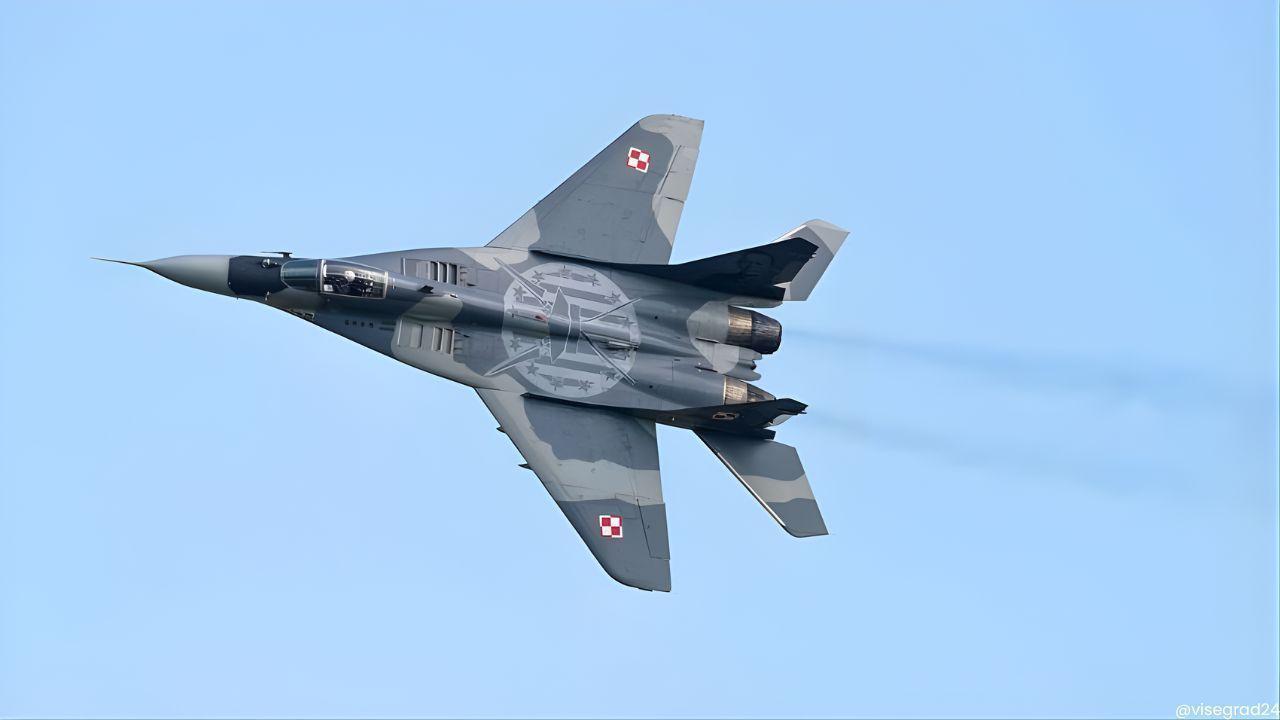
Photo : X / @visegrad24
Military tensions in European airspace resurfaced when Polish fighter jets were scrambled to intercept a Russian reconnaissance aircraft flying over the Baltic Sea. The Polish Air Force deployed MiG-29 fighter jets as part of NATO’s air-policing system to identify and monitor the aircraft approaching sensitive operational zones near allied airspace. While the aircraft remained in international airspace, the interception highlights how closely NATO countries track military aviation activity along their borders. Such responses have become a routine but critical element of maintaining regional security.
The interception was carried out by Poland’s Quick Reaction Alert units, which remain on constant standby to respond to unidentified or unusual aircraft activity near NATO territory. Once the aircraft was detected, Polish MiG-29 fighters were rapidly dispatched to intercept and visually confirm the aircraft’s identity. After approaching the aircraft, the Polish pilots established contact and escorted the reconnaissance plane while monitoring its movement across the Baltic region. These escort missions are designed to ensure that any unidentified aircraft does not pose a threat to national airspace.
The aircraft involved in the interception was identified as a Russian Il-20 reconnaissance plane. This type of aircraft is typically used for intelligence gathering and electronic surveillance operations. Equipped with specialized sensors and monitoring equipment, the aircraft can collect signals intelligence and observe military activity across large areas. Reconnaissance flights of this kind are often conducted near international borders, allowing military forces to monitor communication signals, radar systems, and defense readiness in neighboring regions.
The Baltic Sea has become one of Europe’s most strategically sensitive airspaces. The region lies between several NATO member states and Russia’s military stronghold in Kaliningrad, making it an important corridor for surveillance missions and military patrols. Because of its strategic importance, NATO aircraft frequently conduct air-policing missions to monitor the skies and respond to any unusual or unidentified flights approaching allied airspace. These patrols help maintain situational awareness and prevent potential security incidents.
Encounters between NATO fighter jets and Russian reconnaissance aircraft have become more frequent in recent years. Both sides maintain extensive aerial monitoring operations in the region, leading to periodic intercept missions when military aircraft approach sensitive airspace boundaries. Although these encounters are generally conducted professionally and without escalation, they reflect the continuing geopolitical tension that defines much of the security landscape across Eastern Europe.
The interception over the Baltic Sea serves as another reminder of the delicate balance of power in European airspace. While such operations are part of routine defense procedures, they highlight the ongoing strategic rivalry between NATO and Russia. As surveillance flights and air-policing missions continue, the skies above the Baltic remain one of the most closely monitored regions in the world where every aircraft movement is carefully observed and every response is measured with precision.
#trending #latest, Polish MiG-29 intercept Russian Il-20, Baltic Sea aircraft interception, NATO Russia airspace tensions, Russian reconnaissance aircraft Baltic, Polish Air Force MiG-29 mission, Baltic aerial surveillance incident, NATO air policing Baltic Sea









Advances in Aerospace Technology and Commercial Aviation Recovery
Insights into breakthrough aerospace technologies and commercial aviation’s recovery amid 2025 chall

Defense Modernization and Strategic Spending Trends
Explore key trends in global defense modernization and strategic military spending shaping 2025 secu

Tens of Thousands Protest in Serbia on Anniversary of Deadly Roof Collapse
Tens of thousands in Novi Sad mark a year since a deadly station roof collapse that killed 16, prote

Canada PM Carney Apologizes to Trump Over Controversial Reagan Anti-Tariff Ad
Canadian PM Mark Carney apologized to President Trump over an Ontario anti-tariff ad quoting Reagan,

The ad that stirred a hornets nest, and made Canadian PM Carney say sorry to Trump
Canadian PM Mark Carney apologizes to US President Trump after a tariff-related ad causes diplomatic

Bengaluru-Mumbai Superfast Train Approved After 30-Year Wait
Railways approves new superfast train connecting Bengaluru and Mumbai, ending a 30-year demand, easi



