Post by : Saif
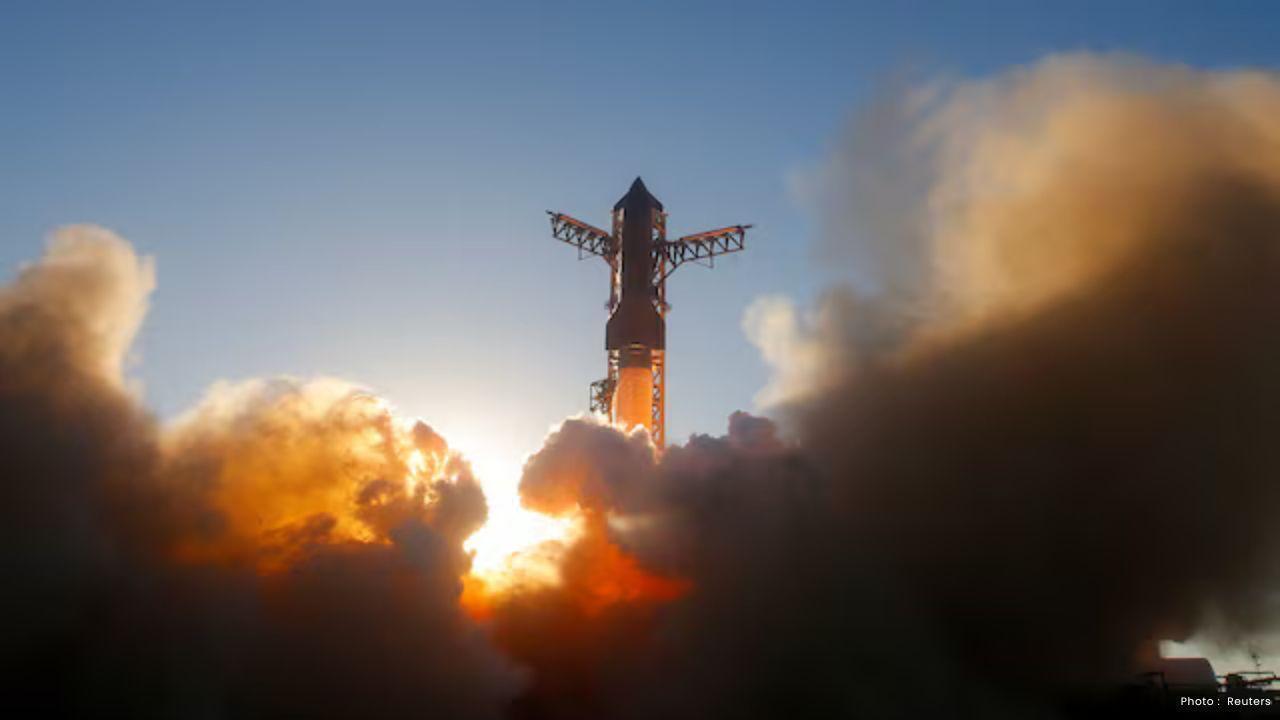
The upcoming public listing of SpaceX is one of the most talked-about financial events in the world. The company, led by Elon Musk, is expected to launch a massive initial public offering (IPO) that could become one of the largest in history.
But behind the excitement, a serious problem is growing. Some private investors who already bought shares linked to SpaceX are now unsure about what they actually own.
SpaceX is still a private company, but over the years, its shares have been traded in private markets. Many investors bought stakes through special funds or secondary deals. These investments allowed people to gain exposure to SpaceX before it officially becomes a public company.
However, as the IPO gets closer, confusion has started to appear. Some investors say they do not clearly understand the structure of their holdings. In simple terms, they are not sure whether they own direct shares in SpaceX or shares in another company that is connected to it.
This confusion comes from the complex way private shares are often sold. In many cases, investors do not buy shares directly from SpaceX. Instead, they invest through special purpose vehicles (SPVs) or funds that hold SpaceX shares on their behalf.
While this system allows more people to invest, it also creates layers that are hard to understand. When an IPO happens, these layers can make it unclear how much ownership an investor truly has.
The situation has become more complicated due to recent changes inside SpaceX. The company completed a major deal by acquiring an artificial intelligence firm, xAI, creating a much larger and more complex business structure.
This merger has added new value to the company, but it has also made it harder for investors to fully understand what they are buying into.
Experts say that some investors may face surprises when the IPO finally happens. The value of their shares, the rights attached to them, and even their ability to sell them may depend on the exact structure of their investment.
Another concern is transparency. In public markets, companies must share detailed financial information. But in private markets, information is often limited. This means that some investors may have made decisions without having a full picture.
The expected size of the IPO adds to the pressure. Reports suggest that SpaceX could be valued at more than $1 trillion, possibly even reaching $1.5 trillion or higher.
Such a large offering attracts huge interest, but it also increases the risks if investors do not fully understand what they are buying.
There is also the issue of share structure. Some reports indicate that SpaceX may use a dual-class share system. This means that certain shares, likely held by founders, will have more voting power than others.
If this happens, ordinary investors may have less control over company decisions, even if they own shares.
For many investors, the main attraction of SpaceX is its strong growth story. The company has become a leader in space launches and satellite services, especially through its Starlink internet network. It is also exploring new areas like space-based computing and artificial intelligence.
But growth potential does not remove the need for clarity.
Financial experts warn that investors should fully understand their investments before the IPO. They should know whether they own direct shares, indirect shares, or just a stake in a fund that holds those shares.
This situation also highlights a larger issue in today’s financial world. Private markets are growing fast, and more people are investing in companies before they go public. But as these markets expand, the risks of confusion and misunderstanding also increase.
The SpaceX case is a reminder that excitement should not replace caution. Big opportunities often come with complex details, and ignoring those details can lead to unexpected outcomes.
As the IPO approaches, there will likely be more questions than answers. Regulators, companies, and investors will all need to focus on one key goal—clear and honest communication.
In the end, trust is the foundation of any financial system. Without it, even the biggest IPO in history could leave many investors uncertain about where they stand.
#trending #latest #SpaceX #ElonMusk #IPO #StockMarket #Investing #FinanceNews #GlobalEconomy #BreakingNews








Advances in Aerospace Technology and Commercial Aviation Recovery
Insights into breakthrough aerospace technologies and commercial aviation’s recovery amid 2025 chall

Defense Modernization and Strategic Spending Trends
Explore key trends in global defense modernization and strategic military spending shaping 2025 secu

Tens of Thousands Protest in Serbia on Anniversary of Deadly Roof Collapse
Tens of thousands in Novi Sad mark a year since a deadly station roof collapse that killed 16, prote

Canada PM Carney Apologizes to Trump Over Controversial Reagan Anti-Tariff Ad
Canadian PM Mark Carney apologized to President Trump over an Ontario anti-tariff ad quoting Reagan,

The ad that stirred a hornets nest, and made Canadian PM Carney say sorry to Trump
Canadian PM Mark Carney apologizes to US President Trump after a tariff-related ad causes diplomatic

Bengaluru-Mumbai Superfast Train Approved After 30-Year Wait
Railways approves new superfast train connecting Bengaluru and Mumbai, ending a 30-year demand, easi



