Post by : Saif
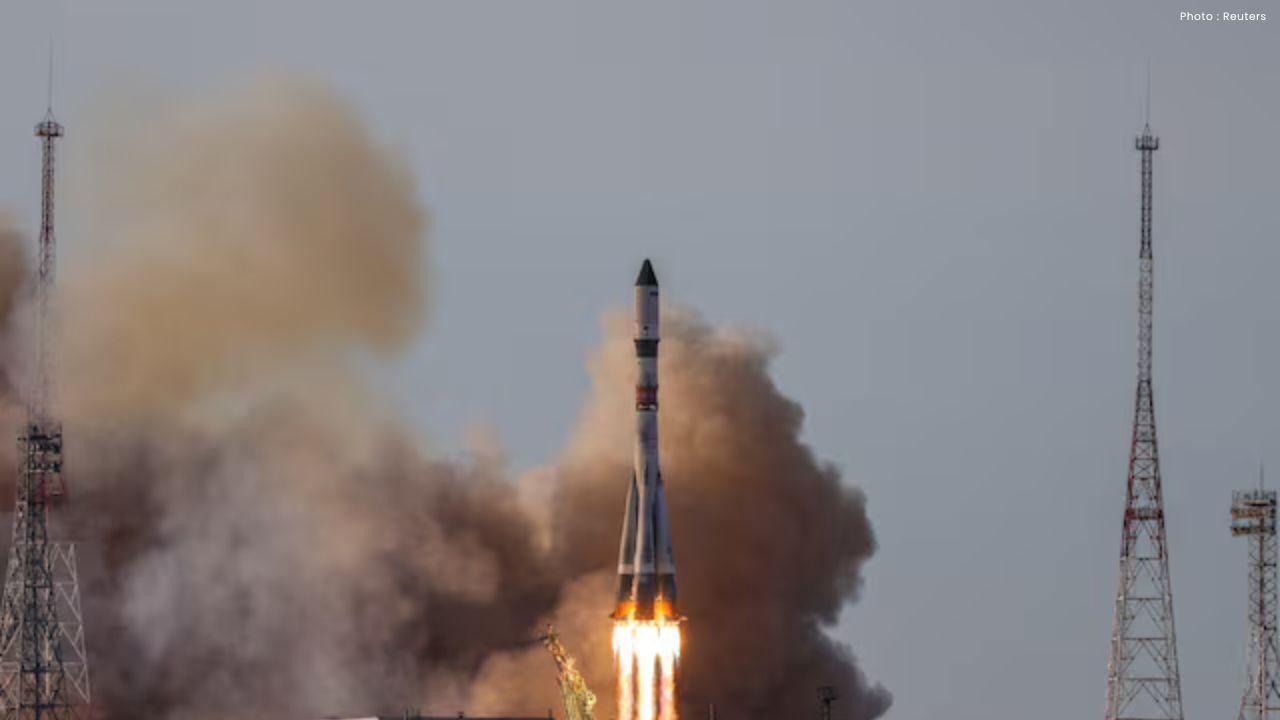
A recent space mission has shown once again that even advanced technology can face unexpected problems. A Russian cargo spacecraft had to switch from automatic to manual docking with the International Space Station after a technical issue was found in one of its antennas.
The spacecraft, known as Progress MS-33, was launched using a Soyuz rocket from Kazakhstan. Its mission was to deliver essential supplies to the space station, including food, water, fuel, and oxygen for the astronauts on board. However, soon after launch, engineers discovered that one of the antennas used for automatic docking had not worked properly.
This antenna is part of a system that helps the spacecraft connect with the space station automatically. When such systems fail, astronauts must rely on manual control to complete the docking process. In this case, the docking was planned to be carried out manually by a trained cosmonaut aboard the station.
Manual docking is not new in space missions. It is part of astronaut training, and crews practice it regularly as a backup method. Even though it is more challenging than automatic docking, it is considered safe when handled by experienced operators.
Despite the antenna problem, officials confirmed that all other systems on the spacecraft were working normally. This allowed the mission to continue without major delays. Engineers also continued to study the issue while the spacecraft was on its way to the station.
The cargo onboard is very important for the crew living in space. The International Space Station depends on regular supply missions to support daily life and scientific work. These missions carry not only basic items like food and water but also equipment for experiments and station maintenance.
At the time of the incident, seven crew members were living on the space station. They included astronauts from different countries, showing how space exploration is a global effort. Missions like this are a result of cooperation between space agencies from around the world.
From a technical point of view, the problem highlights the importance of backup systems in space missions. The automatic docking system, often supported by antenna-based guidance, is designed to make the process smooth and precise. But when something goes wrong, manual control becomes the only option.
Such situations are not very rare. In the past, similar problems with docking systems or antennas have forced crews to switch to manual mode. This shows that even with modern technology, space travel still carries risks and requires human skill and quick decision-making.
From an editorial point of view, this incident reminds us that space missions depend on both machines and humans. While technology can handle many tasks, human training and experience remain critical in dealing with unexpected challenges.
It also shows the level of preparation involved in space programs. Astronauts are trained for many possible scenarios, including equipment failure. This training ensures that even when things do not go as planned, missions can still succeed.
Another important point is the reliability of international cooperation in space. The International Space Station is one of the best examples of countries working together for science and exploration. Even during technical issues, teams from different nations coordinate closely to keep operations running smoothly.
In conclusion, the antenna problem faced by the Russian spacecraft is a reminder of the challenges of space travel. While the issue forced a change in plan, the availability of manual docking ensured that the mission could continue safely.
The event shows that space exploration is not just about advanced machines but also about skilled people who can adapt and respond when problems arise. As missions become more complex in the future, this balance between technology and human ability will remain essential.
#trending #latest #SpaceNews #ISS #Roscosmos #SpaceMission #Astronauts #Science #Technology #BreakingNews #armustnews






Advances in Aerospace Technology and Commercial Aviation Recovery
Insights into breakthrough aerospace technologies and commercial aviation’s recovery amid 2025 chall

Defense Modernization and Strategic Spending Trends
Explore key trends in global defense modernization and strategic military spending shaping 2025 secu

Tens of Thousands Protest in Serbia on Anniversary of Deadly Roof Collapse
Tens of thousands in Novi Sad mark a year since a deadly station roof collapse that killed 16, prote

Canada PM Carney Apologizes to Trump Over Controversial Reagan Anti-Tariff Ad
Canadian PM Mark Carney apologized to President Trump over an Ontario anti-tariff ad quoting Reagan,

The ad that stirred a hornets nest, and made Canadian PM Carney say sorry to Trump
Canadian PM Mark Carney apologizes to US President Trump after a tariff-related ad causes diplomatic

Bengaluru-Mumbai Superfast Train Approved After 30-Year Wait
Railways approves new superfast train connecting Bengaluru and Mumbai, ending a 30-year demand, easi



