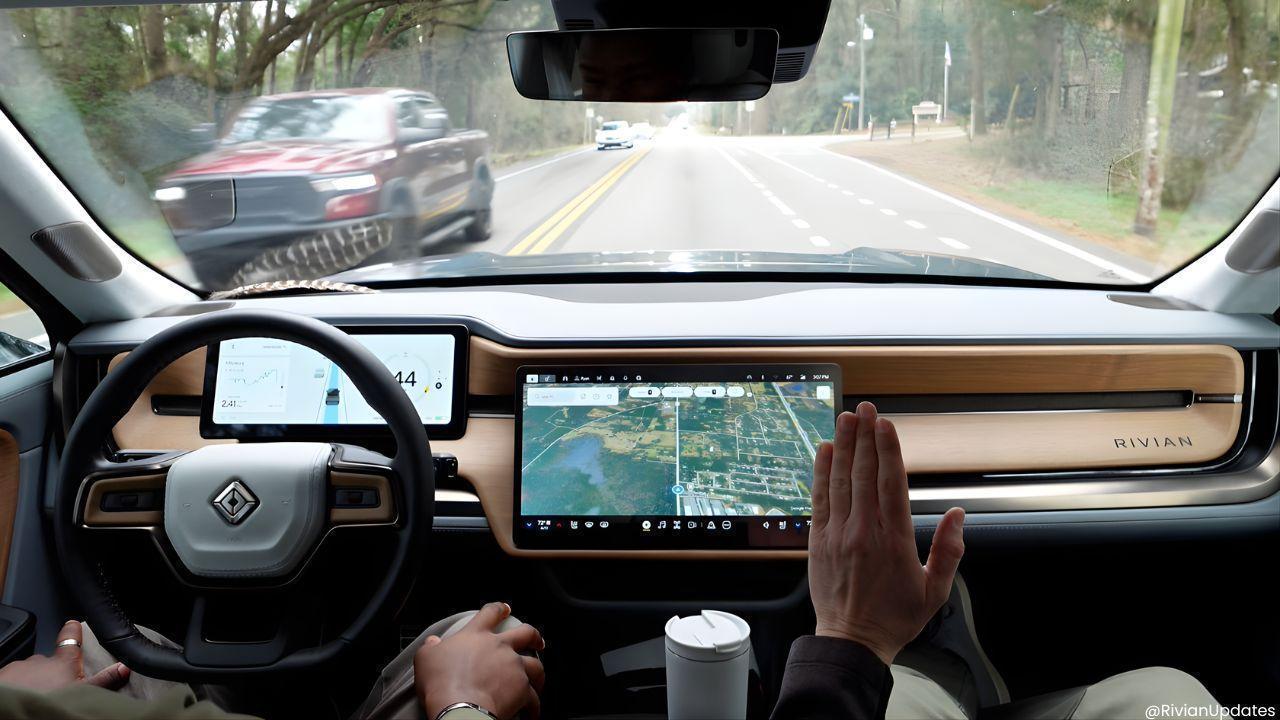
Post by : Avinab Raana
Photo : X / @RivianUpdates
In a move that reflects the evolving priorities of the electric vehicle industry, Rivian has delayed the rollout of its much-anticipated AI assistant, choosing instead to focus on delivering a stability-driven over-the-air (OTA) update. This decision signals a broader industry trend where reliability and user experience are taking precedence over rapid feature expansion. As EVs become increasingly software-defined, the importance of seamless, bug-free performance is becoming a key differentiator for automakers aiming to build long-term customer trust.
The latest update from Rivian is centered on improving system stability, addressing bugs, and enhancing overall vehicle performance. Rather than introducing new headline features, the company is refining the core software architecture to ensure smoother operation across its vehicles.
This approach highlights the complexity of modern EV systems, where software controls everything from battery management to infotainment and driver assistance. Even minor glitches can impact user experience, making stability-focused updates essential for maintaining brand credibility and customer satisfaction.
Rivian’s decision to postpone its AI assistant rollout underscores the challenges of integrating advanced artificial intelligence into vehicle ecosystems. AI assistants are expected to handle voice commands, navigation, and personalized user interactions, requiring high levels of accuracy and reliability.
By delaying the feature, Rivian is signaling that it is unwilling to compromise on quality. In a market where early deployment of incomplete features can lead to negative user feedback, this cautious approach may ultimately strengthen the brand’s reputation for delivering polished and dependable technology.
The Rivian update highlights a fundamental shift in the automotive industry vehicles are no longer defined solely by hardware, but by the software that powers them. Over-the-air updates allow automakers to continuously improve vehicles after purchase, creating an ongoing relationship between the brand and the customer.
This capability is transforming how consumers perceive vehicle ownership. Instead of static products, EVs are becoming dynamic platforms that evolve over time, with new features, improvements, and optimizations delivered remotely.
The delay of the AI assistant also reflects the delicate balance automakers must strike between innovation and usability. While cutting-edge features can generate excitement, they must be backed by reliable performance to ensure a positive user experience.
Rivian’s focus on stability suggests a long-term strategy aimed at building a strong foundation before introducing more advanced capabilities. This approach may slow down feature rollouts in the short term but can lead to more robust and sustainable innovation in the long run.
Rivian’s latest update serves as a reminder that the future of mobility is as much about software as it is about hardware. As automakers race to integrate AI, connectivity, and advanced digital systems, the ability to deliver stable and reliable software will become a critical factor in determining success.
In this evolving landscape, Rivian’s decision to prioritize stability over speed may prove to be a strategic advantage. It reflects a growing understanding that in the world of software-defined vehicles, trust is built not just through innovation, but through consistency and performance.
As the industry continues to evolve, the real winners will be those who can combine cutting-edge technology with a seamless user experience—and Rivian’s latest move suggests it is aiming to be one of them.
#trending #latest,#Rivian #OTAUpdate #ElectricVehicles #AIAssistant #EVSoftware










Advances in Aerospace Technology and Commercial Aviation Recovery
Insights into breakthrough aerospace technologies and commercial aviation’s recovery amid 2025 chall

Defense Modernization and Strategic Spending Trends
Explore key trends in global defense modernization and strategic military spending shaping 2025 secu

Tens of Thousands Protest in Serbia on Anniversary of Deadly Roof Collapse
Tens of thousands in Novi Sad mark a year since a deadly station roof collapse that killed 16, prote

Canada PM Carney Apologizes to Trump Over Controversial Reagan Anti-Tariff Ad
Canadian PM Mark Carney apologized to President Trump over an Ontario anti-tariff ad quoting Reagan,

The ad that stirred a hornets nest, and made Canadian PM Carney say sorry to Trump
Canadian PM Mark Carney apologizes to US President Trump after a tariff-related ad causes diplomatic

Bengaluru-Mumbai Superfast Train Approved After 30-Year Wait
Railways approves new superfast train connecting Bengaluru and Mumbai, ending a 30-year demand, easi



