Post by : Avinab Raana
Photo : X / @tanjooilong
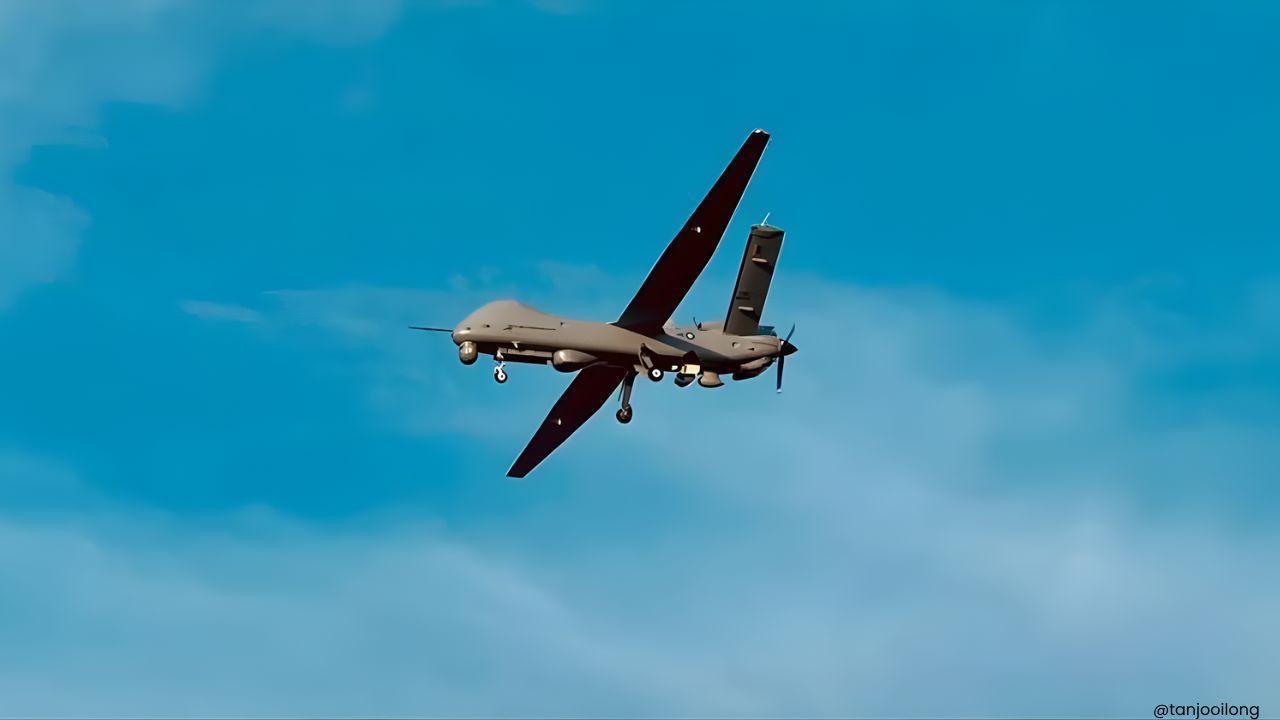
Malaysia has marked a major milestone in its defense aviation journey with the successful first test flight of the ANKA unmanned aerial vehicle (UAV), signaling a decisive shift toward modern, technology-driven air power. Conducted from Labuan Air Base, the three-hour maiden flight represents far more than a technical achievement, it reflects the country’s broader ambition to strengthen surveillance, intelligence, and operational readiness in an increasingly complex geopolitical environment. As nations across the globe accelerate investments in unmanned systems, Malaysia’s entry into this space underscores the growing importance of drones as core assets in modern aviation strategy.
The ANKA platform, developed by Turkish Aerospace Industries, belongs to the Medium Altitude Long Endurance (MALE) class of UAVs, designed for extended missions that require persistent monitoring and intelligence gathering. With the ability to remain airborne for over 20 hours and operate in all weather conditions, the UAV significantly enhances Malaysia’s surveillance capabilities across critical regions.
Its deployment is particularly strategic for monitoring areas such as the South China Sea, where maritime security and territorial awareness are of paramount importance. The UAV’s endurance and advanced sensor systems enable continuous tracking of activities, providing real-time intelligence that strengthens national defense operations.
The successful test flight marks a critical step in enhancing Malaysia’s Intelligence, Surveillance, Target Acquisition, and Reconnaissance (ISTAR) capabilities. These capabilities are increasingly vital in modern warfare, where information dominance often determines operational success.
By integrating UAVs into its defense framework, Malaysia is moving toward a more data-driven approach to security, where aerial intelligence supports faster decision-making and more precise operations. This transition reflects a broader global trend where unmanned systems are becoming indispensable tools for both military and strategic surveillance missions.
The maiden flight was not just a demonstration of technology but also a testament to coordinated efforts across multiple agencies and defense units. The operation involved collaboration between air force command structures, regulatory authorities, and technical agencies, ensuring that all aspects of the mission—from airspace management to meteorological support were executed seamlessly.
Such coordination highlights the complexity of integrating new aerial platforms into existing defense systems, where success depends as much on operational synergy as on technological capability.
The ANKA UAV program is part of Malaysia’s long-term defense modernization strategy under its national development framework. The acquisition of these systems reflects a proactive approach to strengthening military capabilities in response to evolving regional dynamics.
With plans to deploy multiple units, the country is building a scalable UAV ecosystem that can support a wide range of missions, from maritime surveillance to border security and disaster response. This expansion is expected to enhance operational flexibility and improve the overall effectiveness of Malaysia’s armed forces.
The successful test flight of the ANKA UAV underscores a larger transformation in the aviation industry, where unmanned systems are redefining traditional concepts of air power. Unlike conventional aircraft, UAVs offer extended endurance, reduced operational risk, and the ability to operate in high-threat environments without endangering human lives.
This shift is not limited to defense. It is influencing broader aerospace innovation, including autonomous flight systems, advanced sensors, and data-driven operations. As these technologies continue to evolve, UAVs are expected to play an increasingly central role in both military and civilian aviation applications.
Malaysia’s first ANKA UAV test flight represents more than a milestone, it is a signal of the country’s intent to position itself at the forefront of next-generation aviation capabilities. As global competition intensifies and technological advancements accelerate, the ability to adopt and integrate advanced systems will define national strength in the aerospace domain.
This development marks the beginning of a new chapter, where unmanned systems become a cornerstone of Malaysia’s defense strategy. And as these capabilities expand, the skies above the region are set to become smarter, more connected, and increasingly driven by innovation.
#trending #latest,#ANKAUAV #MalaysiaAirForce #DroneTechnology #DefenseAviation #AerospaceInnovation






Advances in Aerospace Technology and Commercial Aviation Recovery
Insights into breakthrough aerospace technologies and commercial aviation’s recovery amid 2025 chall

Defense Modernization and Strategic Spending Trends
Explore key trends in global defense modernization and strategic military spending shaping 2025 secu

Tens of Thousands Protest in Serbia on Anniversary of Deadly Roof Collapse
Tens of thousands in Novi Sad mark a year since a deadly station roof collapse that killed 16, prote

Canada PM Carney Apologizes to Trump Over Controversial Reagan Anti-Tariff Ad
Canadian PM Mark Carney apologized to President Trump over an Ontario anti-tariff ad quoting Reagan,

The ad that stirred a hornets nest, and made Canadian PM Carney say sorry to Trump
Canadian PM Mark Carney apologizes to US President Trump after a tariff-related ad causes diplomatic

Bengaluru-Mumbai Superfast Train Approved After 30-Year Wait
Railways approves new superfast train connecting Bengaluru and Mumbai, ending a 30-year demand, easi



