Post by : Avinab Raana
Photo : X / Splash
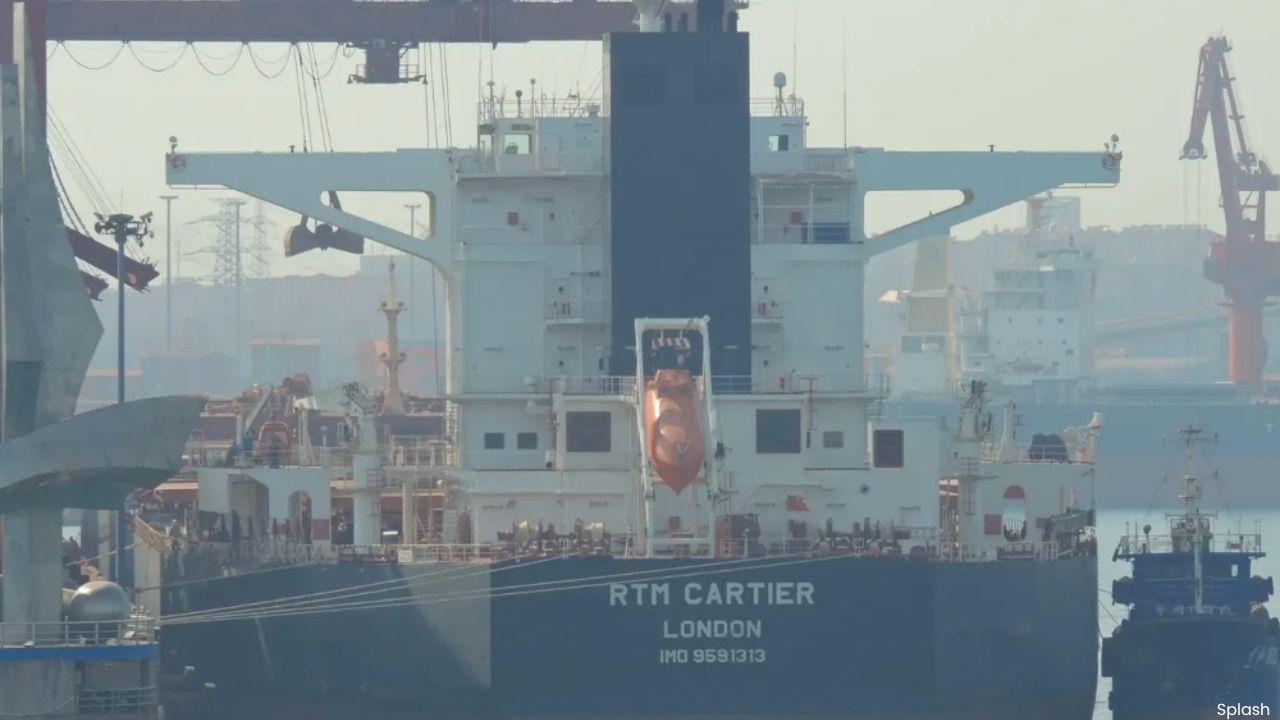
In a development that is drawing significant attention across the global shipping industry, a vessel sale linked to Rio Tinto has emerged as a defining moment for the dry bulk market, offering a clear window into how major industry players are recalibrating their strategies amid evolving trade dynamics. This transaction is not just about the sale of a ship. It is a reflection of broader changes taking place within bulk commodity transportation, where asset ownership, chartering strategies, and capital allocation are being reassessed in response to fluctuating demand and market uncertainty. As one of the world’s largest mining companies, Rio Tinto’s involvement adds weight to the deal, signaling that even industrial giants are actively adjusting their shipping exposure to align with new economic realities.
The sale highlights a growing trend among large commodity players to shift toward asset-light models, where owning vessels is increasingly seen as less critical compared to chartering capacity as needed. For companies like Rio Tinto, which rely heavily on shipping to move raw materials such as iron ore, the flexibility offered by chartering allows them to adapt quickly to changes in demand without being tied to long-term asset ownership risks. This strategic pivot reflects a broader industry movement where operational agility is being prioritized over traditional ownership models, enabling companies to optimize costs and reduce exposure to volatile shipping cycles.
The timing of this sale is particularly significant given the current state of the dry bulk market, which is navigating a complex mix of demand signals. While certain commodities continue to drive steady shipping volumes, others are experiencing fluctuations due to economic slowdowns, shifts in industrial activity, and changing global trade patterns. This uneven demand environment has made it increasingly challenging for shipowners to predict long-term market conditions, prompting many to reassess their fleet strategies. Against this backdrop, transactions like the Rio Tinto-linked sale serve as indicators of how market participants are positioning themselves for both short-term resilience and long-term sustainability.
Another key takeaway from the deal is how vessel valuations are being shaped by current market conditions. Unlike the tanker segment, which has seen a surge in asset prices, the dry bulk sector is experiencing a more balanced and at times cautious approach to valuations. Buyers are carefully assessing earnings potential, operational costs, and future demand before committing to acquisitions.
This cautious optimism reflects a market that is neither in decline nor in boom mode but is instead transitioning toward a more stable and disciplined phase. For investors and operators alike, this creates opportunities to acquire assets at reasonable valuations while preparing for potential market upswings.
The ripple effects of this transaction extend beyond a single vessel or company. It underscores how interconnected the shipping industry is with global commodity markets, where decisions made by mining giants, energy companies, and industrial players directly influence shipping demand and fleet dynamics. As these industries adapt to economic shifts, their strategies inevitably reshape the maritime landscape.
For shipowners and operators, this means staying agile and responsive to changes in cargo flows, trade routes, and chartering patterns. The ability to align fleet strategies with evolving market conditions will be crucial in maintaining competitiveness in an increasingly dynamic environment.
The Rio Tinto-linked vessel sale stands as a powerful reminder that the dry bulk market is at a pivotal moment, where traditional models are being redefined and new strategies are taking shape. It highlights a sector that is moving toward greater efficiency, flexibility, and strategic clarity, even as it navigates ongoing uncertainties.
As global trade continues to evolve, the decisions made today whether in asset ownership, fleet management, or investment strategy will determine the future trajectory of the dry bulk industry. This deal is not just a transaction; it is a signal of where the market is heading, offering valuable insights into the next phase of maritime trade and the forces that will shape it.
#trending #latest#DryBulkMarket #RioTinto #ShippingTrends #BulkCarriers #MaritimeIndustry









Advances in Aerospace Technology and Commercial Aviation Recovery
Insights into breakthrough aerospace technologies and commercial aviation’s recovery amid 2025 chall

Defense Modernization and Strategic Spending Trends
Explore key trends in global defense modernization and strategic military spending shaping 2025 secu

Tens of Thousands Protest in Serbia on Anniversary of Deadly Roof Collapse
Tens of thousands in Novi Sad mark a year since a deadly station roof collapse that killed 16, prote

Canada PM Carney Apologizes to Trump Over Controversial Reagan Anti-Tariff Ad
Canadian PM Mark Carney apologized to President Trump over an Ontario anti-tariff ad quoting Reagan,

The ad that stirred a hornets nest, and made Canadian PM Carney say sorry to Trump
Canadian PM Mark Carney apologizes to US President Trump after a tariff-related ad causes diplomatic

Bengaluru-Mumbai Superfast Train Approved After 30-Year Wait
Railways approves new superfast train connecting Bengaluru and Mumbai, ending a 30-year demand, easi



