Post by : Saif
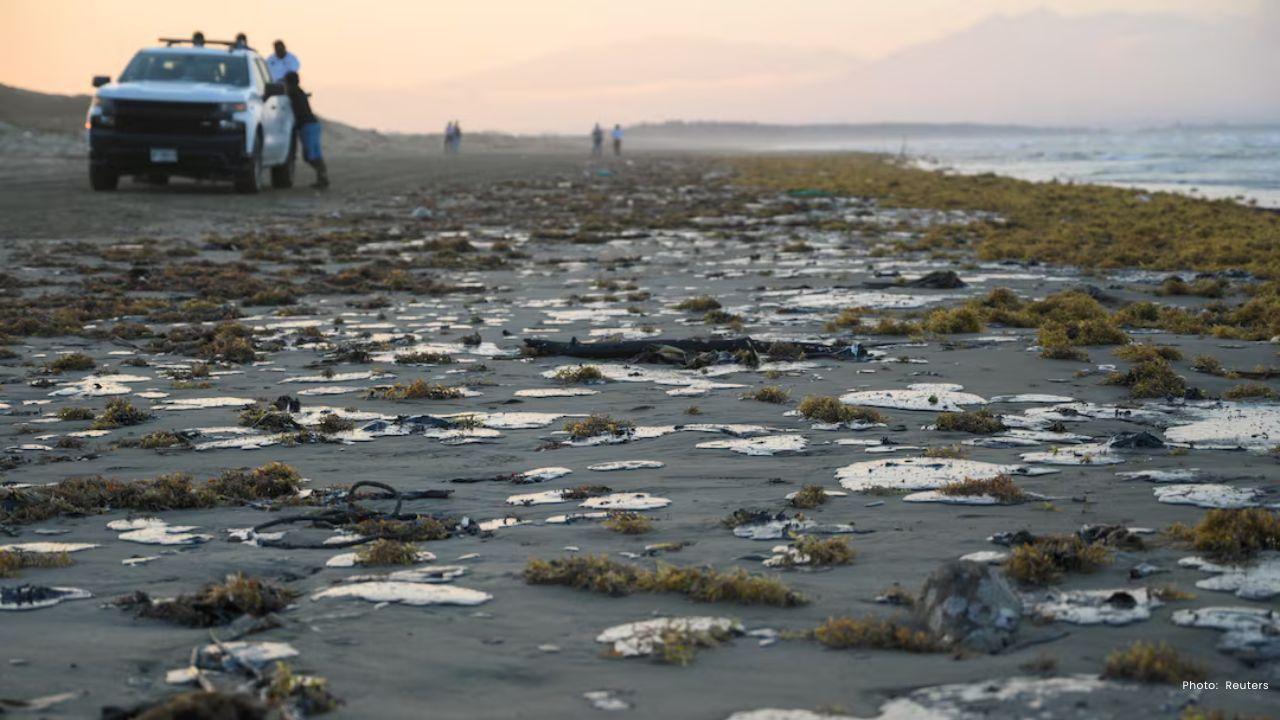
A recent oil spill along the coast of Mexico’s Veracruz state has caused serious problems for local communities that depend on fishing and tourism. Residents say oil has spread across beaches and into the sea, damaging fishing equipment and raising fears that nearby lagoons used for fish and shrimp farming could become polluted.
The spill was first noticed in early March along parts of the Gulf of Mexico coastline. Fishermen and villagers in small coastal communities such as Jicacal and Las Barrillas reported seeing black tar-like oil covering sections of the beach and floating in the water.
For many families in these villages, fishing is the main source of income. Local fishermen say the oil has already damaged their work. Nets used to catch fish have been coated with thick oil, making them difficult or impossible to use. One fisherman described how they went out to sea as usual, only to discover that their fishing nets had become covered with oil instead of fish.
The situation has forced some fishermen to stop working temporarily. Without clean water and functioning equipment, it becomes hard for them to continue their daily activities. For communities that depend heavily on the ocean for food and income, even a short disruption can create financial stress.
Residents are also worried about the nearby lagoon systems where fish and shrimp are farmed. These lagoons are important not only for local food production but also for small businesses that sell seafood to nearby towns and cities. If the oil reaches these waters, it could damage fish stocks and harm the entire local economy.
In response to the spill, local residents have begun organizing their own cleanup efforts. Groups of volunteers have been working together to remove hardened tar and oil from the beaches using basic tools and protective equipment. The cleanup is difficult because the oil has spread across long stretches of coastline.
Despite these efforts, many residents say the work is slow and challenging. Oil can easily sink into sand and rocks, making it hard to remove completely. Environmental experts often warn that even after visible oil is cleaned from beaches, traces can remain in the environment for months or even years.
Authorities have not yet confirmed the exact cause of the spill. Mexico’s state-owned oil company, Pemex, said there has been no evidence of leaks or spills from its facilities in the area.
However, the region is known for heavy oil activity both on land and offshore. Veracruz is one of Mexico’s most important energy regions, with pipelines, refineries, and offshore drilling operations located along the Gulf coast. Because of this, environmental groups often monitor the area closely for signs of pollution.
An environmental organization called the Mexican Center for Environmental Law reported that more than a dozen spill sites have been identified along beaches in Veracruz and neighboring Tabasco since the beginning of March.
These findings suggest that the problem may be more widespread than initially thought. Investigators are now trying to determine whether the oil came from a pipeline leak, offshore drilling activity, or another source.
The spill has also affected tourism in the region. Coastal towns such as Las Barrillas attract visitors who come to enjoy the beaches, seafood restaurants, and boating activities. When beaches are covered with oil, tourists often cancel their trips, which means hotels, restaurants, and local businesses lose income.
Local tourism operators say they are worried about the long-term impact on the area’s reputation. Even after cleanup efforts are completed, it may take time for travelers to feel confident about returning to the beaches.
Environmental problems linked to oil spills can also harm wildlife. Birds, fish, and marine animals are especially vulnerable when oil spreads through coastal ecosystems. Oil can stick to feathers and fur, making it difficult for animals to move or stay warm. It can also poison marine life when it enters the water.
The Gulf of Mexico has experienced several major oil spills in the past, which have shown how long recovery can take. In many cases, governments and companies must spend years cleaning polluted areas and restoring damaged ecosystems.
For now, residents of Veracruz are focusing on protecting their communities and cleaning the beaches as much as possible. Fishermen, volunteers, and local officials continue to work together to remove oil and protect nearby lagoons.
Many residents say they hope authorities will quickly determine the source of the spill and take steps to prevent similar incidents in the future. Environmental groups are also calling for stronger monitoring and faster responses to oil leaks in coastal regions.
The incident in Veracruz highlights the challenges faced by communities that live close to major energy infrastructure. While oil production plays an important role in national economies, accidents and pollution can have serious consequences for people who depend on the natural environment for their livelihoods.
For fishermen in the small villages along the Gulf coast, the sea is more than just a workplace. It is the foundation of their culture, food supply, and family income. As they work to clean their beaches and protect their waters, they hope the damage caused by the spill can be repaired and that their communities can return to normal life.
#trending #latest #Mexico #Veracruz #OilSpill #EnvironmentalDisaster #FishingCommunities #ClimateAndEnergy #MarinePollution #GulfOfMexico #Sustainability #armustnews








Advances in Aerospace Technology and Commercial Aviation Recovery
Insights into breakthrough aerospace technologies and commercial aviation’s recovery amid 2025 chall

Defense Modernization and Strategic Spending Trends
Explore key trends in global defense modernization and strategic military spending shaping 2025 secu

Tens of Thousands Protest in Serbia on Anniversary of Deadly Roof Collapse
Tens of thousands in Novi Sad mark a year since a deadly station roof collapse that killed 16, prote

Canada PM Carney Apologizes to Trump Over Controversial Reagan Anti-Tariff Ad
Canadian PM Mark Carney apologized to President Trump over an Ontario anti-tariff ad quoting Reagan,

The ad that stirred a hornets nest, and made Canadian PM Carney say sorry to Trump
Canadian PM Mark Carney apologizes to US President Trump after a tariff-related ad causes diplomatic

Bengaluru-Mumbai Superfast Train Approved After 30-Year Wait
Railways approves new superfast train connecting Bengaluru and Mumbai, ending a 30-year demand, easi



