Post by : Saif
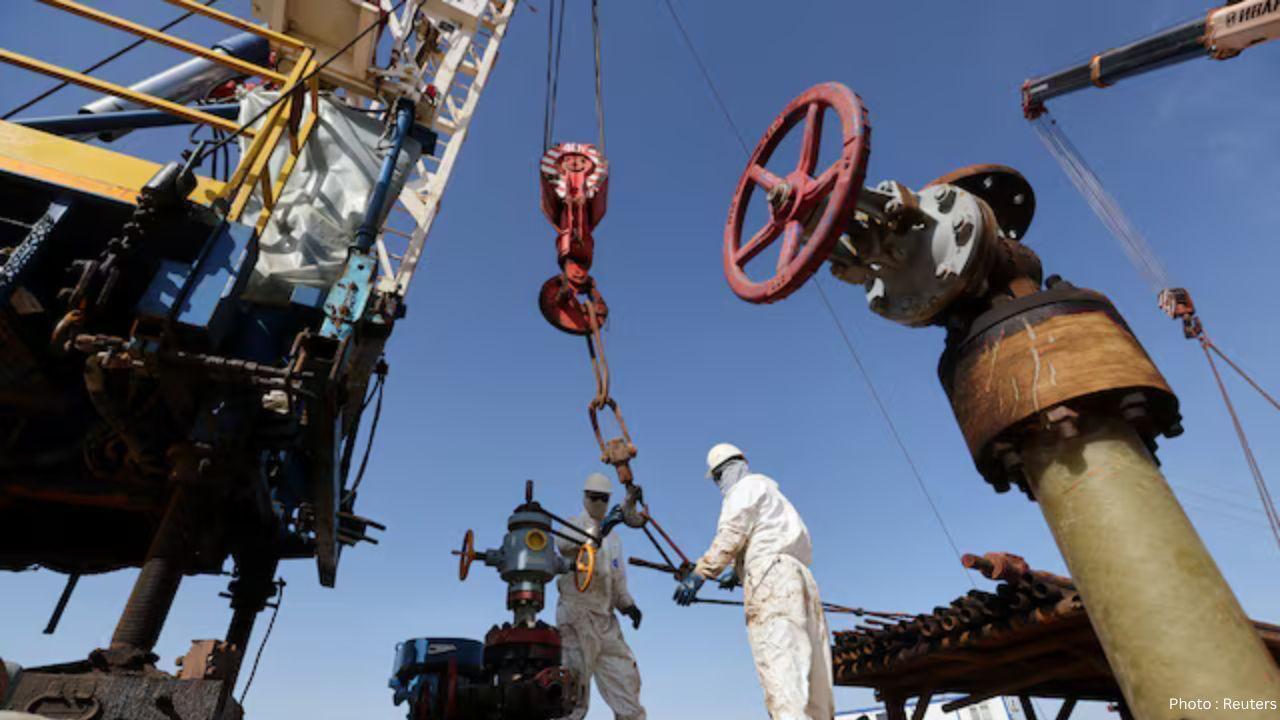
Global oil prices rose sharply on Wednesday after renewed military tensions involving the United States, Iran and Saudi Arabia raised concerns about potential disruptions to energy supplies from the Middle East.
Brent crude futures climbed 3.9% to $87.39 per barrel, while U.S. West Texas Intermediate (WTI) crude gained 3.8% to $82.31 per barrel, reflecting growing uncertainty across global energy markets.
Oil markets reacted after reports of joint military strikes by the United States and Saudi Arabia against targets in Iraq, followed by Iran launching ballistic missiles toward U.S. military positions in the region.
According to U.S. officials, American forces intercepted the incoming missiles, describing the launch as an attempted surprise attack. Iran's Revolutionary Guards later said they had fired ballistic missiles targeting a U.S. air base and a military command facility in Jordan.
Saudi Arabia also announced that, in coordination with U.S. forces, it carried out targeted strikes against Iran-backed groups in Iraq following drone attacks aimed at Saudi oil infrastructure.
The latest developments have increased concerns that the conflict could further threaten energy facilities and key oil transport routes in the Middle East.
Oil prices also received support from lower U.S. crude stockpiles.
Market sources, citing data from the American Petroleum Institute (API), said U.S. crude inventories declined by approximately 3.3 million barrels during the week ending July 24. Investors are now awaiting official inventory figures from the U.S. Energy Information Administration (EIA) for further confirmation.
Lower inventories generally indicate stronger demand or tighter supply, both of which tend to support higher crude prices.
Read more: Oil Prices Head for Weekly Gain as Middle East Tensions Threaten Global Supply
Another factor supporting oil prices is growing speculation that OPEC+ could pause planned oil production increases for three months beginning in October after completing the scheduled return of previously reduced output.
A delay in additional production would likely tighten global supply, providing further upward pressure on crude prices if demand remains stable.
Energy analysts say investors are closely watching military developments across the Middle East, as any escalation involving major oil-producing countries could significantly affect global energy supplies and fuel prices.
With geopolitical risks increasing, lower U.S. inventories and uncertainty surrounding OPEC+ production policy, oil markets are expected to remain highly volatile in the coming days.
#trending #latest #OilPrices #BrentCrude #WTI #USIran #MiddleEast #Iraq #SaudiArabia #GlobalOil #EnergyMarkets #CrudeOil #BreakingNews #WorldNews #Geopolitics #OPECPlus #BusinessNews #OilMarket #Iran








Advances in Aerospace Technology and Commercial Aviation Recovery
Insights into breakthrough aerospace technologies and commercial aviation’s recovery amid 2025 chall

Defense Modernization and Strategic Spending Trends
Explore key trends in global defense modernization and strategic military spending shaping 2025 secu

Tens of Thousands Protest in Serbia on Anniversary of Deadly Roof Collapse
Tens of thousands in Novi Sad mark a year since a deadly station roof collapse that killed 16, prote

Canada PM Carney Apologizes to Trump Over Controversial Reagan Anti-Tariff Ad
Canadian PM Mark Carney apologized to President Trump over an Ontario anti-tariff ad quoting Reagan,

The ad that stirred a hornets nest, and made Canadian PM Carney say sorry to Trump
Canadian PM Mark Carney apologizes to US President Trump after a tariff-related ad causes diplomatic

Bengaluru-Mumbai Superfast Train Approved After 30-Year Wait
Railways approves new superfast train connecting Bengaluru and Mumbai, ending a 30-year demand, easi



