Post by : Avinab Raana
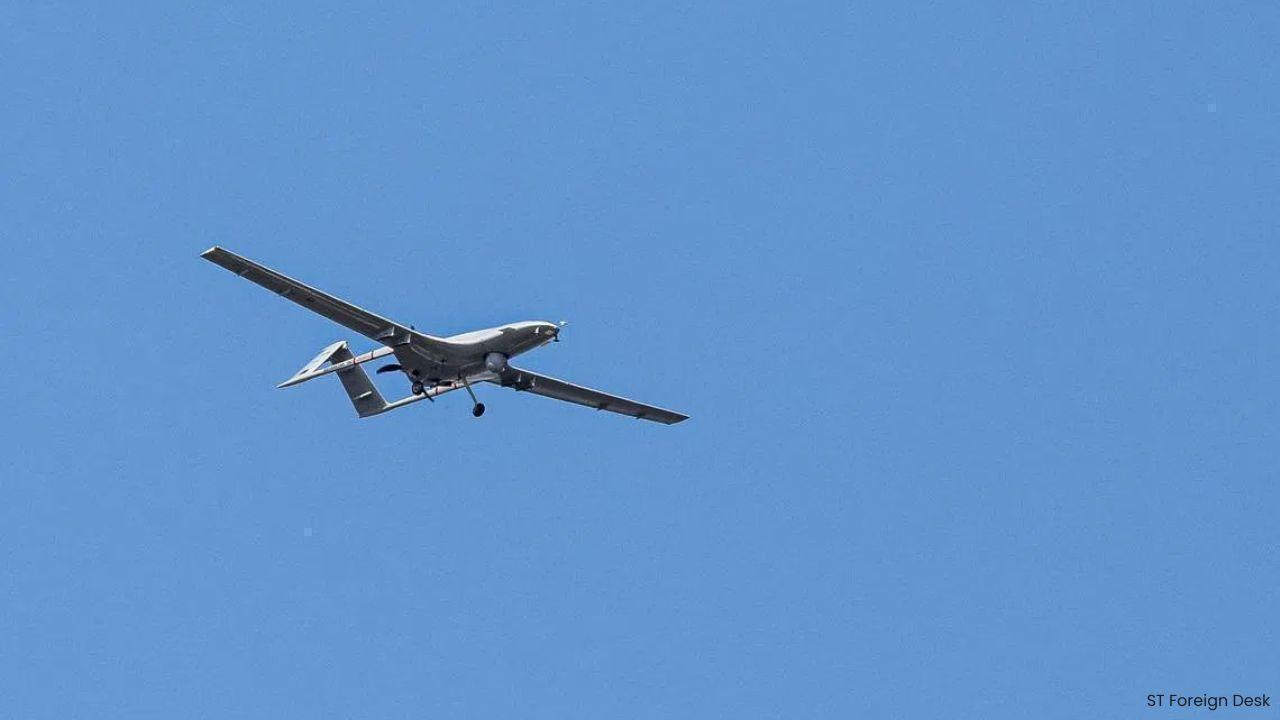
Photo : X / ST Foreign Desk
Libya’s fragile stability is once again under scrutiny as eastern military commander Khalifa Haftar is reported to have acquired advanced combat drones despite a long-standing United Nations arms embargo. This development is not just another violation of international regulations—it marks a significant escalation in aerial warfare capabilities in a region already shaped by years of conflict. As drone technology becomes a defining factor in modern military strategy, this move is set to reshape Libya’s internal power dynamics and regional security landscape.
Recent intelligence assessments and satellite imagery indicate the presence of multiple combat drones at a key eastern Libyan airbase, signaling a notable upgrade in Haftar’s aerial capabilities. These systems, believed to include both Chinese and Turkish-origin platforms, are designed for surveillance, precision strikes, and long-endurance missions. Their deployment significantly enhances operational reach, allowing forces to monitor vast territories, secure strategic assets, and respond swiftly to emerging threats.
The acquisition raises serious questions about the effectiveness of the UN arms embargo imposed on Libya since 2011. Despite international efforts to restrict the flow of weapons into the country, multiple reports over the years have pointed to consistent violations by external actors supporting rival factions. The latest drone deployment underscores a persistent challenge while regulations exist on paper, enforcement remains fragmented, allowing advanced military technology to enter conflict zones with relative ease.
The growing reliance on unmanned aerial vehicles is redefining how conflicts are fought, particularly in regions like North Africa. Drones offer a combination of surveillance precision and strike capability without risking pilot lives, making them highly effective tools in asymmetric warfare. In Libya’s case, drones played a crucial role during earlier phases of conflict, and their re-emergence at scale signals a shift toward more technologically driven military strategies that prioritize intelligence and rapid-response capabilities.
Haftar’s strengthened drone arsenal is likely to influence ongoing political negotiations and territorial control within Libya. With enhanced aerial capabilities, his forces gain increased leverage in securing key regions, including oil-rich territories and strategic infrastructure. At the same time, the move may trigger a parallel response from rival factions, potentially leading to a renewed cycle of military build-up and instability across the region.
This development is part of a wider trend where global conflicts are increasingly shaped by advanced technologies and external involvement. Libya, once seen as a localized conflict, continues to attract international interest due to its strategic location and resources. The introduction of high-tech weaponry like combat drones highlights how regional disputes are evolving into technologically sophisticated arenas with global implications.
As drone warfare continues to expand, the lines between surveillance, deterrence, and active combat are becoming increasingly blurred. Libya’s latest escalation serves as a stark reminder that the future of conflict will not only be fought on land or sea but increasingly in the air, driven by autonomous systems and real-time intelligence. The challenge for the international community now is clear: adapt to this new reality or risk losing control over how modern warfare unfolds.
#trending #latest,#LibyaConflict #CombatDrones #UNEmbargo #DroneWarfare #GlobalSecurity





Advances in Aerospace Technology and Commercial Aviation Recovery
Insights into breakthrough aerospace technologies and commercial aviation’s recovery amid 2025 chall

Defense Modernization and Strategic Spending Trends
Explore key trends in global defense modernization and strategic military spending shaping 2025 secu

Tens of Thousands Protest in Serbia on Anniversary of Deadly Roof Collapse
Tens of thousands in Novi Sad mark a year since a deadly station roof collapse that killed 16, prote

Canada PM Carney Apologizes to Trump Over Controversial Reagan Anti-Tariff Ad
Canadian PM Mark Carney apologized to President Trump over an Ontario anti-tariff ad quoting Reagan,

The ad that stirred a hornets nest, and made Canadian PM Carney say sorry to Trump
Canadian PM Mark Carney apologizes to US President Trump after a tariff-related ad causes diplomatic

Bengaluru-Mumbai Superfast Train Approved After 30-Year Wait
Railways approves new superfast train connecting Bengaluru and Mumbai, ending a 30-year demand, easi



