Post by : Avinab Raana
Photo : X / AeroTime
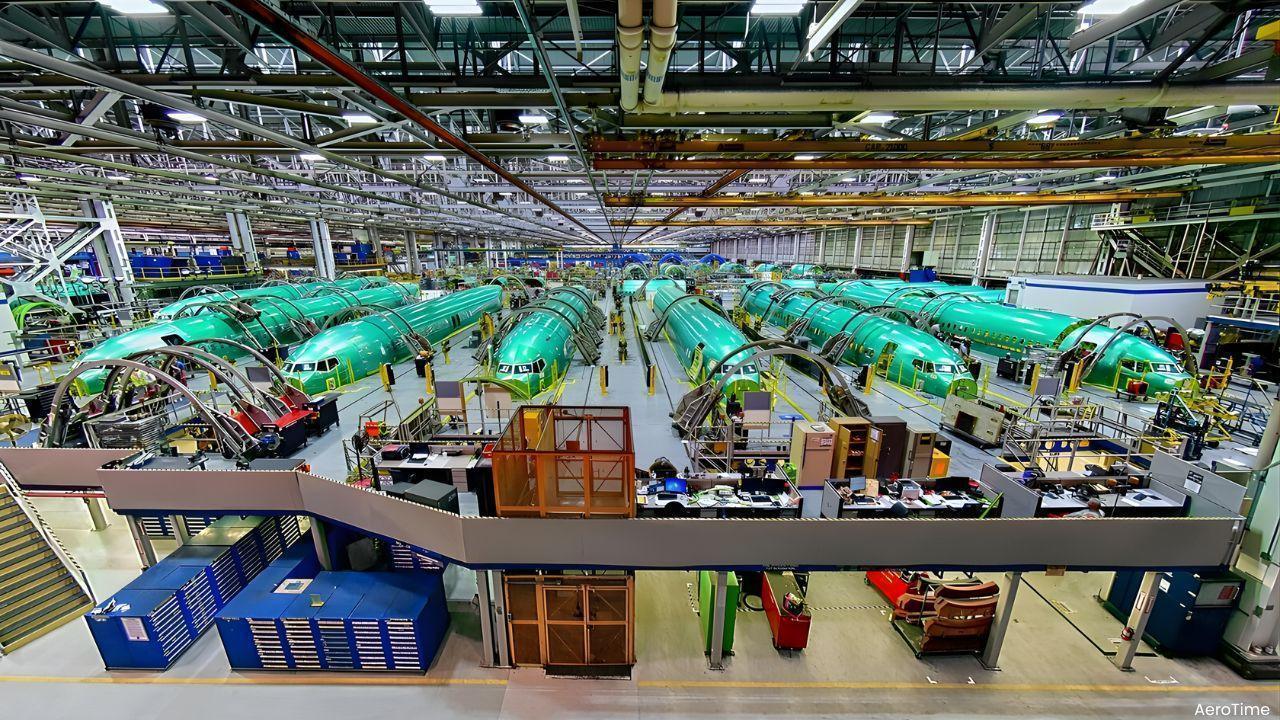
The global aerospace industry is once again facing turbulence, not in the skies, but deep within its supply chain as delays in Boeing 737 fuselage deliveries begin to ripple across production lines. At the center of this disruption is Spirit AeroSystems, the key supplier responsible for manufacturing the fuselage sections that form the backbone of Boeing’s most popular aircraft. These components, transported by rail from Wichita, Kansas to Boeing’s Renton facility, represent one of the most crucial links in the aircraft assembly process, and any slowdown here directly impacts final aircraft output.
Recent developments indicate that the pace of fuselage deliveries has dropped below expected levels, with monthly shipments falling short of Boeing’s targeted production rate. This slowdown is not just a logistical hiccup, it has immediate consequences for Boeing’s ability to meet its aircraft delivery commitments. Since each fuselage marks the starting point of the assembly process, delays at this stage cascade through the entire production timeline, affecting airlines awaiting new aircraft deliveries and reshaping global fleet expansion plans.
Spirit AeroSystems plays a pivotal role in Boeing’s production ecosystem, manufacturing a significant portion of the 737’s structural framework before it is shipped for final assembly. The fuselage is not just a component, it is the foundation upon which the entire aircraft is built. Its timely delivery ensures smooth assembly flow, while any disruption creates bottlenecks that can halt production lines or force costly rescheduling. This dependency highlights the tightly integrated nature of modern aerospace manufacturing, where suppliers and OEMs operate in near-perfect synchronization.
The use of rail transport for fuselage delivery underscores the scale and complexity of aircraft manufacturing. These oversized structures travel across states on specially designed railcars, forming a continuous supply chain pipeline between supplier and manufacturer. When this pipeline slows, it exposes a critical vulnerability- aircraft production is not just about engineering excellence but also about logistical precision. The current delays bring attention to how even small disruptions in transportation can create significant downstream effects.
The aerospace sector has been navigating a prolonged period of instability, marked by supply chain disruptions, quality concerns, and shifting production targets. Boeing’s decision to reintegrate Spirit AeroSystems into its operations reflects a broader effort to regain control over critical manufacturing processes and improve reliability. However, the current delays suggest that stabilizing such a complex ecosystem is an ongoing challenge, requiring both operational alignment and sustained investment.
The impact of these delays is not confined to Boeing alone. Airlines awaiting new aircraft, leasing companies planning fleet expansions, and global logistics networks all feel the effects of slowed production. In an industry where demand for new aircraft remains strong, any disruption in supply can lead to increased costs, delayed routes, and broader operational challenges across the aviation ecosystem.
The slowdown in Boeing 737 fuselage deliveries serves as a powerful reminder that the future of aviation depends as much on supply chain resilience as it does on technological innovation. As manufacturers push for higher production rates to meet global demand, ensuring stability across supplier networks will be critical. The question now is not just how quickly production can scale but how effectively the industry can build a system robust enough to withstand the pressures of a rapidly evolving global market.
#trending #latest,#Boeing737 #SpiritAeroSystems #AerospaceSupplyChain #AircraftProduction #AviationManufacturing








Advances in Aerospace Technology and Commercial Aviation Recovery
Insights into breakthrough aerospace technologies and commercial aviation’s recovery amid 2025 chall

Defense Modernization and Strategic Spending Trends
Explore key trends in global defense modernization and strategic military spending shaping 2025 secu

Tens of Thousands Protest in Serbia on Anniversary of Deadly Roof Collapse
Tens of thousands in Novi Sad mark a year since a deadly station roof collapse that killed 16, prote

Canada PM Carney Apologizes to Trump Over Controversial Reagan Anti-Tariff Ad
Canadian PM Mark Carney apologized to President Trump over an Ontario anti-tariff ad quoting Reagan,

The ad that stirred a hornets nest, and made Canadian PM Carney say sorry to Trump
Canadian PM Mark Carney apologizes to US President Trump after a tariff-related ad causes diplomatic

Bengaluru-Mumbai Superfast Train Approved After 30-Year Wait
Railways approves new superfast train connecting Bengaluru and Mumbai, ending a 30-year demand, easi



