Post by : Saif
Arizona-based space startup Katalyst Space Technologies has launched a groundbreaking mission to rescue NASA’s aging Neil Gehrels Swift Observatory, marking a major milestone in satellite servicing and orbital rescue technology. The mission aims to extend the life of one of NASA’s most important space observatories while demonstrating advanced robotic satellite-grappling capabilities.
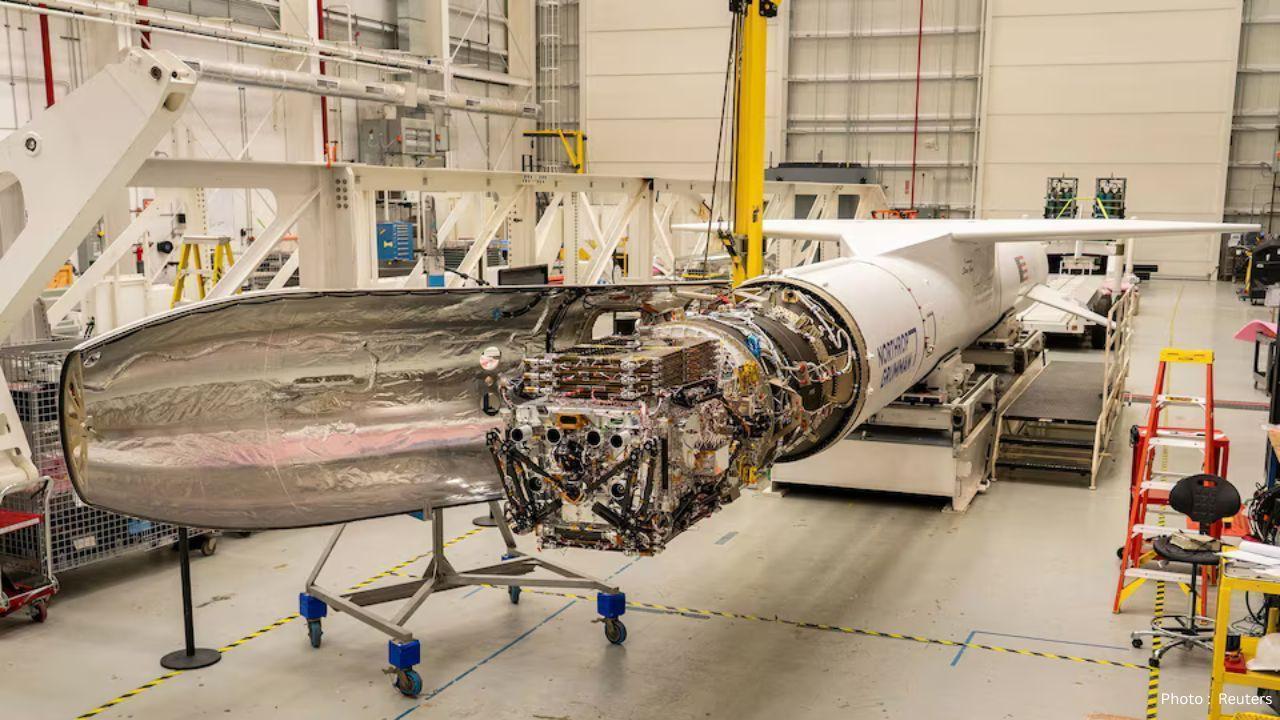
The spacecraft, named LINK, lifted off aboard a Northrop Grumman Pegasus XL rocket on Thursday after being released from a Lockheed Martin TriStar aircraft flying about 40,000 feet (12,200 meters) above the Pacific Ocean. The successful launch marks the beginning of a complex orbital mission designed to prevent the observatory from falling back to Earth.
LINK Spacecraft to Extend Swift Observatory’s Life
The Neil Gehrels Swift Observatory, launched more than 22 years ago, has played a critical role in detecting gamma-ray bursts, black holes, neutron stars, and other high-energy cosmic events. However, the observatory no longer has onboard propulsion, meaning its orbit has gradually decayed and it is expected to re-enter Earth's atmosphere later this year if no action is taken.
Katalyst’s LINK spacecraft will rendezvous with Swift, securely attach itself using robotic grappling technology, and tow the observatory into a higher and more stable orbit. If successful, the mission could extend Swift’s scientific operations by several more years.
NASA Invests in Commercial Orbital Servicing
NASA awarded Katalyst a $30 million contract to develop the mission. According to the company, engineers completed the design, construction and testing of the LINK spacecraft in just nine months—an unusually rapid timeline for a complex space mission.
The mission demonstrates NASA’s growing reliance on commercial companies to provide innovative space services while reducing costs and increasing mission flexibility.
Orbital Servicing Gains Strategic Importance
Satellite servicing has become one of the fastest-growing sectors in the global space industry. Technologies capable of docking with, repairing or relocating satellites are increasingly viewed as strategically important for both commercial and national security purposes.
Industry experts say robotic servicing systems like LINK are becoming increasingly significant as the United States and China continue investing heavily in advanced space capabilities. Such technologies could eventually be used to repair, refuel or safely remove aging satellites from orbit.
Swift Observatory Has Made Major Scientific Discoveries
Since its launch in 2004, the Neil Gehrels Swift Observatory has helped scientists better understand some of the universe’s most powerful explosions, including gamma-ray bursts produced by collapsing stars and neutron star mergers. The spacecraft continues to provide valuable observations for astronomers worldwide.
Saving the observatory would allow NASA to continue collecting important scientific data without the expense of launching a replacement mission.
A New Era for Space Sustainability
The LINK mission also highlights the growing importance of sustainable space operations. Instead of allowing aging satellites to become space debris or burn up in Earth's atmosphere, future servicing missions could extend spacecraft lifespans, reduce orbital congestion and lower the overall cost of space exploration.
If successful, Katalyst’s demonstration could pave the way for routine in-orbit servicing missions that support government, commercial and scientific satellites for decades to come.
#trending #latest #KatalystSpace #NASA #SwiftObservatory #NeilGehrelsSwiftObservatory #LINKMission #SpaceMission #SpaceExploration #SatelliteRescue #OrbitalServicing #SpaceTechnology #SpaceInnovation







Advances in Aerospace Technology and Commercial Aviation Recovery
Insights into breakthrough aerospace technologies and commercial aviation’s recovery amid 2025 chall

Defense Modernization and Strategic Spending Trends
Explore key trends in global defense modernization and strategic military spending shaping 2025 secu

Tens of Thousands Protest in Serbia on Anniversary of Deadly Roof Collapse
Tens of thousands in Novi Sad mark a year since a deadly station roof collapse that killed 16, prote

Canada PM Carney Apologizes to Trump Over Controversial Reagan Anti-Tariff Ad
Canadian PM Mark Carney apologized to President Trump over an Ontario anti-tariff ad quoting Reagan,

The ad that stirred a hornets nest, and made Canadian PM Carney say sorry to Trump
Canadian PM Mark Carney apologizes to US President Trump after a tariff-related ad causes diplomatic

Bengaluru-Mumbai Superfast Train Approved After 30-Year Wait
Railways approves new superfast train connecting Bengaluru and Mumbai, ending a 30-year demand, easi



