Post by : Avinab Raana
Photo : X / InsightRadar
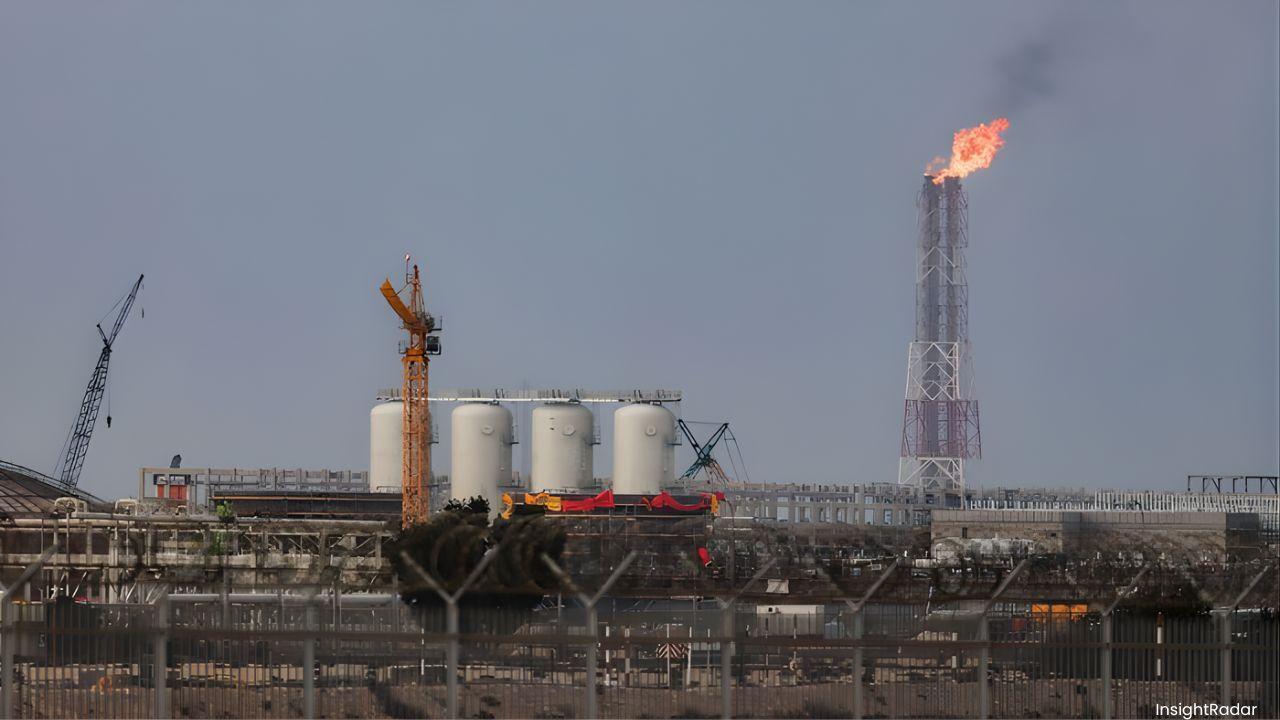
A missile strike targeting Ras Laffan Industrial City in Qatar, home to the world’s largest liquefied natural gas export terminal, has sent shockwaves across global energy markets. The industrial complex is a cornerstone of international LNG supply, serving major energy importers across Asia and Europe. The attack has raised immediate concerns about the stability of global gas shipments, as Ras Laffan processes and exports a significant share of the world’s liquefied natural gas.
Ras Laffan is not just an industrial facility—it is one of the most strategically important energy hubs in the world. The complex houses multiple LNG production trains, export terminals, and supporting energy infrastructure that enable Qatar to maintain its position as a leading LNG exporter. Because of its scale and operational capacity, even minor disruptions at Ras Laffan can have ripple effects across international gas markets and energy supply chains.
News of the strike has intensified concerns among global energy traders and governments monitoring supply security. LNG markets are particularly sensitive to geopolitical instability in the Middle East, where a large portion of global energy production and transportation routes are concentrated. Any sustained disruption to operations at Ras Laffan could influence gas prices, shipment schedules, and energy procurement strategies for importing countries.
The incident highlights how energy infrastructure is increasingly becoming a focal point in geopolitical conflicts. LNG terminals, pipelines, and export facilities are critical national assets, making them highly sensitive targets during periods of regional tension. As geopolitical risks escalate, energy security remains a top priority for governments and international energy markets.
Energy analysts and international buyers are closely monitoring developments at Ras Laffan as authorities assess the damage and determine whether LNG exports will be affected. Any prolonged disruption could shift global LNG trade patterns and force buyers to seek alternative supply sources. Such events underline the interconnected nature of global energy markets, where incidents in one region can influence supply stability and pricing worldwide.
The strike serves as a reminder of how fragile global energy infrastructure can be during periods of geopolitical uncertainty. As countries continue to depend heavily on LNG imports to support their energy needs, disruptions at major export hubs can quickly create ripple effects across international markets. For global energy stakeholders, maintaining secure and resilient supply chains remains one of the most pressing challenges in an increasingly volatile geopolitical environment.
Ras Laffan LNG terminal attack, Iran strike Qatar LNG hub, global LNG supply disruption, Ras Laffan industrial city gas exports, Middle East energy conflict LNG, global LNG market impact, Qatar LNG infrastructure









Advances in Aerospace Technology and Commercial Aviation Recovery
Insights into breakthrough aerospace technologies and commercial aviation’s recovery amid 2025 chall

Defense Modernization and Strategic Spending Trends
Explore key trends in global defense modernization and strategic military spending shaping 2025 secu

Tens of Thousands Protest in Serbia on Anniversary of Deadly Roof Collapse
Tens of thousands in Novi Sad mark a year since a deadly station roof collapse that killed 16, prote

Canada PM Carney Apologizes to Trump Over Controversial Reagan Anti-Tariff Ad
Canadian PM Mark Carney apologized to President Trump over an Ontario anti-tariff ad quoting Reagan,

The ad that stirred a hornets nest, and made Canadian PM Carney say sorry to Trump
Canadian PM Mark Carney apologizes to US President Trump after a tariff-related ad causes diplomatic

Bengaluru-Mumbai Superfast Train Approved After 30-Year Wait
Railways approves new superfast train connecting Bengaluru and Mumbai, ending a 30-year demand, easi



