Post by : Saif
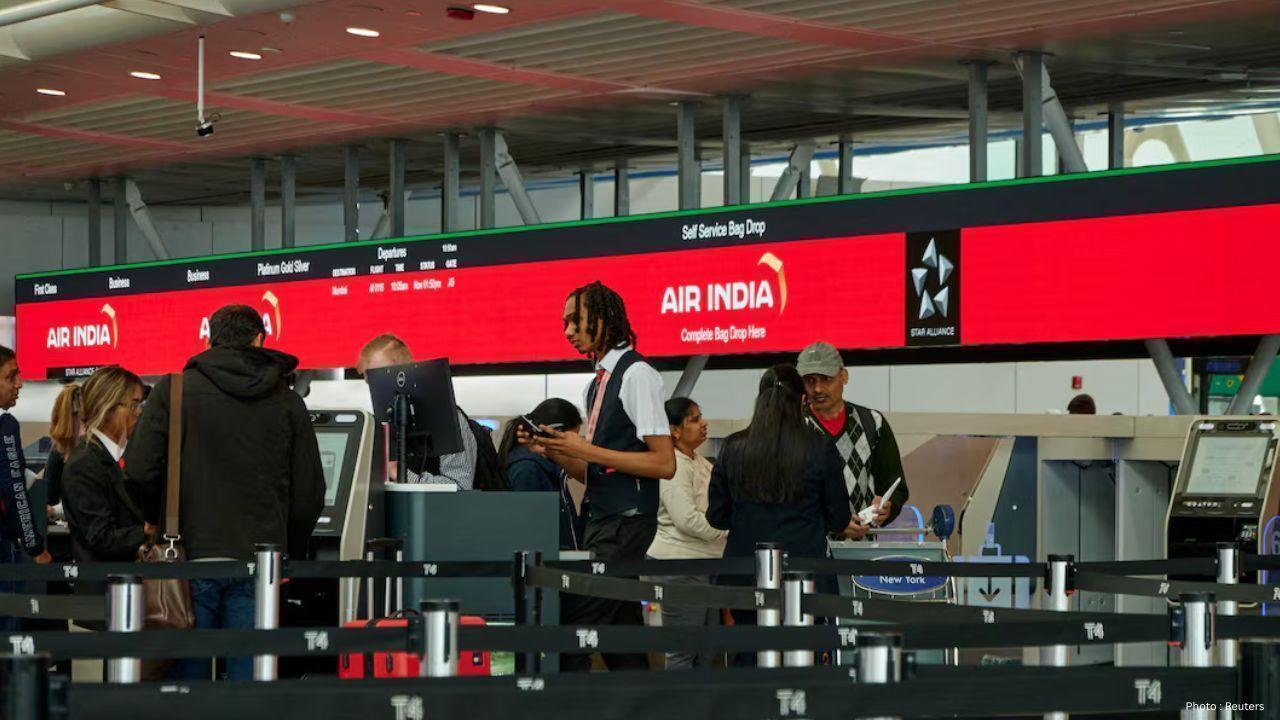
The ongoing conflict involving Iran is creating serious problems for the global aviation industry, and Air India appears to be one of the biggest airlines affected. As rising tensions disrupt important air routes and increase fuel costs, several international airlines are now taking advantage of the situation to expand their presence in India’s fast-growing aviation market.
According to recent reports, Air India has been forced to reduce thousands of international flights because of the Iran conflict and Pakistan’s continued ban on Indian aircraft using its airspace. These restrictions have increased flying times, raised fuel costs, and made several international routes more expensive to operate.
Air India had been trying to position itself as a major global airline under the Tata Group’s ownership. The company invested heavily in new aircraft, better cabins, and more direct flights to Europe and North America. However, the present geopolitical crisis has slowed those ambitions. Flights that once took normal direct routes are now being forced to travel longer paths to avoid restricted airspace, adding several hours to some journeys.
The situation has created an opportunity for foreign airlines such as Lufthansa Group, Cathay Pacific, KLM, and Swiss International Air Lines. These carriers are increasing services to India and attracting passengers looking for more stable international connections. Industry data shows that foreign airlines now control a larger share of international flights from India compared to last year.
India is currently one of the world’s fastest-growing aviation markets. Millions of Indians are travelling abroad for tourism, education, business, and employment opportunities. As demand continues to rise, airlines see India as an extremely valuable market for future growth. This is why international carriers are quickly adding routes and services whenever opportunities appear.
Another major challenge for airlines is the sharp rise in jet fuel prices caused by the conflict in the Middle East. The Strait of Hormuz remains one of the world’s most important energy routes, and any disruption there directly affects oil supplies and fuel prices globally. Higher fuel prices increase airline operating costs, which often lead to more expensive tickets for passengers.
Air India is not alone in facing pressure. Many airlines worldwide are struggling with higher costs and uncertain travel conditions. Still, foreign carriers with stronger international networks and fewer regional restrictions currently have an advantage over Indian airlines on long-distance routes.
The crisis also highlights how closely global politics and the aviation industry are connected. Wars, sanctions, and airspace restrictions can quickly change airline operations and business strategies. Even a strong airline expansion plan can face sudden problems when geopolitical tensions rise.
For India, the situation raises important questions about the future of its aviation sector. The country wants to become a major global travel hub, but continued regional tensions and airspace challenges may slow progress. At the same time, foreign airlines are strengthening their hold on international routes connected to India.
Despite current difficulties, India’s aviation market still holds huge long-term potential. Passenger demand remains strong, and the country’s growing middle class continues to travel more each year. However, Air India and other domestic carriers may need stronger operational strategies and international support to compete effectively during periods of global instability.
#trending #latest #AirIndia #IranConflict #AviationNews #IndiaAirlines #MiddleEastTensions #GlobalAviation #Lufthansa #CathayPacific #TravelNews #AirspaceCrisis #IndiaTravel #AirlineIndustry #TataGroup #InternationalFlights








Advances in Aerospace Technology and Commercial Aviation Recovery
Insights into breakthrough aerospace technologies and commercial aviation’s recovery amid 2025 chall

Defense Modernization and Strategic Spending Trends
Explore key trends in global defense modernization and strategic military spending shaping 2025 secu

Tens of Thousands Protest in Serbia on Anniversary of Deadly Roof Collapse
Tens of thousands in Novi Sad mark a year since a deadly station roof collapse that killed 16, prote

Canada PM Carney Apologizes to Trump Over Controversial Reagan Anti-Tariff Ad
Canadian PM Mark Carney apologized to President Trump over an Ontario anti-tariff ad quoting Reagan,

The ad that stirred a hornets nest, and made Canadian PM Carney say sorry to Trump
Canadian PM Mark Carney apologizes to US President Trump after a tariff-related ad causes diplomatic

Bengaluru-Mumbai Superfast Train Approved After 30-Year Wait
Railways approves new superfast train connecting Bengaluru and Mumbai, ending a 30-year demand, easi



