Post by : Avinab Raana
Photo : X / @AlArabiya_Eng
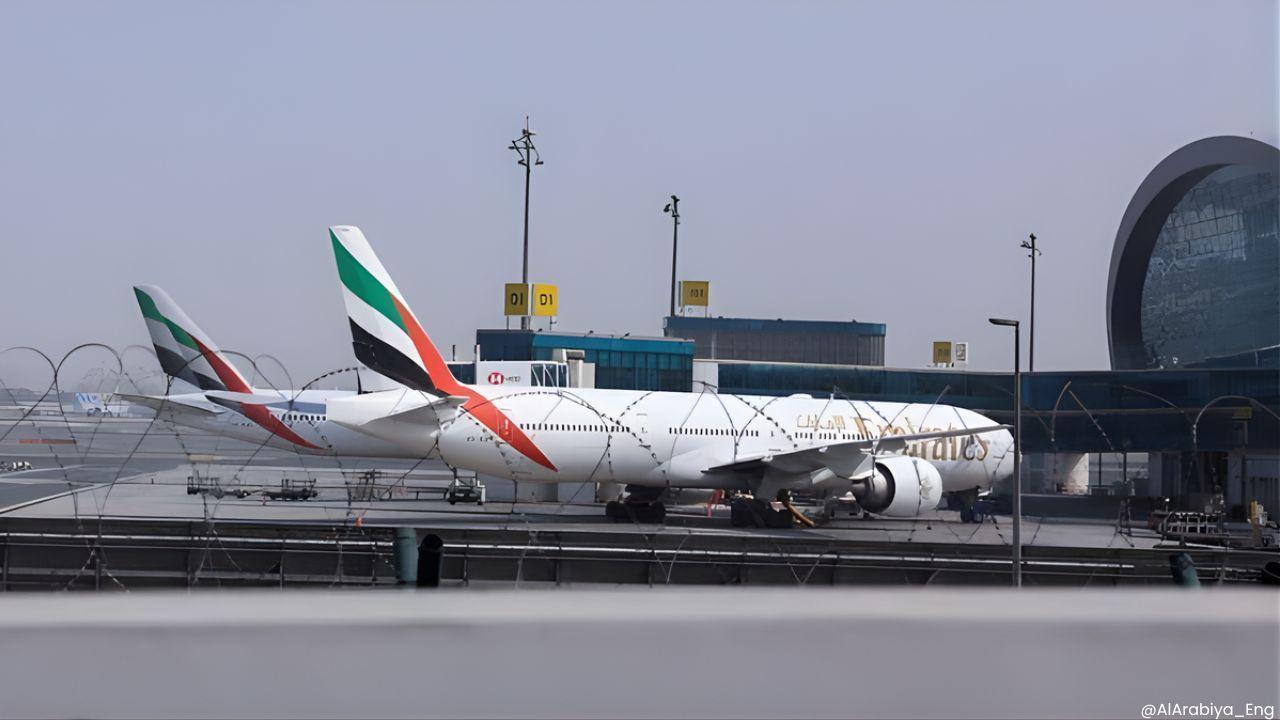
A fresh aviation standoff is unfolding between Indian carriers and Dubai airport authorities, as new operational restrictions threaten to reshape one of the busiest international air corridors in the world. The Federation of Indian Airlines (FIA), representing major carriers, has urgently sought intervention from the Indian government to address what it describes as an increasingly unfair and disruptive cap on flight operations at Dubai’s airports.
This development comes at a time when global aviation is already navigating turbulence caused by geopolitical tensions in West Asia, making the India–Dubai corridor even more critical for both passenger traffic and economic connectivity.
At the heart of the issue lies a temporary but impactful restriction imposed by Dubai airport authorities, limiting foreign carriers—including Indian airlines—to just one flight rotation per day during the Northern Summer 2026 schedule. This restriction, set to run between April and May, has effectively forced airlines to cancel multiple planned services, disrupting carefully built schedules and capacity planning.
For Indian carriers that rely heavily on Dubai routes for both direct travel and global transit connectivity, the impact is immediate and severe. Reduced frequencies mean fewer seats, higher demand pressure, and increased operational inefficiencies, all of which ripple across airline networks and passenger itineraries.
What has intensified the situation further is the perceived imbalance in how these restrictions are being applied. While foreign airlines are facing strict caps, UAE-based carriers such as Emirates and flydubai have reportedly resumed operations at near pre-disruption levels, without being subjected to similar limitations.
This differential treatment has triggered strong reactions from Indian airlines, who argue that such policies distort competition and create an uneven playing field in one of the most commercially significant aviation markets. The FIA has warned that continuing these restrictions could lead to anti-competitive conditions, affecting not only airline revenues but also long-term market stability.
Beyond industry concerns, the real impact is being felt by passengers. Reduced flight options are leading to higher ticket prices, limited availability, and increased uncertainty in travel planning. With Dubai serving as a major transit hub connecting India to Europe, North America, and Africa, any disruption in this corridor has a cascading effect on global travel flows.
Airlines have also flagged significant revenue losses due to forced cancellations and reduced capacity. In a sector already grappling with rising fuel costs and operational challenges, such restrictions add another layer of financial strain, potentially affecting route expansion plans and service quality.
The backdrop to these restrictions is a broader regional crisis in West Asia, which has led to airspace limitations, flight rerouting, and heightened security concerns. These factors have collectively reduced operational capacity at key airports, prompting authorities to impose temporary caps to manage traffic safely and efficiently.
However, while such measures may be operationally necessary, the way they are implemented has become a point of contention—especially when they appear to disproportionately affect certain carriers.
In response, the FIA has urged the Indian Ministry of Civil Aviation to engage directly with Dubai authorities to secure the removal of these restrictions and restore operations to pre-crisis levels. At the same time, it has proposed the possibility of reciprocal measures, suggesting that Indian authorities could impose similar capacity limits on UAE carriers to ensure fairness and balance in bilateral aviation agreements.
This signals a potential escalation from operational concern to diplomatic negotiation, highlighting how aviation policies are increasingly intertwined with broader economic and geopolitical strategies.
The unfolding situation is more than just a temporary disruption—it is a test case for how global aviation systems respond to crisis-driven constraints while maintaining fairness and connectivity. As one of the busiest international routes, the India–Dubai corridor plays a crucial role in global mobility, trade, and tourism.
The decisions taken in the coming weeks will not only determine short-term flight operations but could also influence long-term aviation policies, bilateral agreements, and competitive dynamics in the region.
In a rapidly changing aviation landscape, where external shocks can reshape entire networks overnight, the ability to balance operational necessity with market fairness will define the future of global air travel. And right now, all eyes are on how this high-stakes aviation challenge unfolds.
#trending #latest,#DubaiFlights #IndianAirlines #AviationCrisis #AirTravel #FlightRestrictions









Advances in Aerospace Technology and Commercial Aviation Recovery
Insights into breakthrough aerospace technologies and commercial aviation’s recovery amid 2025 chall

Defense Modernization and Strategic Spending Trends
Explore key trends in global defense modernization and strategic military spending shaping 2025 secu

Tens of Thousands Protest in Serbia on Anniversary of Deadly Roof Collapse
Tens of thousands in Novi Sad mark a year since a deadly station roof collapse that killed 16, prote

Canada PM Carney Apologizes to Trump Over Controversial Reagan Anti-Tariff Ad
Canadian PM Mark Carney apologized to President Trump over an Ontario anti-tariff ad quoting Reagan,

The ad that stirred a hornets nest, and made Canadian PM Carney say sorry to Trump
Canadian PM Mark Carney apologizes to US President Trump after a tariff-related ad causes diplomatic

Bengaluru-Mumbai Superfast Train Approved After 30-Year Wait
Railways approves new superfast train connecting Bengaluru and Mumbai, ending a 30-year demand, easi



