Post by : Avinab Raana
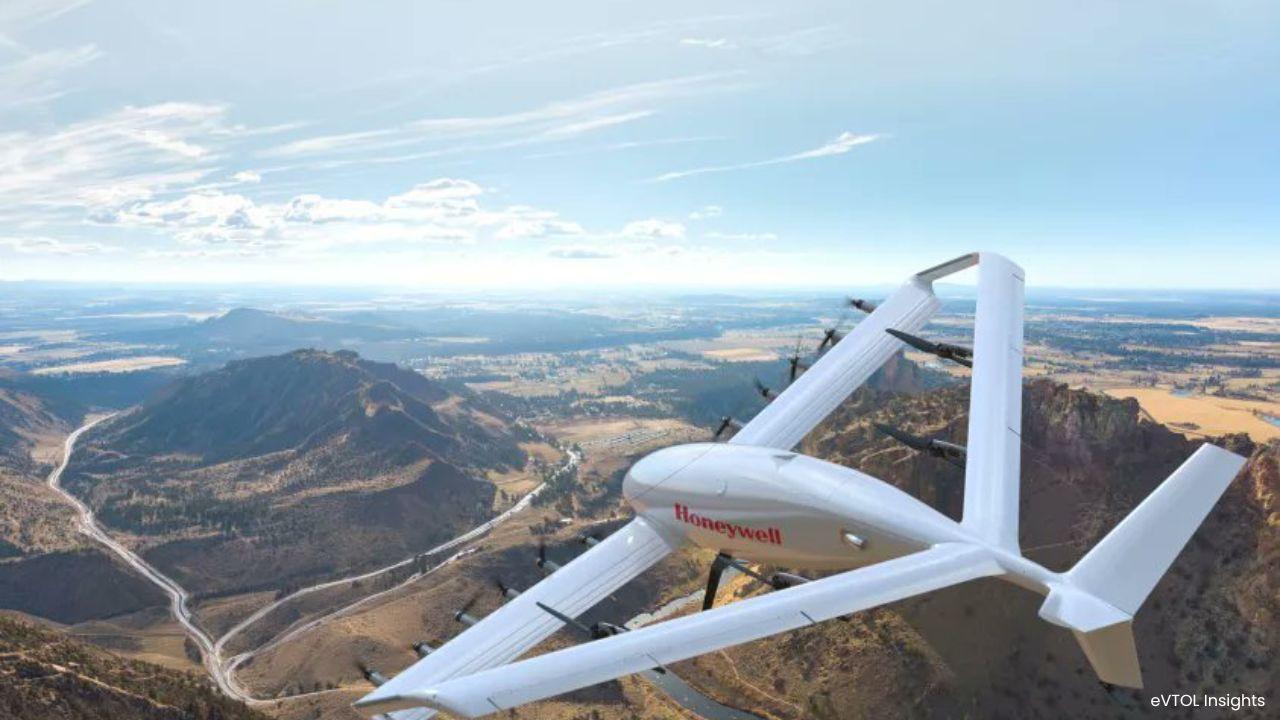
Photo : X / eVTOL Insights
In a world where drone threats are evolving faster than traditional defense systems can respond, a groundbreaking collaboration is rewriting the rules of aerial security. Honeywell and Odys Aviation have unveiled a powerful new airborne counter-drone solution, combining cutting-edge avionics with next-generation VTOL capabilities to create what could become the future of infrastructure protection and defense strategy.
This innovation isn’t just another system upgrade, it represents a paradigm shift. By taking counter-drone operations into the air, the Laila-SAMURAI platform introduces a dynamic, persistent defense layer that moves beyond the limitations of ground-based systems, offering broader coverage and faster response times.
At the heart of this system lies the integration of Honeywell’s SAMURAI counter-UAS platform with Odys Aviation’s hybrid-electric Laila VTOL aircraft. This pairing brings together advanced sensing technologies, AI-enabled detection, and modular defense capabilities into a single airborne platform capable of identifying, tracking, and neutralizing drone threats in real time.
SAMURAI leverages a combination of radio-frequency detection and electro-optical sensors, enabling it to detect even complex drone swarms. What sets it apart is its modular architecture, allowing operators to integrate interceptor drones or other countermeasures depending on mission requirements. This flexibility ensures that the system can adapt to rapidly evolving threats, particularly in high-risk zones such as energy infrastructure, offshore platforms, and strategic facilities.
The rise of low-cost drones has dramatically changed the economics of modern warfare and security. Traditional missile-based defense systems, while effective, are often expensive and limited in coverage. The Laila-SAMURAI system addresses this gap by introducing a cost-efficient airborne layer that can detect threats far earlier—before they reach critical assets.
This is particularly crucial for distributed infrastructure such as pipelines, refineries, and remote installations, where continuous monitoring is both difficult and expensive. By operating in the air, the system extends defensive reach across vast areas, significantly reducing blind spots and response delays.
The Laila aircraft itself is a technological standout. With a hybrid propulsion system capable of running on multiple fuel types, it can remain airborne for up to eight hours and cover distances of approximately 450 miles. Its runway-independent design allows it to take off vertically, making it ideal for deployment in remote or constrained environments.
This operational flexibility means the system can be rapidly deployed in expeditionary missions, offshore zones, or disaster-stricken areas—without the need for extensive infrastructure. In essence, it brings defense capabilities to places where they were previously impractical or impossible.
One of the most critical elements of the Laila-SAMURAI system is its use of artificial intelligence. The platform is designed to distinguish between actual threats and non-threatening objects, enabling faster and more accurate decision-making. In high-speed scenarios, where reaction time is measured in seconds, this capability becomes mission-critical.AI-driven target identification ensures that defense systems are not only faster but also smarter reducing false alarms while improving engagement precision.
This collaboration signals more than just a technological milestone, it reflects a broader shift in how nations and industries approach security. As drone usage expands across both civilian and military domains, the need for scalable, adaptable, and cost-effective countermeasures is becoming urgent.
By introducing an airborne layer into the defense ecosystem, Honeywell and Odys are setting a new benchmark for integrated air defense systems—one that blends endurance, intelligence, and flexibility into a single solution.
As drone threats continue to grow in sophistication, solutions like Laila-SAMURAI could become the backbone of future defense architectures. Its ability to operate independently, adapt to evolving threats, and provide persistent surveillance positions it as a critical asset in both military and civilian security operations.
The real question now isn’t whether airborne counter-drone systems will become standard but how quickly industries and governments will adopt them. Because in the race between threats and technology, staying grounded is no longer an option.
#trending #latest,#CounterDrone #VTOL #Honeywell #AutonomousDefense #DroneSecurity




Advances in Aerospace Technology and Commercial Aviation Recovery
Insights into breakthrough aerospace technologies and commercial aviation’s recovery amid 2025 chall

Defense Modernization and Strategic Spending Trends
Explore key trends in global defense modernization and strategic military spending shaping 2025 secu

Tens of Thousands Protest in Serbia on Anniversary of Deadly Roof Collapse
Tens of thousands in Novi Sad mark a year since a deadly station roof collapse that killed 16, prote

Canada PM Carney Apologizes to Trump Over Controversial Reagan Anti-Tariff Ad
Canadian PM Mark Carney apologized to President Trump over an Ontario anti-tariff ad quoting Reagan,

The ad that stirred a hornets nest, and made Canadian PM Carney say sorry to Trump
Canadian PM Mark Carney apologizes to US President Trump after a tariff-related ad causes diplomatic

Bengaluru-Mumbai Superfast Train Approved After 30-Year Wait
Railways approves new superfast train connecting Bengaluru and Mumbai, ending a 30-year demand, easi



