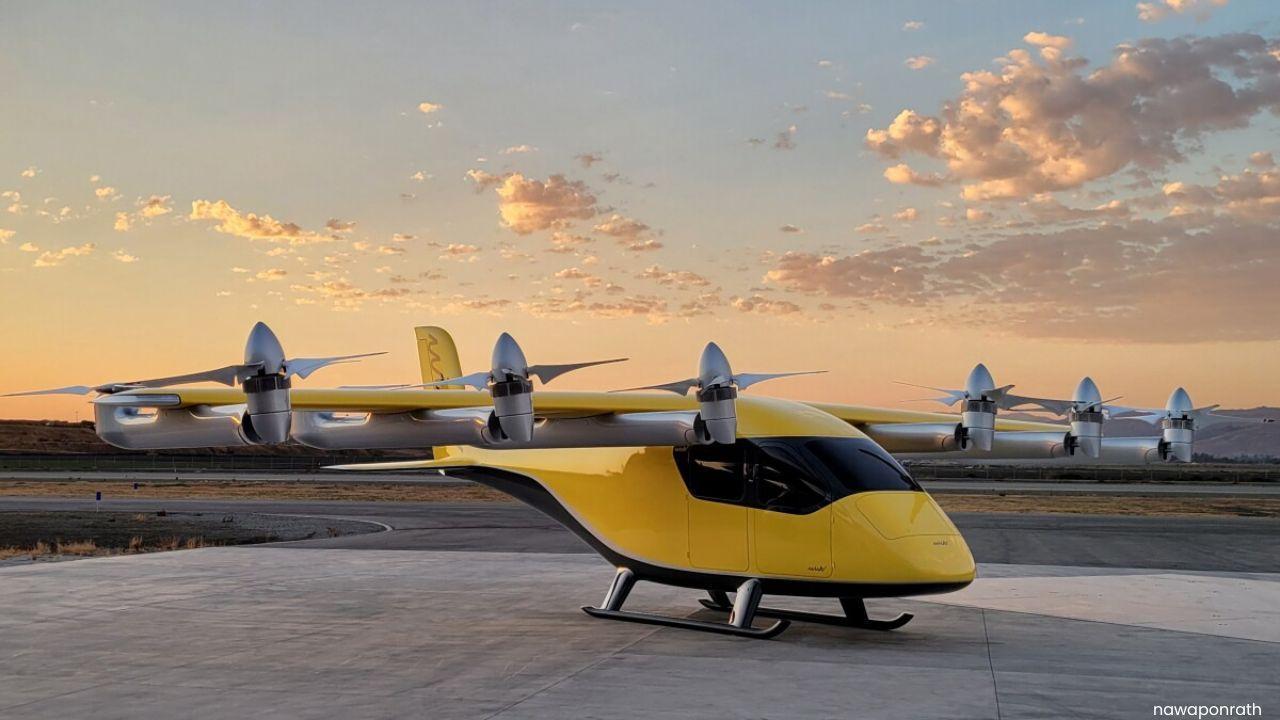
Post by : Avinab Raana
Photo : X / nawaponrath
In a decisive move that could accelerate the future of urban air mobility, the Federal Aviation Administration has restructured its eVTOL integration pilot program, signaling a major shift in how next-generation aircraft will enter commercial airspace. Rather than following a rigid, centralized roadmap, the new approach places greater emphasis on industry-led initiatives, allowing manufacturers, operators, and local authorities to take a more active role in shaping real-world deployment. This change reflects a growing urgency to move beyond experimental phases and bring electric vertical takeoff and landing aircraft closer to everyday operations.
The revised framework marks a transition from controlled pilot programs to more flexible, operationally driven trials. Instead of limiting testing to predefined scenarios, the FAA is now encouraging stakeholders to demonstrate capabilities in real-world environments, including urban corridors and regional routes. This shift is expected to accelerate timelines for eVTOL deployment, enabling companies to validate performance, safety, and scalability under practical conditions. As cities worldwide explore alternatives to congested road networks, this policy evolution could be the catalyst that turns urban air mobility from concept into reality.
A defining feature of the new program is the increased responsibility placed on industry players. eVTOL developers and operators are now expected to lead integration efforts, collaborating directly with regulators and local authorities to design operational frameworks. This decentralized approach allows for innovation to emerge organically, with companies tailoring solutions to specific urban environments. It also creates a competitive landscape where speed, safety, and adaptability will determine which players emerge as leaders in the rapidly evolving advanced aviation sector.
While the regulatory shift is a major step forward, it also brings into focus the critical need for supporting infrastructure. Vertiports, charging networks, air traffic management systems, and digital coordination platforms must evolve in parallel to support large-scale eVTOL operations. The FAA’s new approach acknowledges this complexity by encouraging integrated solutions that combine aircraft technology with ground infrastructure and airspace management. Without this ecosystem, even the most advanced aircraft would struggle to achieve widespread adoption.
Despite the push for faster deployment, safety remains at the core of the FAA’s strategy. The new program maintains strict oversight while allowing greater flexibility in how safety standards are achieved. This balance is crucial in an industry where public trust will play a significant role in adoption. By enabling real-world testing while upholding rigorous safety benchmarks, the FAA is attempting to create a regulatory environment that supports both innovation and accountability.
The impact of this policy shift extends far beyond the United States. As one of the world’s leading aviation regulators, the FAA’s approach is likely to influence global standards for eVTOL integration. Countries looking to develop their own urban air mobility ecosystems may adopt similar frameworks, creating a more harmonized international landscape. This could accelerate the global rollout of eVTOL services, from passenger transport to cargo delivery, reshaping how cities connect and operate.
The FAA’s reimagined eVTOL integration program represents more than just a regulatory update, it is a turning point for the future of aviation. By empowering industry, encouraging real-world deployment, and maintaining a strong focus on safety, the program lays the groundwork for a new era of air transportation. As technology, infrastructure, and policy begin to align, the vision of flying taxis and aerial logistics networks is no longer distant. It is rapidly approaching takeoff, poised to transform urban mobility in ways once thought impossible.
#trending #latest,#eVTOL #UrbanAirMobility #FAA #FutureFlight #AdvancedAviation








Advances in Aerospace Technology and Commercial Aviation Recovery
Insights into breakthrough aerospace technologies and commercial aviation’s recovery amid 2025 chall

Defense Modernization and Strategic Spending Trends
Explore key trends in global defense modernization and strategic military spending shaping 2025 secu

Tens of Thousands Protest in Serbia on Anniversary of Deadly Roof Collapse
Tens of thousands in Novi Sad mark a year since a deadly station roof collapse that killed 16, prote

Canada PM Carney Apologizes to Trump Over Controversial Reagan Anti-Tariff Ad
Canadian PM Mark Carney apologized to President Trump over an Ontario anti-tariff ad quoting Reagan,

The ad that stirred a hornets nest, and made Canadian PM Carney say sorry to Trump
Canadian PM Mark Carney apologizes to US President Trump after a tariff-related ad causes diplomatic

Bengaluru-Mumbai Superfast Train Approved After 30-Year Wait
Railways approves new superfast train connecting Bengaluru and Mumbai, ending a 30-year demand, easi



