Post by : Avinab Raana
In a move that could reshape the future of European defense strategy, Denmark has officially signed the first export contract for the next-generation SAMP/T NG air and missile defense system marking a defining moment not just for the country, but for the entire European defense ecosystem. As geopolitical tensions continue to redefine global security priorities, this decision signals a powerful shift toward regional self-reliance and advanced defense integration. The agreement positions Denmark as the third operator of the system after France and Italy, reinforcing a growing coalition of European nations investing in cutting-edge, homegrown air defense capabilities. At its core, this is not just a procurement deal, it is a strategic declaration that Europe is accelerating its push to reduce dependency on external defense systems and build a unified, technologically superior shield against evolving aerial threats.
Denmark’s selection of the Franco-Italian SAMP/T NG system over the widely used US Patriot missile system highlights a deeper strategic recalibration. While Patriot systems have long dominated global markets, European nations are increasingly prioritizing regional solutions that offer better integration, flexibility, and supply chain reliability. The SAMP/T NG, developed through the Eurosam consortium involving Thales and MBDA, represents Europe’s most advanced ground-based air defense platform, capable of intercepting ballistic missiles, drones, and advanced aerial threats with precision. The decision also reflects concerns over delivery timelines and supply constraints tied to US systems, pushing Denmark toward a solution that aligns more closely with European defense objectives and NATO interoperability goals.
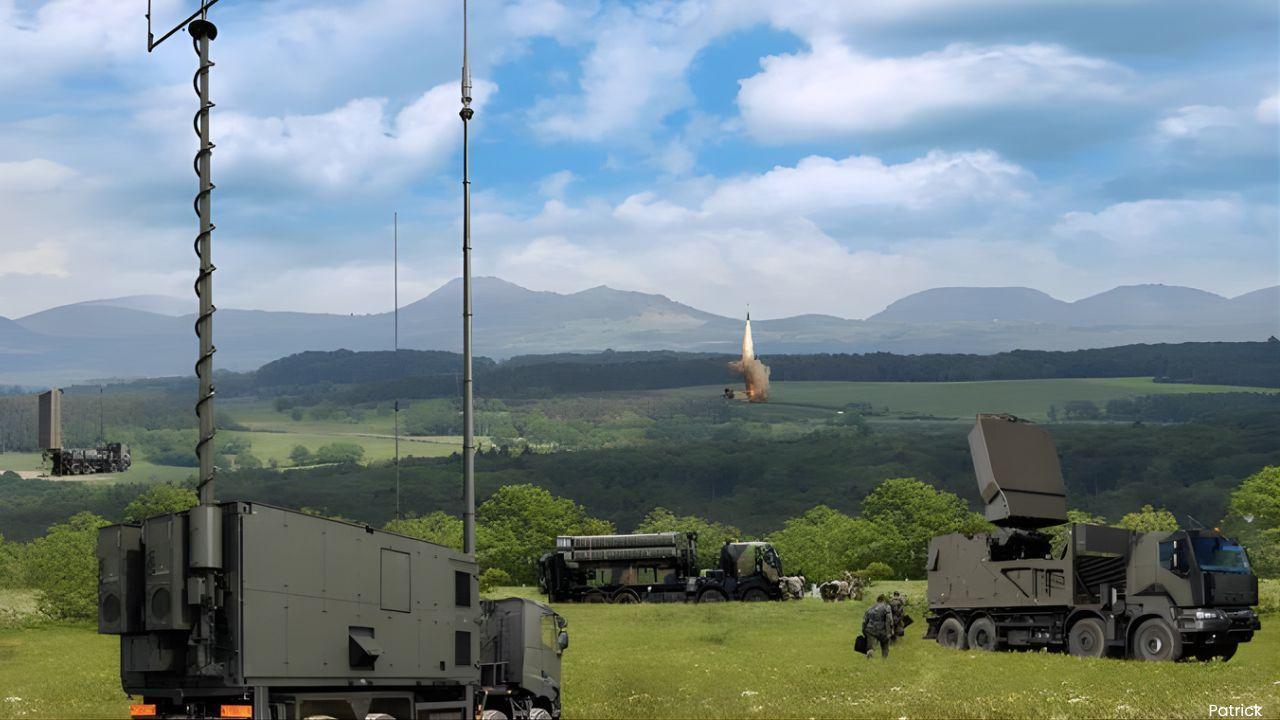
What sets the SAMP/T NG apart is its sophisticated technological architecture, designed to operate in highly complex threat environments. The system incorporates the Ground Fire 300 radar, an advanced active electronically scanned array (AESA) system capable of detecting threats up to 400 kilometers away with full 360-degree coverage. Its ability to track multiple targets simultaneously including drones, aircraft, and ballistic missiles makes it one of the most versatile defense systems currently available. Coupled with Aster 30 missile variants and an open-architecture engagement module, the platform is engineered for rapid response, interoperability, and future upgrades. This technological sophistication ensures that Denmark’s airspace protection is not only robust but also adaptable to emerging threats in an increasingly unpredictable global security landscape.
The contract outlines a phased implementation strategy, with initial deliveries of the SAMP/T NG system expected to begin in 2028. However, Denmark is already accelerating its readiness by initiating early training programs for personnel, recognizing that operational capability depends as much on skilled human resources as on advanced hardware. The procurement is reportedly structured across multiple contracts, covering both system acquisition and training requirements, ensuring that Denmark can build a fully functional defense ecosystem well ahead of deployment. This forward-looking approach reflects lessons learned from modern conflicts, where rapid deployment and readiness often determine the effectiveness of defense systems.
Denmark’s entry into the SAMP/T NG ecosystem carries significant geopolitical implications. As Europe faces increasing security challenges, the need for integrated, multi-layered air defense systems has become more urgent than ever. The SAMP/T NG is part of a broader architecture aimed at strengthening NATO’s collective defense capabilities while simultaneously enhancing Europe’s strategic autonomy. By investing in a European-built system, Denmark is contributing to a larger movement that seeks to balance transatlantic partnerships with independent defense capabilities. This shift is particularly relevant in the context of ongoing global conflicts, where supply chain resilience and rapid deployment capabilities have become critical factors in defense planning.
Beyond its military significance, the deal also represents a major boost for Europe’s defense manufacturing sector. With increasing demand for advanced air defense systems across the continent, companies involved in the SAMP/T NG program are poised to see significant growth in production and technological innovation. The contract is expected to pave the way for additional orders from other European nations, creating a ripple effect across the defense supply chain. As countries like Norway, Belgium, and Switzerland explore similar systems, Denmark’s decision could serve as a catalyst for a broader shift toward European defense solutions, strengthening industrial capabilities and fostering long-term collaboration within the region.
Denmark’s signing of the first export contract for the SAMP/T NG system is more than a milestone, it is a turning point that captures the evolving dynamics of global defense. In a world where threats are becoming more complex and unpredictable, the ability to deploy advanced, integrated, and reliable air defense systems is no longer optional, it is essential. This move not only reinforces Denmark’s commitment to safeguarding its airspace but also signals a broader transformation in how nations approach security, collaboration, and technological innovation. As Europe continues to redefine its defense priorities, one thing is clear: the future of air defense will be shaped not just by power, but by precision, partnership, and strategic foresight.
#trending #latest#SAMP_T_NG #DenmarkDefense #AirDefenseSystem #EuropeanDefense








Advances in Aerospace Technology and Commercial Aviation Recovery
Insights into breakthrough aerospace technologies and commercial aviation’s recovery amid 2025 chall

Defense Modernization and Strategic Spending Trends
Explore key trends in global defense modernization and strategic military spending shaping 2025 secu

Tens of Thousands Protest in Serbia on Anniversary of Deadly Roof Collapse
Tens of thousands in Novi Sad mark a year since a deadly station roof collapse that killed 16, prote

Canada PM Carney Apologizes to Trump Over Controversial Reagan Anti-Tariff Ad
Canadian PM Mark Carney apologized to President Trump over an Ontario anti-tariff ad quoting Reagan,

The ad that stirred a hornets nest, and made Canadian PM Carney say sorry to Trump
Canadian PM Mark Carney apologizes to US President Trump after a tariff-related ad causes diplomatic

Bengaluru-Mumbai Superfast Train Approved After 30-Year Wait
Railways approves new superfast train connecting Bengaluru and Mumbai, ending a 30-year demand, easi



