Post by : Avinab Raana
Photo : X / WAR
Denmark Resets Its Air Defence Strategy
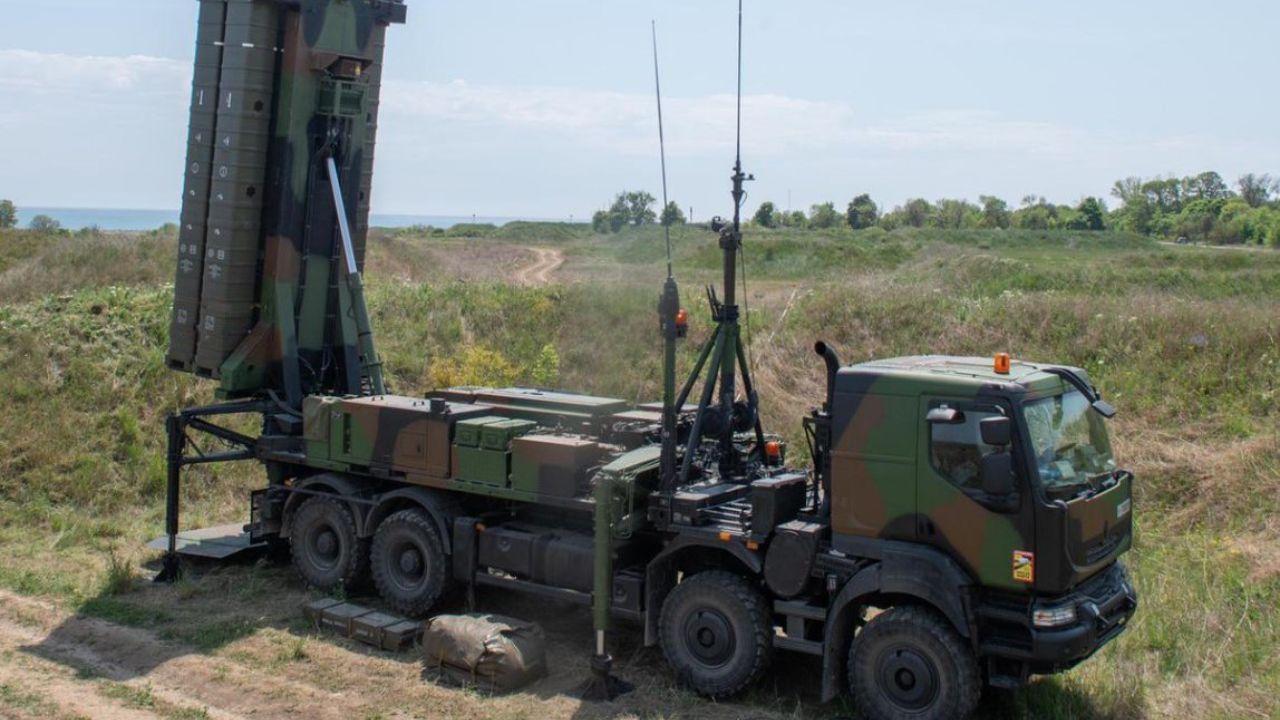
Denmark has announced a sweeping plan to revamp its national air defence, committing almost nine billion US dollars to acquire modern ground-based systems. This comes after decades without a substantial land-based missile shield, amid rising geopolitical tensions in Europe and a renewed focus on protecting civilian infrastructure and military sites from aerial threats. The decision marks a turning point, signaling that Denmark is treating air defence not as optional but essential to national security.
A Gap in Denmark’s Defences
After the Cold War, Denmark gradually scaled down its air defence battery, including decommissioning many surface-to-air missile systems. As global threats evolved with long-range missiles, drones, and near-peer adversaries re-emerging Danish authorities recognized vulnerability in its ability to protect airspace. Recent incidents and regional instability have pushed Denmark to restore comprehensive coverage.
What the New Plan Covers
The investment covers a broad suite of systems: short-, medium, and long-range missile systems; radar and sensor networks; command and control infrastructure; and integration platforms to make sure all components work together. It also includes rapid deployment units and possibly leasing options to speed arrival of initial capability while permanent systems are procured. The plan aims to ensure that by mid-decade, Denmark has both immediate protection and long-term resilience.
Procurement Approach: Speed and Versatility
A key element is urgency. Denmark is seeking interim solutions that can be deployed quickly, while strategic procurement channels work through more complex systems. Simultaneous investments in multiple suppliers aim to reduce single-vendor dependency and ensure diversified capability. Leasing systems in the short term would allow Denmark to plug gaps as longer-term purchases are finalized.
What’s at Stake: Protecting Civilians and Critical Sites
The new air defence capacity is meant to guard against aerial threats to urban centres, critical infrastructure power plants, airports, data hubs — and military assets. The goal is survivability in crisis, whether from long-range missiles, cruise threats, ballistic threats, or drone swarms. For Danish civilians, it means assurance that authorities can intercept or deter threats arriving from the skies.
Challenges to Implementation
Deploying modern air defence is complex. Regulatory clearances, site preparation for radar stations, integration of sensors, and logistics of missile stockpiles present technical challenges. Weather and geography (Denmark’s islands, coastal areas) require systems that operate reliably in harsh conditions. Budgeting must cover not just acquisition but maintenance, training, spare parts, and eventual upgrades.
Economic and Strategic Benefits
Beyond national security, the investment spurs industrial activity, skills development, and technological innovation. Suppliers, manufacturers, engineering firms stand to gain business. Strategically, having credible air defence strengthens Denmark’s position in NATO, bolsters deterrence in Northern Europe, and signals commitment to collective security.
Timeline and Deliverables
Initial systems are expected to become operational in phases. Short- and medium-range systems will likely deploy first, ensuring basic cover while more sophisticated, long-range systems come online. Sensors and command infrastructure are among the priority components. Denmark aims to start seeing hardware in the field by next year and to have most capability in place by the middle of the decade.
Comparing with Neighbouring Countries
Other European states have also ramped up air defence spend recently. Many in the Nordic and Baltic regions are upgrading short-range missile shields and radar networks. Denmark’s plan is ambitious compared to its recent history but in line with broader regional movement. It brings Denmark closer to peers who already have layered defence systems.
Strategic Implications for Regional Security
A well-armed Denmark adds depth to northern Europe’s ability to deter and respond to threat vectors. It supports NATO’s eastern flank, helps secure air corridors, and increases the resilience of collective defence. The upgrade also encourages allied cooperation in training, intelligence sharing, and possibly shared procurement or supply arrangements.
Public Trust and Policy Support
For such a large investment, public approval matters. Transparent procurement, accountability, and visible deployment progress will help maintain trust. Policymakers will need to demonstrate that budget allocation is justified, deliverables are meeting timelines, and that systems work not just on paper but in practice.
The Path Ahead
Denmark is entering a new era of defence preparedness. The plan to spend nearly nine billion dollars on air defence is a decisive move. If executed well, it may reshape the country’s security posture, protect its people more effectively, and contribute significantly to regional stability. The weeks ahead will be crucial in choosing suppliers, setting up infrastructure, and turning ambition into capability.
As Denmark moves forward with this investment, its success will hinge on execution, not just intention. Systems must function, deployment must be rapid, and maintenance consistent. For Denmark, the skies are no longer something taken for granted they are something to defend.
Denmark air defence, Defence investment, Ground-based air defence









Advances in Aerospace Technology and Commercial Aviation Recovery
Insights into breakthrough aerospace technologies and commercial aviation’s recovery amid 2025 chall

Defense Modernization and Strategic Spending Trends
Explore key trends in global defense modernization and strategic military spending shaping 2025 secu

Tens of Thousands Protest in Serbia on Anniversary of Deadly Roof Collapse
Tens of thousands in Novi Sad mark a year since a deadly station roof collapse that killed 16, prote

Canada PM Carney Apologizes to Trump Over Controversial Reagan Anti-Tariff Ad
Canadian PM Mark Carney apologized to President Trump over an Ontario anti-tariff ad quoting Reagan,

The ad that stirred a hornets nest, and made Canadian PM Carney say sorry to Trump
Canadian PM Mark Carney apologizes to US President Trump after a tariff-related ad causes diplomatic

Bengaluru-Mumbai Superfast Train Approved After 30-Year Wait
Railways approves new superfast train connecting Bengaluru and Mumbai, ending a 30-year demand, easi



