Post by : Avinab Raana
Photo : X / @Zicutake
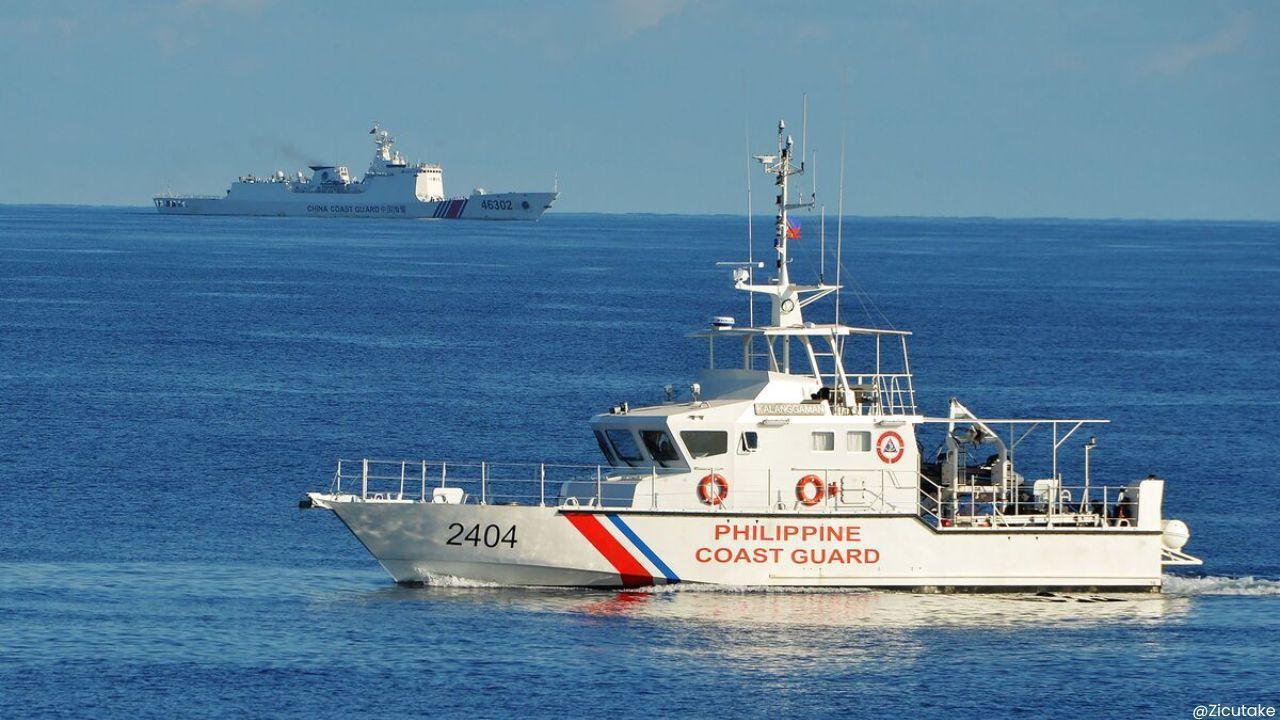
A fresh flashpoint has emerged in the already volatile South China Sea, as Chinese forces fired flares at a Philippine Coast Guard aircraft during a routine surveillance mission over the Kalayaan Island Group. The incident has once again highlighted the fragile security dynamics in one of the world’s most contested maritime regions, where aviation safety and geopolitical tensions are increasingly intersecting.
The aircraft, a Cessna Caravan operated by the Philippine Coast Guard, was conducting maritime domain awareness operations missions that are critical for monitoring territorial waters, ensuring maritime security, and asserting national presence.
According to Philippine authorities, the aircraft encountered aggressive actions near key reef areas, including Panganiban (Mischief Reef) and Zamora (Subi Reef), both of which are heavily militarized and controlled by China. During the flight, Chinese forces reportedly launched flares directly in the vicinity of the aircraft, creating a potentially hazardous situation.
Officials described the act as a “deliberate and dangerous provocation,” emphasizing that such maneuvers could have serious consequences for flight safety. Flares, while often used as warning signals, pose risks when deployed near aircraft due to potential engine ingestion or pilot distraction, particularly during low-altitude surveillance missions.
The aircraft also received repeated radio challenges, a common tactic in contested airspace, further intensifying the situation and underscoring the operational pressures faced by patrol crews.
This latest encounter is not a standalone event but part of a growing pattern of confrontations between Chinese forces and Philippine patrol units in the region. Reports indicate that similar flare incidents have occurred in recent weeks, pointing to an escalation in both frequency and intensity of such encounters.
The South China Sea has long been a hotspot of overlapping territorial claims involving multiple countries, but recent developments suggest a shift toward more assertive tactics. These include not only maritime standoffs but also increasingly aggressive aerial interactions, raising concerns about the risk of miscalculation or unintended escalation.
The Kalayaan Island Group, located within the Spratly Islands, holds immense strategic importance due to its proximity to key shipping routes and potential energy resources. Control over this region is not just about territorial sovereignty—it is about influence over one of the world’s most critical maritime corridors.
China’s extensive development of artificial islands and military infrastructure in the area has significantly altered the balance of power, enabling it to project force across vast stretches of the sea. Meanwhile, the Philippines continues to assert its claims through patrol missions and increased transparency operations aimed at documenting activities in the region.
Incidents like this go beyond regional disputes, they have broader implications for global aviation safety and international norms. The use of flares and aggressive interception tactics near civilian or government aircraft raises serious questions about adherence to established aviation safety protocols.
As airspace over contested regions becomes more crowded with surveillance and patrol flights, the risk of dangerous encounters increases. This places additional pressure on international bodies and regional alliances to establish clearer rules of engagement and prevent incidents from escalating into larger conflicts.
The flare incident over the Kalayaan Island Group is a stark reminder of how quickly geopolitical tensions can spill into the aviation domain. What may appear as a tactical warning maneuver carries the potential for far-reaching consequences, especially in a region where multiple nations operate in close proximity.
As both sides continue to assert their presence, the need for diplomatic engagement and robust safety frameworks becomes more urgent than ever. Because in the skies above disputed waters, even a single miscalculation can change the course of regional stability.
#trending #latest#SouthChinaSea #Geopolitics #AviationSafety #Philippines #ChinaTensions







Advances in Aerospace Technology and Commercial Aviation Recovery
Insights into breakthrough aerospace technologies and commercial aviation’s recovery amid 2025 chall

Defense Modernization and Strategic Spending Trends
Explore key trends in global defense modernization and strategic military spending shaping 2025 secu

Tens of Thousands Protest in Serbia on Anniversary of Deadly Roof Collapse
Tens of thousands in Novi Sad mark a year since a deadly station roof collapse that killed 16, prote

Canada PM Carney Apologizes to Trump Over Controversial Reagan Anti-Tariff Ad
Canadian PM Mark Carney apologized to President Trump over an Ontario anti-tariff ad quoting Reagan,

The ad that stirred a hornets nest, and made Canadian PM Carney say sorry to Trump
Canadian PM Mark Carney apologizes to US President Trump after a tariff-related ad causes diplomatic

Bengaluru-Mumbai Superfast Train Approved After 30-Year Wait
Railways approves new superfast train connecting Bengaluru and Mumbai, ending a 30-year demand, easi



