Post by : Avinab Raana
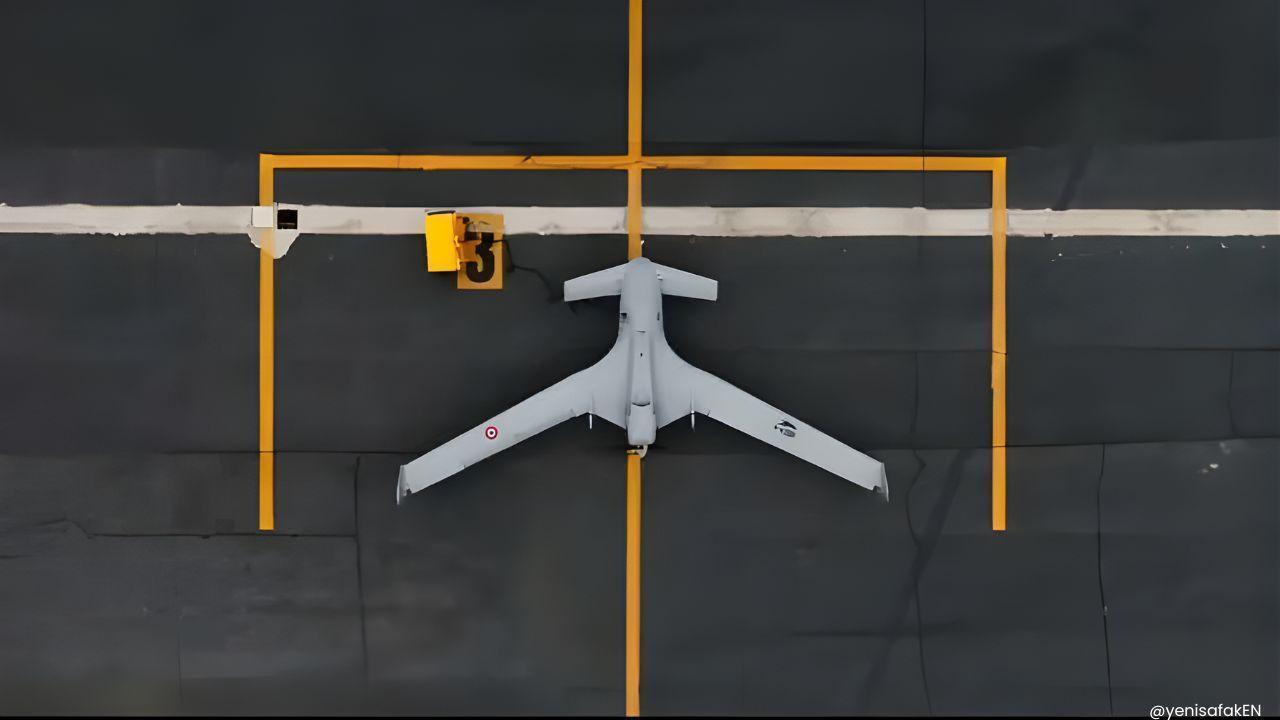
Photo : X / @yenisafakEN
Turkish defense technology company Baykar has unveiled its latest unmanned aerial platform, the K2 kamikaze drone, marking another step forward in autonomous battlefield systems. The drone has been designed to perform long-range strike missions while integrating advanced artificial intelligence features that allow it to operate with minimal human intervention. The introduction of the K2 reflects the growing importance of unmanned aerial vehicles in modern warfare, where autonomous systems are increasingly replacing traditional manned platforms in reconnaissance and precision strike missions.
One of the most notable capabilities of the K2 drone is its AI-powered swarm coordination system, which allows multiple drones to operate together as a coordinated network. Through intelligent communication between units, the drones can maintain formation, share target data, and execute synchronized attacks. Swarm technology significantly enhances operational flexibility because multiple drones can overwhelm defensive systems while simultaneously carrying out surveillance and strike operations.
The K2 drone is designed as a loitering munition, meaning it can remain airborne while searching for targets before launching a precision strike. Its extended operational range and payload capacity allow it to engage strategic targets located far from its launch point. This combination of range and payload makes the platform suitable for a variety of missions including reconnaissance, tactical strike operations, and suppression of enemy defenses.
Another important feature of the K2 platform is its ability to operate from relatively simple launch environments. Unlike many large unmanned aircraft that require specialized infrastructure, the drone is designed for flexible deployment, enabling rapid use in forward operational zones. This capability is particularly valuable in modern combat environments where mobility and adaptability often determine the effectiveness of unmanned systems.
The launch of the K2 drone strengthens Baykar’s position in the global defense technology sector. The company has gained international recognition for its unmanned aerial platforms and continues to expand its portfolio with increasingly sophisticated autonomous systems. As global demand for advanced drones grows, manufacturers are investing heavily in AI-driven control systems, extended flight ranges, and swarm coordination capabilities.
The development of the K2 kamikaze drone highlights the rapid transformation taking place in military technology. Autonomous systems capable of operating in coordinated networks are expected to play a central role in future conflicts.With advanced AI integration and swarm capabilities, platforms like the K2 represent a shift toward highly automated combat systems that can perform complex missions with speed, precision, and adaptability.
Baykar K2 kamikaze drone, AI swarm drone technology, Baykar loitering munition K2, autonomous drone swarm warfare, Turkish defense UAV innovation, long range kamikaze drone system, AI powered military drones








Advances in Aerospace Technology and Commercial Aviation Recovery
Insights into breakthrough aerospace technologies and commercial aviation’s recovery amid 2025 chall

Defense Modernization and Strategic Spending Trends
Explore key trends in global defense modernization and strategic military spending shaping 2025 secu

Tens of Thousands Protest in Serbia on Anniversary of Deadly Roof Collapse
Tens of thousands in Novi Sad mark a year since a deadly station roof collapse that killed 16, prote

Canada PM Carney Apologizes to Trump Over Controversial Reagan Anti-Tariff Ad
Canadian PM Mark Carney apologized to President Trump over an Ontario anti-tariff ad quoting Reagan,

The ad that stirred a hornets nest, and made Canadian PM Carney say sorry to Trump
Canadian PM Mark Carney apologizes to US President Trump after a tariff-related ad causes diplomatic

Bengaluru-Mumbai Superfast Train Approved After 30-Year Wait
Railways approves new superfast train connecting Bengaluru and Mumbai, ending a 30-year demand, easi



