Post by : Saif
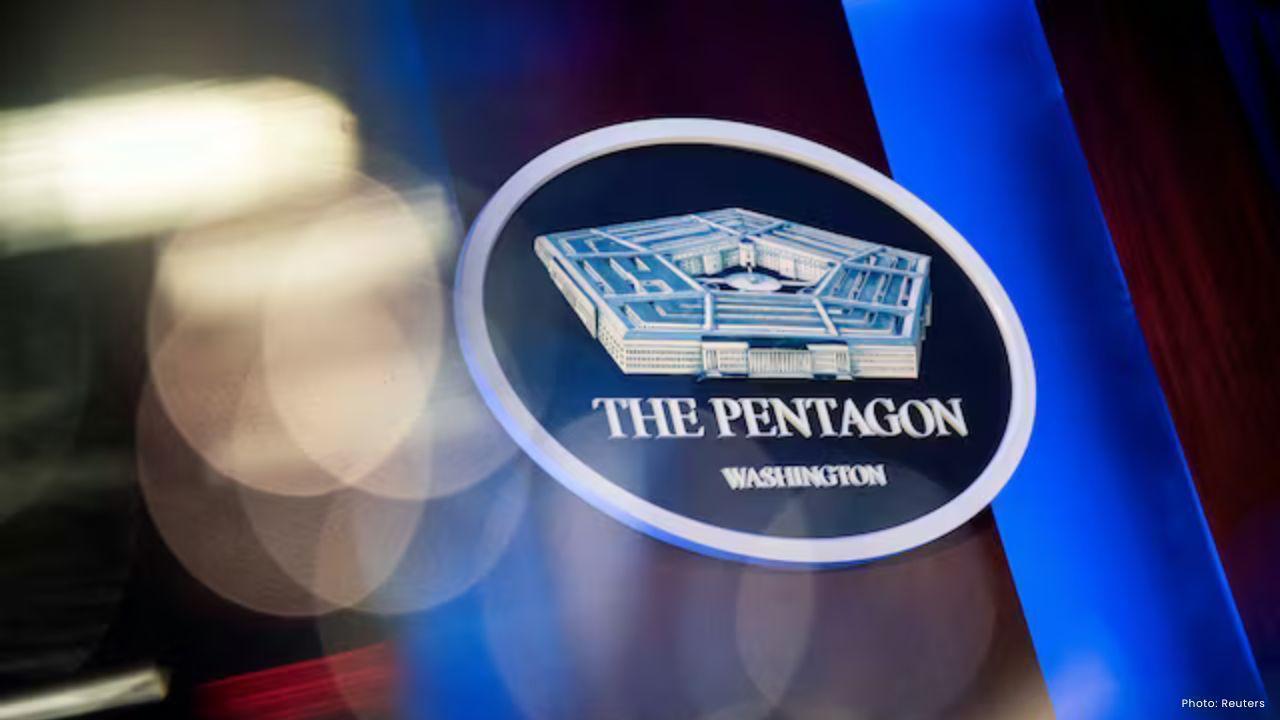
A major dispute has emerged between the U.S. Department of Defense and the artificial intelligence company Anthropic. The company has asked a U.S. appeals court to temporarily stop the Pentagon’s decision that labeled it a “supply-chain risk.” The case highlights growing tensions between technology companies and governments over how artificial intelligence should be used in military operations.
Anthropic, the developer of the AI system known as Claude, filed a request with the U.S. Court of Appeals for the District of Columbia Circuit asking judges to pause the Pentagon’s decision while the legal challenge is reviewed. The company warned that the government’s action could cause serious financial damage and harm its reputation in the technology industry.
The dispute began after the U.S. Defense Department decided to classify Anthropic as a supply-chain risk. This label means that the Pentagon and its contractors are no longer allowed to use the company’s artificial intelligence products. The designation is usually reserved for companies that are seen as security threats to the government’s technology systems.
According to Anthropic, the Pentagon’s decision could lead to large financial losses. In court documents, the company said the move could result in “irreparable harm” and may cost it hundreds of millions or even billions of dollars in lost revenue.
The disagreement between the company and the U.S. government developed over how the military wanted to use Anthropic’s AI technology. Officials reportedly asked the company to loosen restrictions that prevented its systems from being used in mass surveillance of civilians or in fully autonomous weapons. Anthropic refused to remove those safeguards, saying it wanted stronger protections to prevent misuse of its technology.
After negotiations failed, the Pentagon responded by placing the company on a national security blacklist. The move required government agencies to stop using the company’s AI tools and gave contractors a deadline to phase them out.
Anthropic argues that the decision was unfair and possibly unlawful. The company has already filed a separate lawsuit in a California federal court asking judges to overturn the designation entirely. The new request for a court stay is intended to temporarily pause the ban until the courts can fully examine the case.
The case has drawn attention across the technology industry. Some experts say the dispute reflects a larger debate about how powerful artificial intelligence systems should be used by governments, especially in military operations. As AI becomes more advanced, questions about safety, ethics, and control have become central issues in global technology policy.
Several large technology companies and researchers have shown support for Anthropic’s legal challenge. Some industry leaders worry that strict government actions against AI developers could slow innovation or create uncertainty for companies working with advanced technologies.
At the same time, national security officials argue that the military must have reliable access to advanced AI tools in order to maintain technological advantages. Governments around the world are investing heavily in artificial intelligence for defense purposes, including intelligence analysis, cybersecurity, and military planning.
The dispute also highlights the growing importance of AI in modern defense systems. Artificial intelligence can analyze large amounts of data quickly, identify threats, and help military leaders make faster decisions. Because of this, the technology has become a strategic priority for many countries.
However, the use of AI in warfare also raises serious ethical questions. Many researchers have warned about the dangers of autonomous weapons systems that can operate without human control. Others worry about the potential for governments to use AI tools for mass surveillance.
Anthropic has positioned itself as a company that focuses strongly on AI safety and responsible development. Its leadership has said the company wants to ensure that advanced AI systems are not used in ways that could harm society.
The Pentagon, on the other hand, believes that access to cutting-edge AI tools is essential for national security. Officials say the military must be able to use advanced technologies in order to respond to threats and protect the country.
Because of these competing priorities, the conflict between Anthropic and the Defense Department has become one of the most closely watched legal battles in the technology sector.
Legal experts say the outcome of the case could set an important precedent for how governments regulate artificial intelligence companies in the future. If the courts rule in favor of Anthropic, it could limit the government’s power to block technology companies from defense contracts. If the Pentagon wins, it may strengthen government authority over companies whose technologies are used in national security systems.
For now, the courts will decide whether to temporarily pause the Pentagon’s decision while the legal battle continues. That ruling could determine whether Anthropic’s technology can remain part of the U.S. defense supply chain in the near future.
The dispute also signals a broader shift in the relationship between governments and artificial intelligence companies. As AI becomes more powerful and more important for national security, conflicts over control, ethics, and regulation are likely to become more common.
In the coming months, the legal battle between Anthropic and the Pentagon may help shape how artificial intelligence is developed, regulated, and used in both civilian life and military operations.
#trending #latest #ArtificialIntelligence #Anthropic #Pentagon #AITechnology #TechPolicy #NationalSecurity #AIEthics #TechIndustry #GlobalTechnology #armustnews








Advances in Aerospace Technology and Commercial Aviation Recovery
Insights into breakthrough aerospace technologies and commercial aviation’s recovery amid 2025 chall

Defense Modernization and Strategic Spending Trends
Explore key trends in global defense modernization and strategic military spending shaping 2025 secu

Tens of Thousands Protest in Serbia on Anniversary of Deadly Roof Collapse
Tens of thousands in Novi Sad mark a year since a deadly station roof collapse that killed 16, prote

Canada PM Carney Apologizes to Trump Over Controversial Reagan Anti-Tariff Ad
Canadian PM Mark Carney apologized to President Trump over an Ontario anti-tariff ad quoting Reagan,

The ad that stirred a hornets nest, and made Canadian PM Carney say sorry to Trump
Canadian PM Mark Carney apologizes to US President Trump after a tariff-related ad causes diplomatic

Bengaluru-Mumbai Superfast Train Approved After 30-Year Wait
Railways approves new superfast train connecting Bengaluru and Mumbai, ending a 30-year demand, easi



