Post by : Avinab Raana
Photo : X / FLYING Magazine
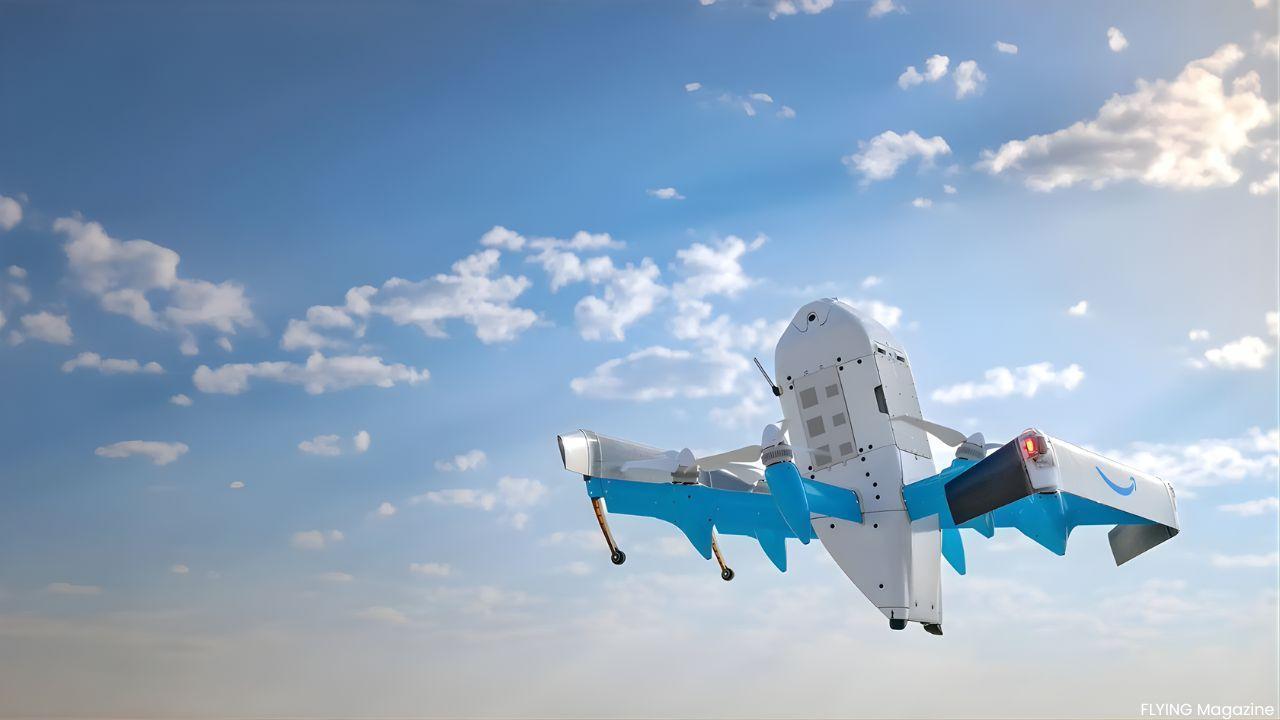
Amazon has made a sharp and significant move in the fast-evolving drone delivery space by pulling Prime Air out of the Commercial Drone Alliance. On the surface, it looks like a trade group exit. In reality, it points to something much bigger: a widening divide over how the drone industry should balance innovation, safety, and regulation as autonomous aircraft move closer to mainstream commercial use. This is not just about one company walking away from an industry body. It is about who gets to shape the future rules of autonomous aviation.
The core disagreement appears to revolve around drone safety standards, especially for flights that operate beyond the visual line of sight of human operators. As commercial drone delivery scales up, one of the most sensitive questions is how these aircraft will safely detect, avoid, and respond to other objects in shared airspace. Amazon has clearly signaled that it wants stronger safeguards and a more cautious regulatory approach. That stance puts it at odds with broader industry efforts that may prefer more flexible frameworks to speed up commercial deployment.
At the heart of this dispute is detect-and-avoid technology, one of the most critical building blocks for autonomous drone operations. For drone delivery networks to function safely at scale, drones must be able to sense nearby aircraft, obstacles, and unexpected movement in real time, then react instantly without depending on constant human control. That capability is not just a technical feature. It is the foundation of public trust. Without it, the promise of large-scale drone delivery remains difficult to defend in crowded and sensitive airspace.
Amazon’s exit also reflects a strategic calculation. Prime Air is not simply another experimental project. It is a high-visibility business initiative tied to the company’s larger vision of faster, automated logistics. That means every safety debate carries brand, regulatory, and commercial consequences. By stepping away from the alliance, Amazon is drawing a line and making it clear that it does not want its position diluted in a broader industry compromise. In a sector where public confidence can make or break adoption, that kind of positioning matters.
For years, drone delivery was treated as an exciting glimpse into the future. That phase is ending. The conversation is now becoming more serious, more political, and more commercially important. Regulators, companies, and the public are no longer asking whether autonomous drones are coming. They are asking what rules will govern them once they arrive at scale. That is why this split matters. It reveals that the next stage of drone growth will be shaped as much by policy and safety standards as by engineering breakthroughs.
Amazon’s departure from the Commercial Drone Alliance may prove to be a turning point for the drone sector. It exposes the tension between speed and safety, between industry unity and competitive strategy, and between ambition and accountability. The future of autonomous delivery will not be decided by technology alone. It will be decided by who earns the right to operate in the skies with trust, discipline, and a system the public is willing to accept.
#trending #latest, Amazon Prime Air exit, Commercial Drone Alliance, drone safety rules, autonomous delivery drones, detect and avoid technology, drone regulation debate, Amazon drone delivery









Advances in Aerospace Technology and Commercial Aviation Recovery
Insights into breakthrough aerospace technologies and commercial aviation’s recovery amid 2025 chall

Defense Modernization and Strategic Spending Trends
Explore key trends in global defense modernization and strategic military spending shaping 2025 secu

Tens of Thousands Protest in Serbia on Anniversary of Deadly Roof Collapse
Tens of thousands in Novi Sad mark a year since a deadly station roof collapse that killed 16, prote

Canada PM Carney Apologizes to Trump Over Controversial Reagan Anti-Tariff Ad
Canadian PM Mark Carney apologized to President Trump over an Ontario anti-tariff ad quoting Reagan,

The ad that stirred a hornets nest, and made Canadian PM Carney say sorry to Trump
Canadian PM Mark Carney apologizes to US President Trump after a tariff-related ad causes diplomatic

Bengaluru-Mumbai Superfast Train Approved After 30-Year Wait
Railways approves new superfast train connecting Bengaluru and Mumbai, ending a 30-year demand, easi



