Post by : Saif
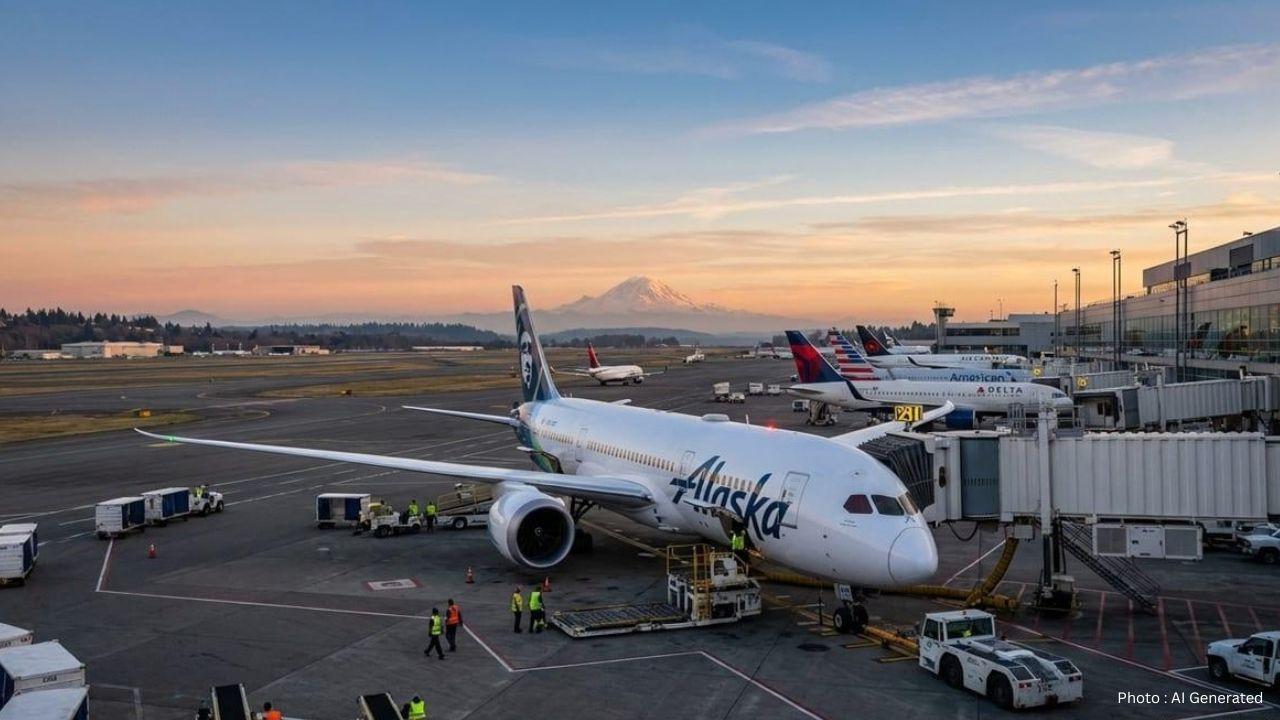
Alaska Airlines is expanding its international network from Seattle as it takes its long-running competition with Delta Air Lines into overseas markets.
The airline plans to increase the number of intercontinental destinations from Seattle to at least 15 by 2030. New services to Paris and Athens are expected to begin next year as Alaska targets more premium travelers and international passengers.
The expansion is part of a broader strategy to increase revenue from international travel, premium cabins and its loyalty program while maintaining the lower operating costs that have traditionally supported its business.
Alaska's expansion puts much of its new international capacity directly against Delta in Seattle.
Data from aviation analytics company Cirium shows that about 92% of Alaska's scheduled intercontinental seats from Seattle during the 12 months through August 2027 are on routes that Delta also serves nonstop.
Delta has strengthened its position in Seattle by adding international routes and increasing its airport presence. The airline launched Rome service this summer and plans to start daily flights to Tokyo Narita in March 2027.
Delta also has preferential access to 18 gates at Seattle-Tacoma International Airport and has expanded its lounge facilities.
Alaska has a strong presence in the Seattle market, including through Hawaiian Airlines. Together, the airlines account for about half of scheduled airline seats in the Seattle area, roughly twice Delta's share.
The balance changes on international routes. Delta currently operates about twice as many scheduled intercontinental seats from Seattle as Alaska, according to Cirium data.
Alaska plans to use its strong domestic network to bring passengers from across the western United States to Seattle before connecting them to long-haul international flights.
More than half of passengers on Alaska's Seoul and Reykjavik services connect through Seattle, according to the airline. London and Rome have a larger share of passengers starting or ending their journeys in the local market.
Read more: Boeing Set to Deliver Upgraded 787 Dreamliners With Longer Range and Higher Cargo Capacity
Alaska is also changing the way it makes money from passengers. The airline wants a larger share of revenue to come from premium cabins and other higher-value services rather than relying heavily on its main economy cabin.
Alaska expects nearly 60% of its revenue to come from outside the price-sensitive main cabin by 2030, compared with 53% this year.
The airline is adding Boeing 787 aircraft, premium seating and lounges as part of the international expansion.
Alaska also plans to join American Airlines' revenue-sharing ventures across the Atlantic and Pacific. If regulators approve the arrangements, the partnerships could allow the airlines and their international partners to coordinate fares and schedules and share revenue on selected routes.
International expansion also brings additional costs. Alaska needs more aircraft, pilots, cabin crew and airport infrastructure while facing stronger competition from larger airlines.
The company has already experienced higher crew expenses as it builds its Boeing 787 operation in Seattle. Alaska expects those costs to become more manageable as its long-haul fleet grows.
Fuel prices are another concern. The airline's profits have come under pressure from higher fuel costs linked to the wider disruption caused by the Iran war.
Alaska expects to finish 2026 with net leverage at about three times its long-term target, limiting its financial flexibility as it expands.
International travel represents about 30% of airline revenue in the Seattle market, according to Alaska. The company historically captured only part of that business.
Its strategy now depends on turning its strong domestic position into a larger share of international and premium travel.
The airline's first European summer provided mixed results. Strong premium demand on London flights helped the operation make a profit in July, but higher fuel prices later wiped out that gain.
Alaska's expansion will therefore depend on whether growing international and premium revenue can offset higher fuel, aircraft, staffing and operating costs as competition with Delta intensifies.
#trending #latest #AlaskaAirlines #DeltaAirLines #SeattleAirport #Airlines #AviationNews #InternationalFlights #AirTravel #Boeing787 #TravelNews #USAirlines








Advances in Aerospace Technology and Commercial Aviation Recovery
Insights into breakthrough aerospace technologies and commercial aviation’s recovery amid 2025 chall

Defense Modernization and Strategic Spending Trends
Explore key trends in global defense modernization and strategic military spending shaping 2025 secu

Tens of Thousands Protest in Serbia on Anniversary of Deadly Roof Collapse
Tens of thousands in Novi Sad mark a year since a deadly station roof collapse that killed 16, prote

Canada PM Carney Apologizes to Trump Over Controversial Reagan Anti-Tariff Ad
Canadian PM Mark Carney apologized to President Trump over an Ontario anti-tariff ad quoting Reagan,

The ad that stirred a hornets nest, and made Canadian PM Carney say sorry to Trump
Canadian PM Mark Carney apologizes to US President Trump after a tariff-related ad causes diplomatic

Bengaluru-Mumbai Superfast Train Approved After 30-Year Wait
Railways approves new superfast train connecting Bengaluru and Mumbai, ending a 30-year demand, easi



