Post by : Saif
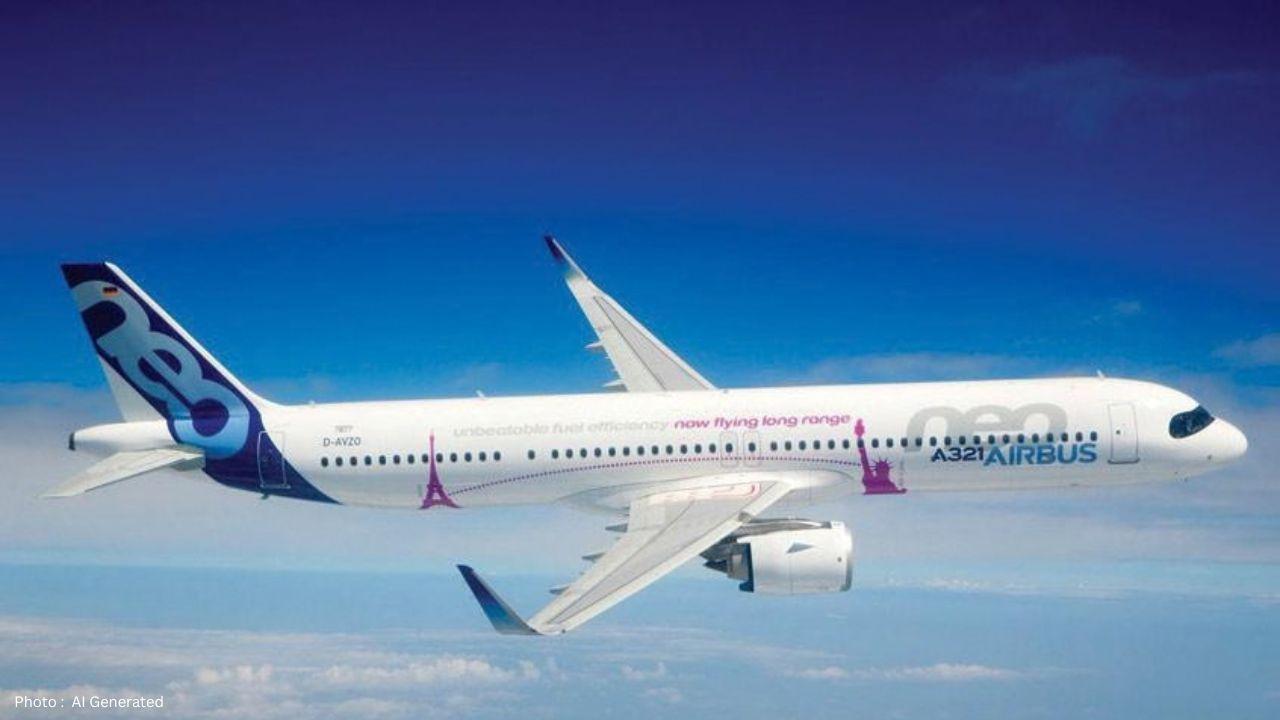
Airbus has identified a quality defect in the fuselage structure of its popular A321neo aircraft, affecting around 500 planes, but the company says the issue does not create a safety risk and aircraft can continue flying.
The issue affects about 250 A321neo aircraft already in service and another 250 still in production, according to a person familiar with the matter. Airbus said it has identified and contained the source of the problem and has a remedy available.
Airbus said the issue involves a deviation in the surface protection coating applied to structural components called stringers. These components run lengthwise along the aircraft fuselage and help support its structure.
The problem was discovered while parts were already undergoing rework on the production line. Airbus said the issue had been contained and that there was no immediate safety concern for aircraft already operating.
Airlines are continuing to accept A321neo deliveries without requiring additional work before delivery, according to the source.
The quality issue could affect approximately 500 A321neo aircraft in total. Around half are already flying with airlines, while the remaining aircraft are still being built.
The longer-range A321XLR is not affected by the issue, according to the source.
The A321neo is Airbus' largest single-aisle aircraft and can carry up to 244 passengers. It is designed to operate routes of up to around 4,000 nautical miles, or 7,400 kilometres.
The latest problem comes less than a year after Airbus faced another fuselage-related manufacturing issue involving A320-family aircraft.
That earlier issue involved defects in fuselage panels and contributed to delivery delays. Airbus also described that problem as a quality issue without safety implications.
The latest defect is therefore being closely watched by airlines and industry suppliers as Airbus works to increase production of its narrow-body aircraft.
Read more: New Airbus Commercial Chief Pledges Focus on Production and Supports Bigger A220
Airbus is seeking to raise narrow-body jet production to 75 aircraft per month from around 60 currently.
The company first identified the latest issue during the summer, with further analysis providing additional findings recently, according to the source.
The affected fuselage component is produced by Airbus' aerostructures division Stelia.
Although Airbus says there is no immediate requirement for repairs, European aviation regulators could issue a directive requiring affected aircraft to be inspected or repaired within a specified period.
Such a directive could determine how airlines manage the affected aircraft in the coming months.
Delta Air Lines, which operates A321neo aircraft, said it remains in contact with manufacturers and would follow operator recommendations and regulatory requirements.
For now, Airbus says A321neo aircraft can continue operating because the quality defect does not pose a safety risk. Airlines are also continuing to receive aircraft while Airbus works on the corrective solution.
The main issue is expected to involve manufacturing and possible future repair requirements rather than an immediate grounding of aircraft. Any regulatory directive could provide further details on inspections, repair deadlines and the number of aircraft requiring corrective work.
The development will remain important for Airbus as it tries to increase production of the A320 family while managing supply-chain and manufacturing challenges.
#trending #latest #Airbus #A321neo #AirbusA321neo #AviationNews #AircraftNews #AirlineNews #Aerospace #AviationIndustry #AirbusNews #A321neoDefect #AircraftSafety #Aviation2026







Advances in Aerospace Technology and Commercial Aviation Recovery
Insights into breakthrough aerospace technologies and commercial aviation’s recovery amid 2025 chall

Defense Modernization and Strategic Spending Trends
Explore key trends in global defense modernization and strategic military spending shaping 2025 secu

Tens of Thousands Protest in Serbia on Anniversary of Deadly Roof Collapse
Tens of thousands in Novi Sad mark a year since a deadly station roof collapse that killed 16, prote

Canada PM Carney Apologizes to Trump Over Controversial Reagan Anti-Tariff Ad
Canadian PM Mark Carney apologized to President Trump over an Ontario anti-tariff ad quoting Reagan,

The ad that stirred a hornets nest, and made Canadian PM Carney say sorry to Trump
Canadian PM Mark Carney apologizes to US President Trump after a tariff-related ad causes diplomatic

Bengaluru-Mumbai Superfast Train Approved After 30-Year Wait
Railways approves new superfast train connecting Bengaluru and Mumbai, ending a 30-year demand, easi



