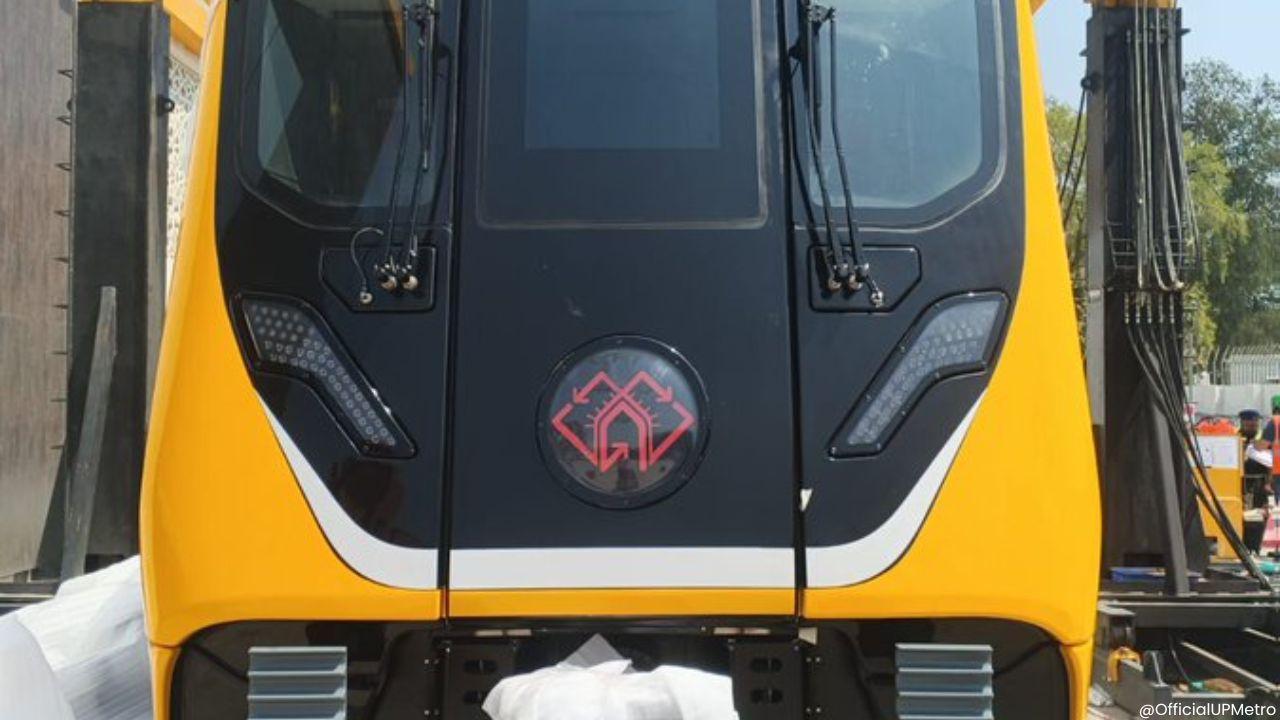
Post by : Avinab Raana
Photo : X / @OfficialUPMetro
In a breakthrough that is quietly redefining the economics of urban rail systems in India, Agra Metro has demonstrated how cutting-edge technology can transform everyday operations into powerful cost-saving mechanisms. Within just one year of implementing regenerative braking technology, the metro system has saved approximately ₹5 million in electricity costs proving that innovation in infrastructure can deliver immediate financial and environmental returns.
This development is not just about savings; it represents a deeper shift in how metro systems are designed and operated. At a time when cities are under pressure to reduce emissions while managing rising operational costs, Agra Metro is emerging as a model for smart, sustainable transit solutions that deliver measurable impact from day one.
At the heart of this success lies Sécheron’s advanced IGBT inverter technology, which enables the recovery of energy generated during train braking. In conventional systems, this energy is lost as heat, effectively wasting a valuable resource. However, Agra Metro has turned this limitation into an opportunity by capturing that energy and feeding it back into the power grid.
This recovered energy can then be reused by other trains or distributed across the network, significantly reducing overall electricity consumption. The result is a highly efficient system where energy is continuously recycled rather than wasted transforming braking from a loss-making process into a value-generating one.
The ₹5 million annual saving achieved by a single inverter unit is just the beginning. With a projected payback period of less than five years and an operational lifespan exceeding three decades, the technology is expected to generate substantial long-term financial returns. Over its lifecycle, the system could deliver savings worth over $1 million, highlighting its economic viability at scale.
This makes regenerative braking not just an environmental solution, but a financially strategic investment for metro operators. In a sector where energy costs form a significant portion of operational expenses, such innovations can dramatically improve profitability and sustainability simultaneously.
Agra Metro’s success is particularly significant in the context of India’s broader push toward sustainable urban mobility. As cities expand and metro networks become the backbone of urban transportation, the need for energy-efficient systems is more critical than ever.
By adopting regenerative braking technology, Agra Metro is reducing its carbon footprint while setting a benchmark for other metro projects across the country. It demonstrates how infrastructure decisions made during the early stages of development can have long-lasting environmental and economic benefits.
What makes this achievement even more impactful is its scalability. As more inverter units are deployed across the network, the cumulative savings are expected to increase significantly, amplifying both financial and environmental benefits. This positions regenerative braking as a cornerstone technology for future metro systems—not just in India, but globally.
Cities looking to modernize their public transport infrastructure can draw valuable lessons from Agra’s approach: integrate smart energy systems from the outset, prioritize efficiency, and leverage technology to turn operational challenges into opportunities.
Agra Metro’s ₹5 million saving is more than a headline, it is a glimpse into the future of rail transportation, where systems are designed to be self-optimizing, energy-efficient, and environmentally responsible. In an era where sustainability is no longer optional, such innovations are becoming essential to the success of urban transit networks.
As metro systems around the world race to become greener and more cost-effective, Agra has quietly taken the lead proving that sometimes, the most powerful revolutions are the ones that happen behind the scenes.
#trending #latest,#AgraMetro #RegenerativeBraking #SustainableTransit #EnergyEfficiency #SmartRail










Advances in Aerospace Technology and Commercial Aviation Recovery
Insights into breakthrough aerospace technologies and commercial aviation’s recovery amid 2025 chall

Defense Modernization and Strategic Spending Trends
Explore key trends in global defense modernization and strategic military spending shaping 2025 secu

Tens of Thousands Protest in Serbia on Anniversary of Deadly Roof Collapse
Tens of thousands in Novi Sad mark a year since a deadly station roof collapse that killed 16, prote

Canada PM Carney Apologizes to Trump Over Controversial Reagan Anti-Tariff Ad
Canadian PM Mark Carney apologized to President Trump over an Ontario anti-tariff ad quoting Reagan,

The ad that stirred a hornets nest, and made Canadian PM Carney say sorry to Trump
Canadian PM Mark Carney apologizes to US President Trump after a tariff-related ad causes diplomatic

Bengaluru-Mumbai Superfast Train Approved After 30-Year Wait
Railways approves new superfast train connecting Bengaluru and Mumbai, ending a 30-year demand, easi



