Post by : Saif
Germany's far-right Alternative for Germany, or AfD, is gaining strong support in eastern states ahead of upcoming regional elections, despite economists warning that some of the party's policies could hurt the same regions where it is most popular.
AfD support has reached around 41% in Saxony-Anhalt, which will hold its regional election on September 6, while the party is polling at about 36% in Mecklenburg-Vorpommern, where voters will go to the polls on September 20.
Support for the AfD in eastern Germany is linked not only to immigration but also to long-standing economic and demographic problems.
Experts say many eastern communities continue to feel disadvantaged more than three decades after German reunification.
Several regions are dealing with declining populations, shortages of skilled workers, higher unemployment and lower incomes compared with western Germany.
Mecklenburg-Vorpommern has lost nearly one-fifth of its population since reunification, while Saxony-Anhalt has one of Germany's highest proportions of older residents.
Economist Oliver Holtemoeller of the Halle Institute for Economic Research said labour shortages are becoming one of the biggest challenges for Mecklenburg-Vorpommern's future.
Population decline has been particularly severe among younger residents.
Research by DIW Berlin indicates that areas with fewer young, highly educated people and a larger population aged over 60 tend to record stronger support for the AfD.
However, some younger residents who remain in eastern Germany say attitudes are changing.
Pablo Himmelspach, a 29-year-old student and member of the rap duo Hinterlandgang, said young people in his generation are increasingly willing to stay in the region rather than automatically move away.
Community initiatives are also attempting to create more opportunities for young people.
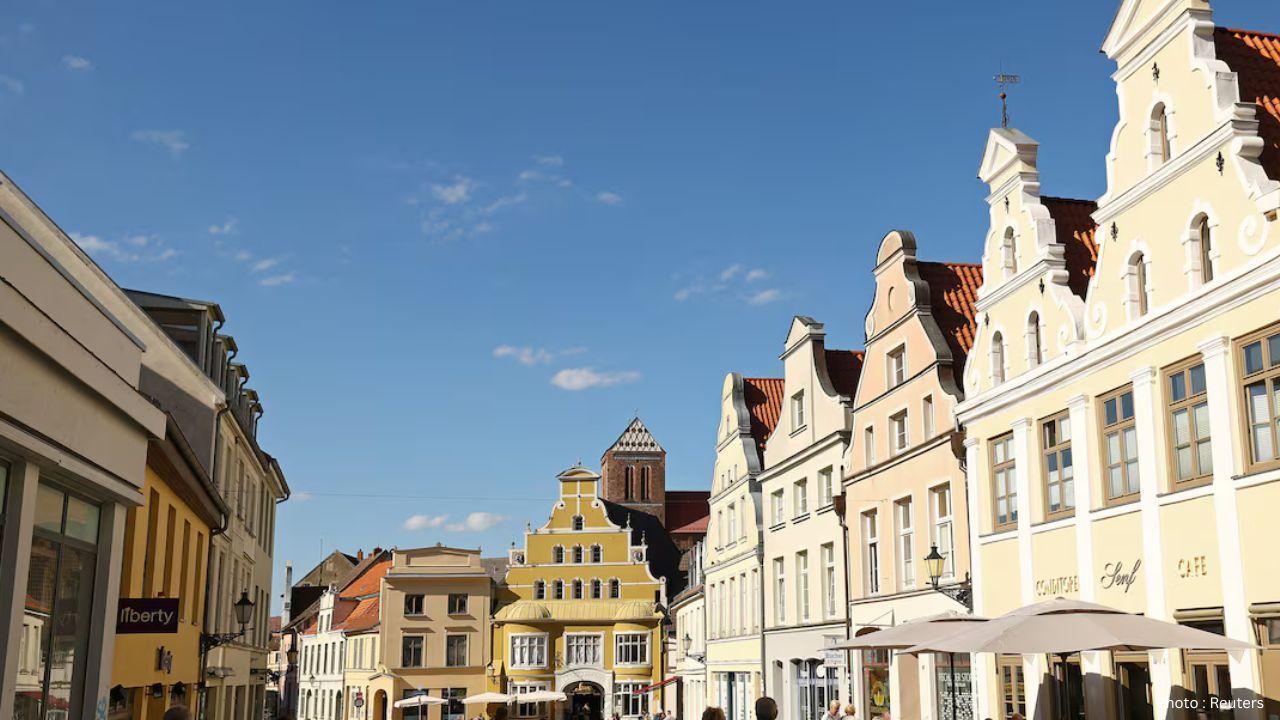
In Wismar, a mobile Disco Bus travels to villages and schoolyards, providing entertainment for teenagers in areas where local budgets cannot support similar programmes.
Economists argue that some of the AfD's proposed policies could make economic problems in eastern Germany worse.
Marcel Fratzscher, president of DIW Berlin, said dissatisfaction in regions with strong AfD support was understandable but argued that voters could ultimately harm their own economic interests by supporting the party.
A DIW study estimates that Saxony-Anhalt could lose around €1,600 in annual income per person and 10,000 jobs if key AfD policies were implemented.
The party has proposed measures including leaving the euro and European Union, reducing immigration and cutting state spending.
AfD officials reject the criticism and argue that their policies would instead strengthen the economy.
Hans-Thomas Tillschneider, the party's deputy chair in Saxony-Anhalt, said eliminating CO2-related charges and ending sanctions against Russia would reduce energy costs and boost foreign trade.
He argued that these measures could create stronger economic growth.
The debate is particularly important for eastern Germany, where businesses tend to be smaller, worker qualifications are generally lower and economic opportunities are more limited than in many western regions.
Some eastern German institutions are trying to address labour shortages by attracting international students.
At the University of Rostock, an internationalised marine engineering programme expanded from just 10 students a year to around 200 within two semesters after being redesigned with local companies.
Students from India, Pakistan, Egypt and other countries have joined the programme.
University officials hope many international graduates will remain in the region and contribute to the local workforce.
However, proposed AfD policies that would introduce tuition fees for non-EU students have raised concerns among educators.
Read more: Karachi Mall Fire Death Toll Rises to 11 as Search Continues for Missing
Businesses involved in renewable energy could also be affected by the AfD's energy policies.
Lars Gottschligg, an entrepreneur in Saxony-Anhalt, has developed a facility combining solar power, energy storage, data centres and electric vehicle charging.
While the AfD favours a greater role for conventional energy sources, Gottschligg believes economic factors will continue to support renewable power.
He argues that consumers want both affordable energy and a healthy environment and says renewable energy could continue to grow if it remains economically competitive.
#trending #latest #Germany #AfD #AlternativeForGermany #GermanPolitics #SaxonyAnhalt #MecklenburgVorpommern #EasternGermany #GermanyElection #GermanElection #EuropeanPolitics #PoliticsNews #Economy







Advances in Aerospace Technology and Commercial Aviation Recovery
Insights into breakthrough aerospace technologies and commercial aviation’s recovery amid 2025 chall

Defense Modernization and Strategic Spending Trends
Explore key trends in global defense modernization and strategic military spending shaping 2025 secu

Tens of Thousands Protest in Serbia on Anniversary of Deadly Roof Collapse
Tens of thousands in Novi Sad mark a year since a deadly station roof collapse that killed 16, prote

Canada PM Carney Apologizes to Trump Over Controversial Reagan Anti-Tariff Ad
Canadian PM Mark Carney apologized to President Trump over an Ontario anti-tariff ad quoting Reagan,

The ad that stirred a hornets nest, and made Canadian PM Carney say sorry to Trump
Canadian PM Mark Carney apologizes to US President Trump after a tariff-related ad causes diplomatic

Bengaluru-Mumbai Superfast Train Approved After 30-Year Wait
Railways approves new superfast train connecting Bengaluru and Mumbai, ending a 30-year demand, easi



