Post by : Avinab Raana
Photo : X / Splash
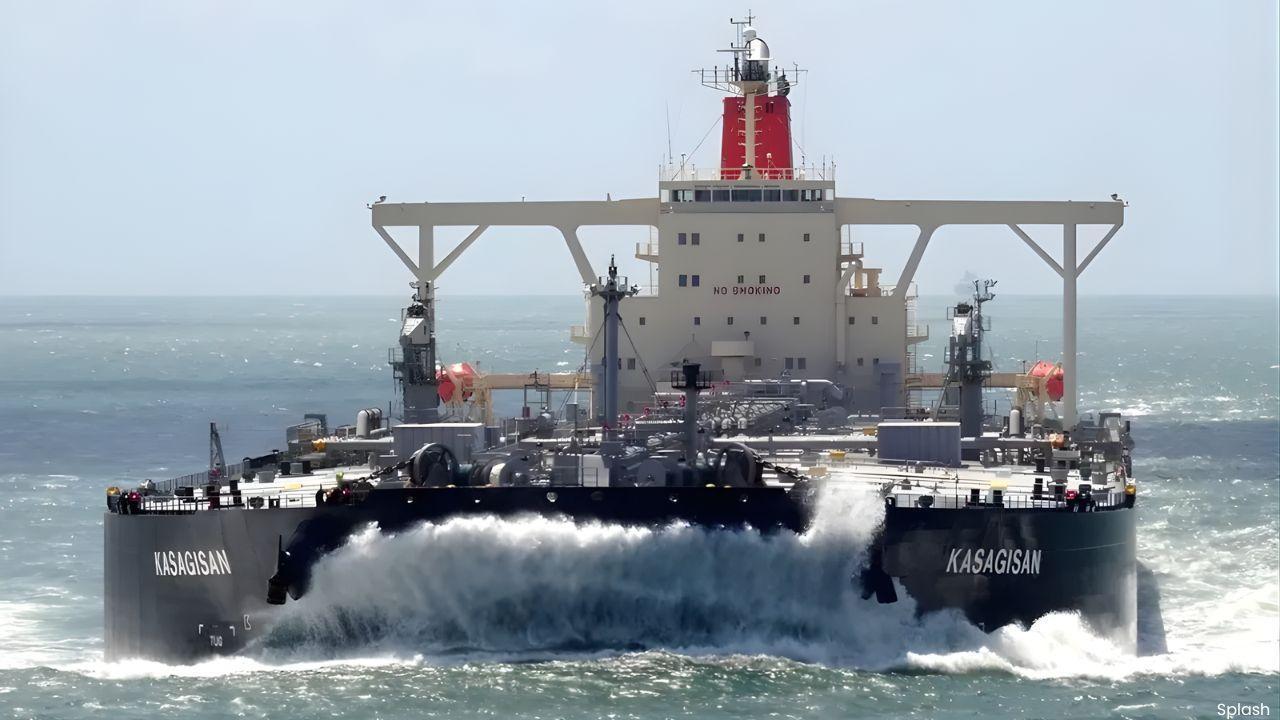
In a striking development that underscores the strength of the global tanker market, a 20-year-old Very Large Crude Carrier (VLCC) has been sold for an impressive $60.5 million an eye-catching figure for a vessel of its age and a clear indicator of surging demand across crude oil shipping routes. At a time when older ships would typically see declining valuations due to age-related operational limitations, this transaction flips the narrative entirely, highlighting a market where demand is outpacing traditional depreciation logic. The deal reflects a broader shift in maritime economics, where immediate earning potential and supply constraints are outweighing concerns around vessel age, efficiency, and long-term lifecycle costs.
Traditionally, vessels nearing the 20-year mark are considered close to the end of their prime commercial life, often heading toward scrapping or limited trading roles. However, the current market dynamics have altered this trajectory. Strong freight earnings, combined with a shortage of available tonnage, have pushed buyers to aggressively pursue even older vessels that can generate immediate returns. In today’s environment, where crude oil trade flows remain robust and fleet growth has been relatively constrained, older VLCCs are being revalued as valuable short-term assets capable of capitalizing on high freight rates.
One of the key drivers behind this elevated valuation is the tightening supply of available tankers, particularly in the VLCC segment. A slowdown in new shipbuilding orders over recent years has limited fleet expansion, while stricter environmental regulations have discouraged owners from investing heavily in new tonnage. At the same time, geopolitical tensions and shifting trade routes have increased the demand for crude transportation, further tightening the market.
In such a scenario, even aging vessels become critical assets, especially for operators looking to quickly deploy capacity without waiting for newbuild deliveries. This imbalance between supply and demand is a major factor pushing asset prices higher, creating a seller’s market across the tanker sector.
The $60.5 million price tag highlights a fundamental shift in how shipping assets are being valued. Instead of focusing solely on age and technical specifications, buyers are prioritizing earnings potential, charter rates, and market positioning. With VLCCs currently benefiting from strong charter rates, the ability to generate substantial cash flow in a short period makes even older ships attractive investments.
This shift also reflects a broader trend where shipping companies are becoming more opportunistic, leveraging favorable market conditions to maximize returns. In this context, the acquisition of older vessels is less about long-term ownership and more about short-term profitability, driven by immediate market demand.
The sale of a 20-year-old VLCC at such a high valuation sends a strong signal about the current state and future direction of the tanker market. It suggests that the industry is entering a phase where asset scarcity, geopolitical shifts, and evolving trade patterns are reshaping traditional valuation models.
If current conditions persist, we may see continued strength in second-hand vessel prices, particularly for larger tankers that play a crucial role in global oil transportation. However, this trend also raises questions about fleet modernization and environmental compliance, as older vessels may face increasing regulatory pressures in the coming years.
This landmark deal is more than just a headline, it is a reflection of a shipping market that is rewriting its own rules. In a sector where age once dictated value, demand and profitability are now taking center stage. The $60.5 million sale of a 20-year-old VLCC stands as a testament to the resilience and adaptability of the maritime industry, where shifting dynamics can transform even aging assets into high-value opportunities.
#trending #latest#VLCC #TankerMarket #ShippingIndustry #CrudeOilShipping #MaritimeTrends









Advances in Aerospace Technology and Commercial Aviation Recovery
Insights into breakthrough aerospace technologies and commercial aviation’s recovery amid 2025 chall

Defense Modernization and Strategic Spending Trends
Explore key trends in global defense modernization and strategic military spending shaping 2025 secu

Tens of Thousands Protest in Serbia on Anniversary of Deadly Roof Collapse
Tens of thousands in Novi Sad mark a year since a deadly station roof collapse that killed 16, prote

Canada PM Carney Apologizes to Trump Over Controversial Reagan Anti-Tariff Ad
Canadian PM Mark Carney apologized to President Trump over an Ontario anti-tariff ad quoting Reagan,

The ad that stirred a hornets nest, and made Canadian PM Carney say sorry to Trump
Canadian PM Mark Carney apologizes to US President Trump after a tariff-related ad causes diplomatic

Bengaluru-Mumbai Superfast Train Approved After 30-Year Wait
Railways approves new superfast train connecting Bengaluru and Mumbai, ending a 30-year demand, easi



