Post by : Saif
Lawmakers and grieving families are urging the U.S. House of Representatives to pass a major aviation safety bill following a deadly midair collision last year. The proposed law aims to strengthen flight safety rules and require better tracking systems on aircraft to prevent similar tragedies in the future. Supporters say the bill could save lives, while critics have raised concerns about cost and military impact.
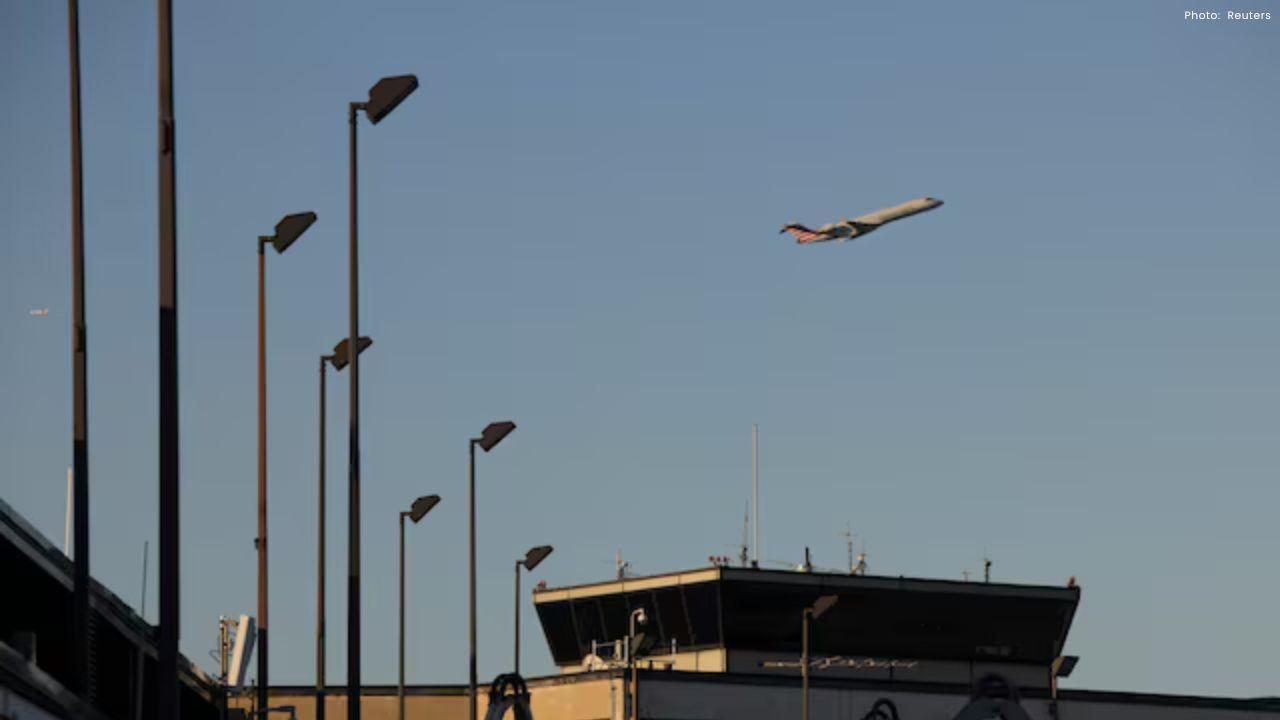
The push for reform comes after a tragic accident in January 2025, when an American Airlines regional jet collided with a U.S. Army Black Hawk helicopter over Washington, D.C. Sixty-seven people were killed in the crash. It was the deadliest midair collision in the United States in more than two decades. The disaster shocked the nation and raised serious questions about aviation safety standards.
In response, lawmakers introduced the ROTOR Act. The bill would require aircraft to install a tracking system known as Automatic Dependent Surveillance-Broadcast, or ADS-B, by the end of 2031. This technology allows pilots and air traffic controllers to see the exact position of nearby aircraft in real time. Safety experts say the system gives earlier warnings and helps avoid collisions.
The U.S. Senate had already passed the bill with strong support. However, when the measure came before the U.S. House of Representatives, it failed to reach the required two-thirds majority needed for approval under fast-track rules. Although a large number of lawmakers voted in favor, the bill fell short by just one vote.
Families of the victims traveled to Washington to speak directly with lawmakers before the vote. Many held photos of their loved ones and shared emotional stories about their loss. They argued that stronger safety rules are necessary to prevent more families from experiencing similar heartbreak. For them, the bill is not just about policy—it is about protecting lives.
Supporters of the ROTOR Act point to findings from the National Transportation Safety Board, which investigates air crashes. Officials from the agency have said that ADS-B technology could have provided important warnings before the 2025 collision. With better tracking systems in place, pilots might have had more time to react and avoid the crash.
However, the proposal has also faced resistance. The Pentagon raised concerns shortly before the vote. Defense officials argued that requiring military aircraft to install the same systems could create security risks and financial strain. Some lawmakers echoed these concerns, saying they needed more time to study the possible impact on national defense.
Other critics questioned the cost of implementing the technology across all aircraft. They argued that while safety is critical, lawmakers must balance safety improvements with budget realities. Some members of Congress suggested alternative approaches that would address aviation safety without imposing strict equipment requirements on all aircraft.
Despite the setback, supporters say the fight is not over. Lawmakers who back the bill have promised to continue pushing for stronger aviation safety rules. They believe that public safety must remain the top priority. Families of the victims have also pledged to keep raising awareness and urging Congress to act.
The debate highlights the challenge of passing safety reforms in a complex political environment. Aviation safety involves civilian airlines, private pilots, and military operations. Finding a solution that satisfies all parties is not easy. Yet, many argue that the lessons from the 2025 disaster must not be ignored.
Air travel remains one of the safest forms of transportation in the United States. Still, experts warn that constant updates to technology and regulations are necessary to maintain high safety standards. As aircraft traffic increases and skies become more crowded, improved tracking systems could play a vital role in preventing future accidents.
In simple terms, the aviation safety bill represents an effort to learn from tragedy and strengthen protections for passengers and crews. While the House vote did not approve the measure this time, pressure continues to build. Lawmakers will likely revisit the issue in the months ahead, and the voices of families affected by the collision will remain central to the debate.
The outcome of this legislative effort will shape how the United States approaches aviation safety in the years to come. For many, the goal is clear: safer skies and fewer tragedies.
#trending #latest #AviationSafety #FlightSafety #CongressDebate #AirCollision #USHouse #PublicSafety #ROTORAct #armustnews







Advances in Aerospace Technology and Commercial Aviation Recovery
Insights into breakthrough aerospace technologies and commercial aviation’s recovery amid 2025 chall

Defense Modernization and Strategic Spending Trends
Explore key trends in global defense modernization and strategic military spending shaping 2025 secu

Tens of Thousands Protest in Serbia on Anniversary of Deadly Roof Collapse
Tens of thousands in Novi Sad mark a year since a deadly station roof collapse that killed 16, prote

Canada PM Carney Apologizes to Trump Over Controversial Reagan Anti-Tariff Ad
Canadian PM Mark Carney apologized to President Trump over an Ontario anti-tariff ad quoting Reagan,

The ad that stirred a hornets nest, and made Canadian PM Carney say sorry to Trump
Canadian PM Mark Carney apologizes to US President Trump after a tariff-related ad causes diplomatic

Bengaluru-Mumbai Superfast Train Approved After 30-Year Wait
Railways approves new superfast train connecting Bengaluru and Mumbai, ending a 30-year demand, easi



