Post by : Saif
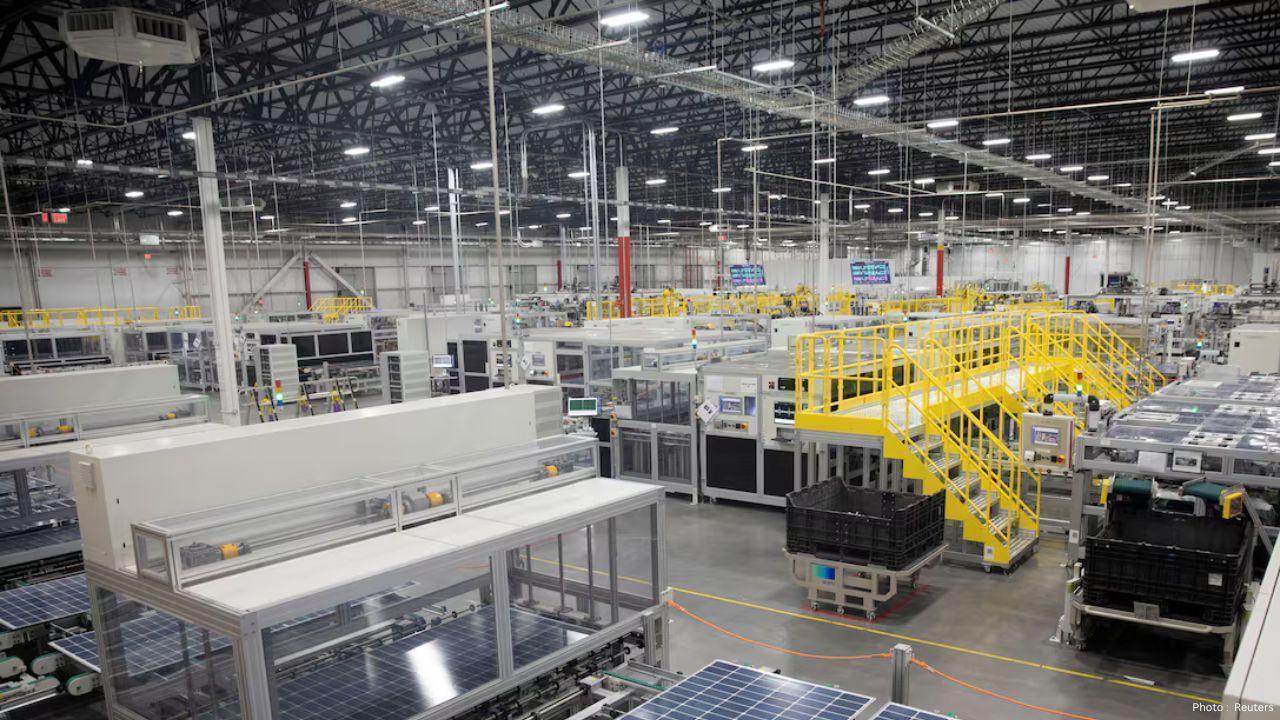
U.S. manufacturing activity slowed slightly in June after reaching its highest level in four years the previous month, according to the latest report from the Institute for Supply Management (ISM). Although growth moderated, the manufacturing sector continued to expand for the sixth consecutive month, supported by strong investment in artificial intelligence (AI) and improving business confidence.
The ISM Manufacturing Purchasing Managers' Index (PMI) fell to 53.3 in June from 54.0 in May, which had marked the strongest reading since May 2022. A PMI reading above 50 indicates that the manufacturing sector is expanding. Economists surveyed by Reuters had expected the index to remain unchanged at 54.0.
Experts said the slight slowdown reflected easing demand after companies rushed to place orders earlier this year to avoid supply disruptions and rising prices linked to the conflict in the Middle East.
AI Investment Continues to Support Manufacturing
Despite the slower pace of growth, manufacturers continued to benefit from increased spending on artificial intelligence technologies. Demand for electronic components, semiconductors, machinery, and electrical equipment remained strong, helping offset challenges created by global geopolitical tensions.
Fourteen manufacturing industries reported growth during June, including machinery, computer and electronic products, electrical equipment, textile mills, and primary metals.
Economists noted that AI-related investments continue to drive factory production, making the sector more resilient despite uncertainty in global markets.
New Orders Ease but Manufacturing Stays in Expansion
Factory orders remained healthy during June, although growth slowed slightly. The ISM's New Orders Index slipped to 56.0 from 56.8 in May, indicating businesses are still receiving strong customer demand.
Order backlogs also declined modestly, while export orders contracted during the month. However, factory inventories recovered after a prolonged period of decline, suggesting manufacturers are gradually rebuilding stock levels as supply chain conditions improve.
Supplier delivery times also improved compared with May, reflecting fewer disruptions following the ceasefire between the United States and Iran, which helped stabilize shipping routes and lower energy prices.
Input Prices Remain Elevated Despite Some Improvement
Although inflationary pressure eased somewhat in June, manufacturers continued to report high input costs across several industries.
The ISM's Prices Paid Index dropped to 73.0 from 82.1 in May but remained well above the level that signals rising costs.
Manufacturers reported continued price increases for aluminum, copper, electrical components, semiconductors, memory chips, packaging materials, and electronic equipment.
Several companies also warned that uncertainty surrounding tariffs and the recent conflict in the Middle East continues to affect production costs and profitability. Some manufacturers said higher import duties and raw material prices have forced them to raise prices for customers.
Food and beverage producers reported elevated costs for key ingredients, while transportation equipment manufacturers said tariffs continue to reduce demand and hurt profit margins.
Hiring Shows Signs of Improvement
Employment in the manufacturing sector remained relatively weak, but hiring activity improved during June.
According to the ISM survey, about 64% of manufacturers reported hiring workers, compared with 50% in May. Although the manufacturing employment index has remained in contraction for most of the past three years, economists believe hiring conditions are gradually improving.
Separate employment data released by payroll company ADP showed that private employers added 98,000 jobs in June, while planned layoffs by U.S.-based companies fell sharply by 53% compared with the previous month.
Economists expect the official U.S. employment report to show that nonfarm payrolls increased by around 110,000 jobs in June, with the unemployment rate expected to remain steady at 4.3%.
Federal Reserve Continues to Monitor Inflation
The latest manufacturing data suggests the U.S. economy remains resilient despite ongoing inflation concerns. While lower oil prices following the U.S.-Iran ceasefire have reduced some cost pressures, prices for industrial materials and technology-related products remain elevated.
Financial markets continue to expect the Federal Reserve to raise interest rates later this year if inflation remains above its target. The central bank recently kept its benchmark interest rate unchanged at 3.50% to 3.75%, but policymakers signaled that additional rate increases are still possible depending on future economic data.
Overall, June's report indicates that while manufacturing growth has slowed from its recent peak, the sector continues to benefit from AI-driven investment, improving supply chains, and stronger hiring activity. However, elevated production costs and inflation remain key challenges that manufacturers will continue to face in the coming months.
#trending #latest #USManufacturing #USEconomy #FactoryActivity #ManufacturingPMI #USFactoryGrowth #EconomicNews #FederalReserve #Inflation #InputCosts #AIInvestment #ManufacturingIndustry #BusinessNews










Advances in Aerospace Technology and Commercial Aviation Recovery
Insights into breakthrough aerospace technologies and commercial aviation’s recovery amid 2025 chall

Defense Modernization and Strategic Spending Trends
Explore key trends in global defense modernization and strategic military spending shaping 2025 secu

Tens of Thousands Protest in Serbia on Anniversary of Deadly Roof Collapse
Tens of thousands in Novi Sad mark a year since a deadly station roof collapse that killed 16, prote

Canada PM Carney Apologizes to Trump Over Controversial Reagan Anti-Tariff Ad
Canadian PM Mark Carney apologized to President Trump over an Ontario anti-tariff ad quoting Reagan,

The ad that stirred a hornets nest, and made Canadian PM Carney say sorry to Trump
Canadian PM Mark Carney apologizes to US President Trump after a tariff-related ad causes diplomatic

Bengaluru-Mumbai Superfast Train Approved After 30-Year Wait
Railways approves new superfast train connecting Bengaluru and Mumbai, ending a 30-year demand, easi



