Post by : Amit
Photo : X / Cam Pedersen
GM’s Battery Arm Embraces a Dual-Chemistry Production Model
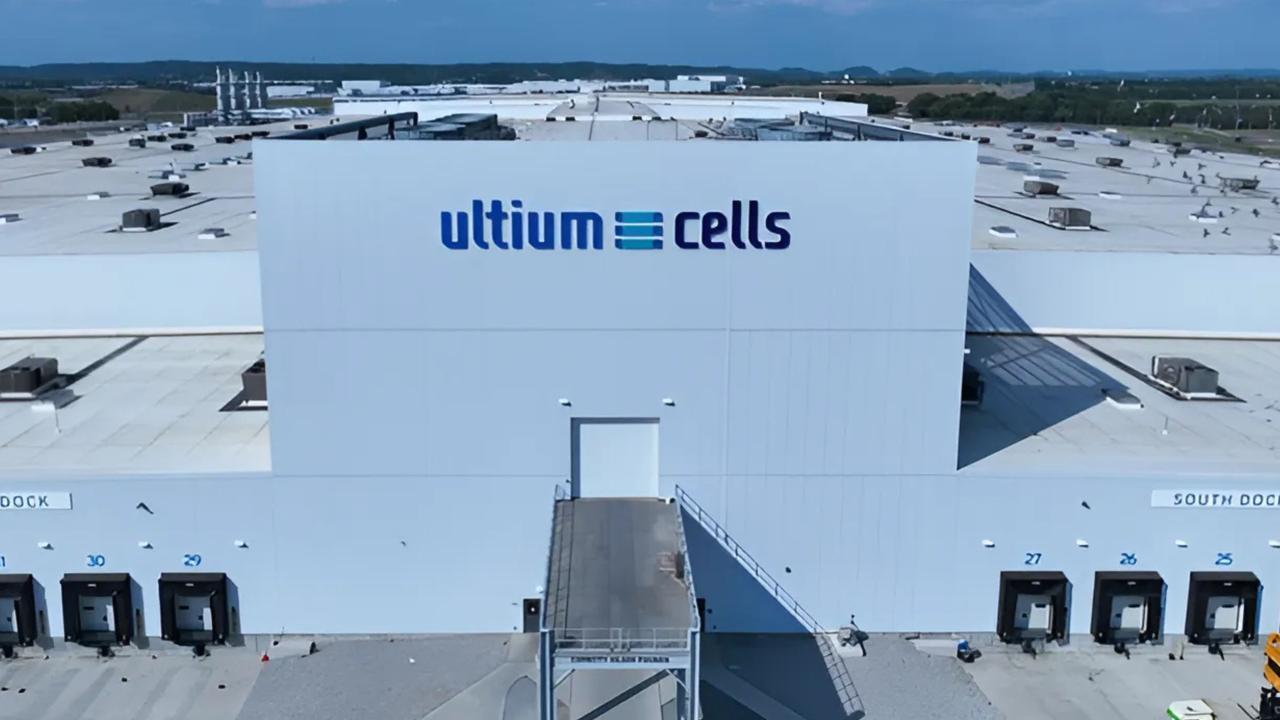
In a strategic pivot designed to align with a rapidly diversifying electric vehicle (EV) market, General Motors and LG Energy Solution’s battery joint venture Ultium Cells has announced a critical reshaping of its U.S. battery production operations. Its plant in Spring Hill, Tennessee, will begin producing low-cost lithium iron phosphate (LFP) battery cells aimed at mainstream and budget-friendly EV models, while the Lordstown, Ohio plant will remain dedicated to crafting high-performance nickel-rich cells for GM’s premium and high-output vehicles.
The move reflects a growing recognition across the EV industry that one battery chemistry doesn’t fit all. As the market splits between affordable, everyday electric cars and high-performance luxury EVs, automakers like GM are under pressure to tailor their battery strategies to meet distinct consumer and vehicle segment needs.
LFP in Tennessee: Driving Cost Down, Market Reach Up
Ultium’s Tennessee facility, located adjacent to GM’s existing Spring Hill assembly plant, is now being repositioned to become the company’s hub for cost-effective battery manufacturing. By adopting LFP chemistry, this plant will play a crucial role in enabling GM to bring electric vehicles to the sub-$30,000 market segment—a price point seen as critical for mass adoption.
LFP (Lithium Iron Phosphate) batteries are known for their durability, safety, and cost-effectiveness. Though they offer slightly lower energy density than nickel-manganese-cobalt (NMC) or nickel-cobalt-aluminum (NCA) chemistries, their thermal stability and affordability make them ideal for shorter-range, urban-use vehicles. Additionally, they are significantly less reliant on scarce and expensive materials such as nickel and cobalt, easing both ethical and geopolitical supply chain pressures.
The Spring Hill plant’s shift to LFP is timely. GM recently revealed plans to revive the Chevrolet Bolt on an LFP platform. It’s likely that the new Bolt—alongside other future low-cost EVs—will benefit directly from the Tennessee plant’s revised production capabilities. The factory’s output will also support GM’s ambitions to expand its EV reach into commercial fleets, where LFP’s long cycle life and low maintenance needs are highly attractive.
Lordstown’s Premium Focus: Powering GM’s Flagship EVs
On the other side of the spectrum, Ultium’s plant in Lordstown, Ohio, is doubling down on its commitment to high-performance, energy-dense batteries. It will continue producing nickel-rich chemistries that support longer range, faster charging, and more powerful output—key specifications for flagship EVs like the Cadillac Lyriq, GMC Hummer EV, and the Chevrolet Silverado EV.
Nickel-based chemistries, such as NMC and NCA, remain the gold standard for vehicles requiring superior energy density and performance. Though costlier and more complex to manufacture, they offer the kind of torque, acceleration, and driving range necessary to compete in the luxury and truck segments—where customers expect combustion-engine equivalency or better.
GM’s decision to isolate high-performance production in Lordstown also ensures the facility remains a cornerstone of its technological development efforts. It’s a continuation of the plant’s historical significance to GM’s electrification journey and reflects an ongoing commitment to maintaining top-tier engineering and skilled labor in Ohio.
A Split Production Strategy for a Split Market
The bifurcation of battery production—one site for low-cost LFP, the other for high-performance NMC—marks a clear shift in how GM plans to scale its EV portfolio across the full consumer spectrum. It’s a strategy that acknowledges the reality of a two-speed EV market, where first-time EV buyers seek affordability and simplicity, while legacy vehicle owners and enthusiasts demand power, range, and features.
This kind of chemistry segmentation also enhances manufacturing flexibility. With two distinct facilities focused on different battery technologies, GM can better manage supply chain risks, adapt to raw material price fluctuations, and strategically distribute inventory based on regional vehicle sales trends.
Industry analysts have welcomed the move as a smart, proactive response to the real-world challenges of mass EV adoption. “You can’t use a one-size-fits-all battery in a world with $25,000 EVs and $100,000 EVs on the same market,” said Angela Morgan, an auto industry analyst at EV Research Lab. “GM’s strategy is essentially building chemical diversity into their product portfolio.”
Aligning with Global Battery Trends
GM is not alone in this approach. Automakers across the globe are adopting dual-chemistry battery strategies to maintain competitive edge and lower their EV cost structures. Tesla, for instance, uses LFP batteries in its standard-range vehicles sold in China and Europe, while BYD, a major Chinese automaker, has heavily invested in LFP production and even supplies LFP packs to other brands.
By localising LFP production in the U.S., GM also takes a major step toward building a domestically secure battery supply chain—a critical factor amid ongoing trade tensions and mineral access constraints. Sourcing LFP components largely within North America would allow GM to benefit from U.S. federal EV tax incentives under the Inflation Reduction Act (IRA), which rewards domestic content and production.
Economic Impact: Jobs, Investments, and Regional Growth
The realignment at Ultium’s plants will also influence local economies and labor dynamics. The Spring Hill plant’s new direction is expected to attract further investments in LFP-specific component manufacturing, including partnerships with suppliers of phosphate-based cathodes and iron materials. New training programs will likely be introduced to prepare workers for the different production techniques used in LFP cells.
In Lordstown, where the facility has been a focal point of labor negotiations and political attention, the continued emphasis on high-value, high-performance battery production is a win for skilled labor and advanced manufacturing. It ensures job stability for workers already trained in complex battery assembly processes and preserves the plant’s status as a hub for innovation in the EV transition.
Both facilities are expected to continue operating under joint venture governance, but GM’s influence on technology direction and vehicle alignment ensures that each site is tightly integrated into its EV rollout timeline.
Competitive Positioning for the Future
This manufacturing pivot is not merely a reactionary step—it’s a forward-looking strategy that anticipates where the EV market is heading. With demand for affordable electric vehicles likely to soar in the second half of the decade, and with performance EVs becoming technological flagships for brand identity, GM is positioning itself to win on both fronts.
The LFP push in Tennessee opens up price points that can attract younger and first-time EV buyers. It also gives GM a chance to reclaim market share from Tesla, Hyundai, and emerging Chinese players in the entry-level space. Simultaneously, Lordstown’s continued focus on energy-dense batteries ensures GM stays competitive in the lucrative, margin-rich luxury and truck segments.
“We’re building a scalable, flexible EV ecosystem,” said a GM spokesperson in a statement. “By having the right batteries for the right vehicles, we can better meet customer expectations and accelerate our transition to an all-electric future.”
A Blueprint for the Industry?
As GM and Ultium Cells roll out this two-pronged battery manufacturing strategy, many in the industry are watching closely. If successful, it could serve as a blueprint for other automakers grappling with the same pressures: lowering EV costs while meeting performance expectations, securing local supply chains while scaling globally, and maintaining sustainability without sacrificing consumer appeal.
What’s clear is that battery chemistry is no longer just a technical detail—it’s a strategic lever, a cost driver, and a competitive differentiator. Ultium’s dual-production model offers a glimpse of how the next phase of the EV revolution will be powered—not just by kilowatt-hours, but by smart manufacturing decisions rooted in flexibility, efficiency, and real market need.
Ultium Cells, Ev Battery,China, Europe









Advances in Aerospace Technology and Commercial Aviation Recovery
Insights into breakthrough aerospace technologies and commercial aviation’s recovery amid 2025 chall

Defense Modernization and Strategic Spending Trends
Explore key trends in global defense modernization and strategic military spending shaping 2025 secu

Tens of Thousands Protest in Serbia on Anniversary of Deadly Roof Collapse
Tens of thousands in Novi Sad mark a year since a deadly station roof collapse that killed 16, prote

Canada PM Carney Apologizes to Trump Over Controversial Reagan Anti-Tariff Ad
Canadian PM Mark Carney apologized to President Trump over an Ontario anti-tariff ad quoting Reagan,

The ad that stirred a hornets nest, and made Canadian PM Carney say sorry to Trump
Canadian PM Mark Carney apologizes to US President Trump after a tariff-related ad causes diplomatic

Bengaluru-Mumbai Superfast Train Approved After 30-Year Wait
Railways approves new superfast train connecting Bengaluru and Mumbai, ending a 30-year demand, easi



