Post by : Amit
The End of an Aviation Chapter for Britain
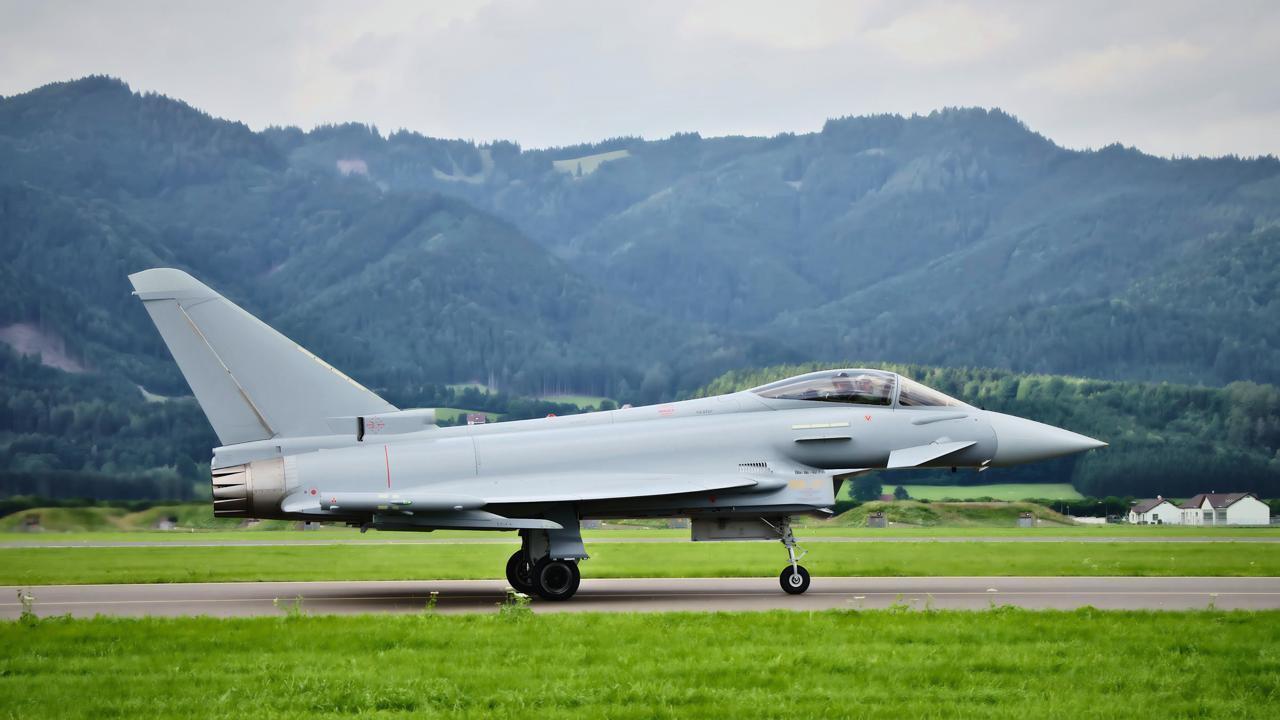
The United Kingdom’s long-standing role in the production of the Eurofighter Typhoon is approaching its conclusion as the assembly line at BAE Systems' Warton plant prepares to shut down by 2026. This development marks the end of a major chapter in British aerospace manufacturing, as no new orders have been secured to sustain Typhoon production beyond the remaining backlog. The news not only signals a manufacturing slowdown but also raises pressing concerns over the future of skilled aerospace jobs, defence readiness, and industrial capability in the UK.
The Eurofighter Typhoon has been the backbone of Britain's air defence for nearly two decades, symbolizing both military strength and advanced technological collaboration between European partners. However, the absence of fresh export deals and shifting defence priorities are now bringing the program’s industrial lifecycle to a close.
Typhoon’s Legacy in British and European Defence
Developed through a multinational partnership involving the United Kingdom, Germany, Italy, and Spain, the Eurofighter Typhoon was conceived during the Cold War as a cutting-edge air superiority fighter. Over the years, it has evolved into a highly capable multirole platform used extensively by the Royal Air Force (RAF) and several allied nations.
The UK’s role in the Typhoon program has been pivotal, with BAE Systems assembling the aircraft at its Warton facility in Lancashire, employing thousands of workers directly and sustaining a wide network of suppliers across the country. The Typhoon has been deployed in various operations, including air policing, counterterrorism, and rapid response to international crises, earning a reputation as one of the most agile and powerful fighters of its generation.
The Challenge of No New Orders
Despite its operational success, the Eurofighter Typhoon faces declining demand in the global market. Many countries are now shifting focus to fifth-generation stealth fighters like the Lockheed Martin F-35 or investing in next-generation fighter development programs. Efforts to secure export orders, including potential deals with countries like Saudi Arabia and Qatar, have either stalled or failed to materialize at the pace required to keep the Warton production line viable.
The current order book is expected to be fulfilled by 2026, after which no further aircraft are scheduled for production in the UK unless new contracts are signed swiftly. This creates an impending gap that risks the loss of highly specialized manufacturing expertise, with fears that skilled aerospace workers may be forced to seek employment outside the defence sector.
Economic and Industrial Implications
The potential closure of Typhoon production carries significant implications for the UK’s defence industrial base. The Warton site not only serves as the heart of Typhoon assembly but also plays a crucial role in the UK's Tempest Future Combat Air System (FCAS) program. A production gap could result in workforce layoffs, supply chain disruptions, and a weakening of domestic defence manufacturing capabilities at a time when national security threats are becoming increasingly complex.
The economic impact extends beyond direct jobs, affecting dozens of small and medium enterprises (SMEs) embedded in the aerospace supply chain. The government faces mounting pressure to intervene or accelerate future defence procurement to safeguard industrial resilience.
Tempest and the Future of British Combat Airpower
The British government and BAE Systems are now looking towards the Tempest program as the next frontier in military aviation. Designed as a sixth-generation fighter jet with advanced stealth, AI-driven systems, and digital combat capabilities, Tempest is projected to enter service by the mid-2030s. The UK has partnered with Italy and Japan on this ambitious project, which aims to position Britain at the forefront of future air combat technologies.
However, the timeline for Tempest leaves a significant production and employment gap between the end of Typhoon manufacturing and the start of new aircraft assembly. Ensuring a smooth transition is now a strategic priority to maintain the UK's sovereign defence capabilities and industrial capacity.
Defence Policy in the Spotlight
The winding down of Typhoon production has also sparked debate within the UK’s political and defence circles. Critics argue that the government should have done more to secure export deals or invest in upgrades to the existing Typhoon fleet to extend production. Others point to the changing nature of warfare, where cyber threats, unmanned systems, and multi-domain operations are reshaping defence spending priorities.
The UK's continuing commitment to NATO obligations, rapid response capabilities, and homeland defence makes maintaining a robust air combat fleet essential. As such, attention is increasingly turning to how the RAF will bridge the capability gap between the outgoing Typhoon and the future Tempest.
Global Position of the Eurofighter
While the UK’s production line faces closure, the Eurofighter Typhoon remains in service with several air forces, including those of Germany, Spain, Italy, Austria, and Saudi Arabia. It continues to receive upgrades in radar, weapons systems, and digital combat technologies to maintain relevance. Nonetheless, without fresh orders from new markets, the manufacturing aspect of the program is unsustainable in the UK.
Some defence analysts suggest that Eurofighter partners must act collectively to market the Typhoon more aggressively in regions like Asia, the Middle East, and South America if any hope remains to extend the platform’s production life.
A Critical Moment for British Aerospace
The impending end of Eurofighter Typhoon production in the UK symbolizes not only the sunset of a legendary aircraft but also a crucial crossroads for the country’s aerospace sector. As the defence landscape evolves and the race towards sixth-generation combat aircraft accelerates, the UK faces the dual challenge of safeguarding its skilled workforce and ensuring that it remains a leader in advanced military aviation.
Without decisive action to either bridge the gap with interim projects or fast-track Tempest development, Britain risks undermining decades of defence manufacturing excellence. The Eurofighter may soon make its final descent on British production lines, but the battle to sustain and evolve the UK’s air power supremacy is far from over.
Aviation, European, Britain










Advances in Aerospace Technology and Commercial Aviation Recovery
Insights into breakthrough aerospace technologies and commercial aviation’s recovery amid 2025 chall

Defense Modernization and Strategic Spending Trends
Explore key trends in global defense modernization and strategic military spending shaping 2025 secu

Tens of Thousands Protest in Serbia on Anniversary of Deadly Roof Collapse
Tens of thousands in Novi Sad mark a year since a deadly station roof collapse that killed 16, prote

Canada PM Carney Apologizes to Trump Over Controversial Reagan Anti-Tariff Ad
Canadian PM Mark Carney apologized to President Trump over an Ontario anti-tariff ad quoting Reagan,

The ad that stirred a hornets nest, and made Canadian PM Carney say sorry to Trump
Canadian PM Mark Carney apologizes to US President Trump after a tariff-related ad causes diplomatic

Bengaluru-Mumbai Superfast Train Approved After 30-Year Wait
Railways approves new superfast train connecting Bengaluru and Mumbai, ending a 30-year demand, easi



