Post by : Saif
The United States is facing a growing crisis at its airports, and a new decision by Donald Trump has added both urgency and controversy to the situation. The president has ordered the deployment of agents from U.S. Immigration and Customs Enforcement to assist the Transportation Security Administration at major airports across the country.
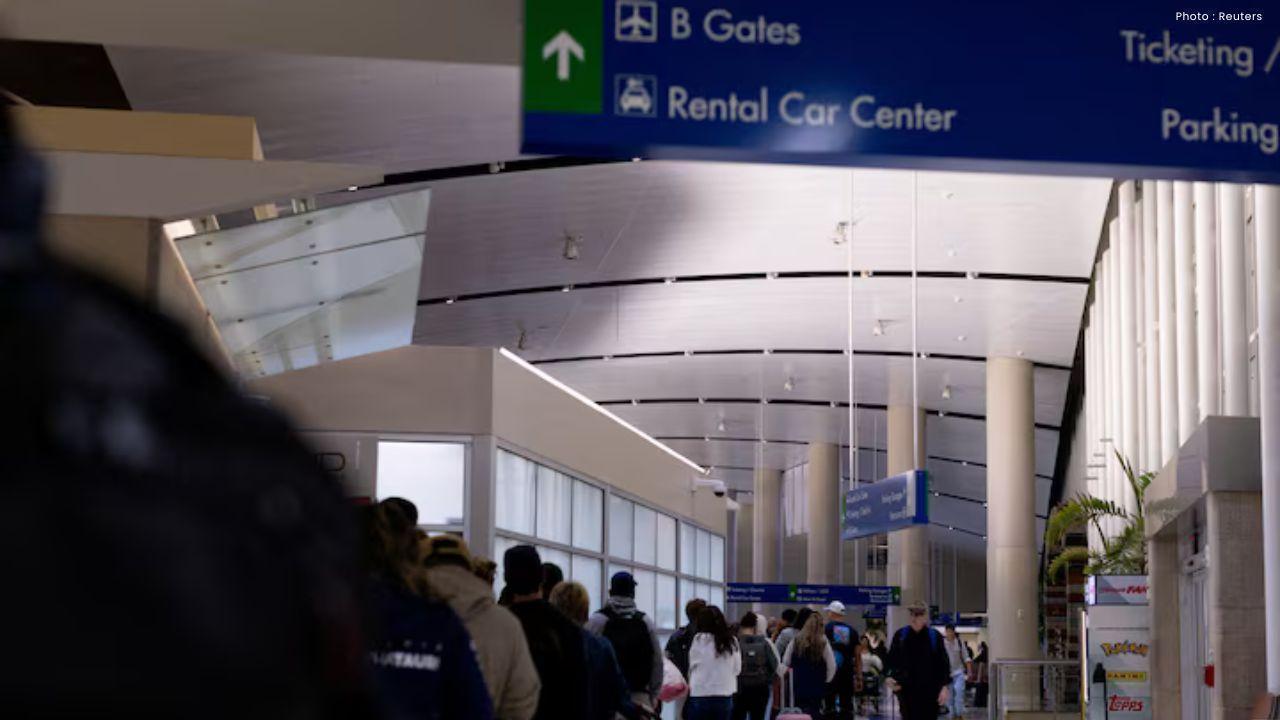
This move comes during a partial government shutdown that has left thousands of TSA workers without pay. As a result, many employees have stopped coming to work, creating long lines and delays at airports. In some places, more than one-third of TSA staff have been absent, making it difficult to manage passenger traffic.
To deal with the shortage, the government has decided to send hundreds of ICE agents to about 14 airports. Their main role will be to help manage crowds and support operations, not to carry out full security checks. They will not be allowed to work at screening checkpoints because they do not have the required training or security clearance.
The problem began when the Department of Homeland Security ran out of funding due to a political disagreement in Congress. Lawmakers have been unable to agree on a budget, mainly because of differences over immigration policies. While the debate continues, TSA workers have been forced to continue working without salaries, leading to frustration and financial stress.
Many TSA employees are struggling to pay rent, buy food, or even afford daily expenses. Because of this, some have resigned, while others have taken sick leave. Reports suggest that hundreds of workers have already quit, and more may follow if the situation does not improve.
The decision to bring in ICE agents has sparked strong reactions. Supporters of the move say it is necessary to keep airports running and reduce long waiting times for travelers. They argue that ICE agents are trained law enforcement officers who can help manage security in difficult situations.
However, critics strongly disagree. Labor unions and several political leaders have warned that ICE agents are not trained for airport screening duties. They say that replacing or supporting TSA workers with untrained personnel could create safety risks.
There are also concerns about the role of ICE itself. The agency is mainly responsible for immigration enforcement, including arrests and deportations. Its presence in airports has raised fears among some groups that immigration enforcement could increase in public spaces. However, officials have said that the deployment is not meant for immigration operations.
The situation also highlights a deeper political conflict. Democrats and Republicans are blaming each other for the shutdown. Democrats are demanding changes in immigration enforcement policies, while Republicans are pushing for immediate funding without new conditions. This deadlock has left federal workers and travelers caught in the middle.
From an editorial point of view, this crisis shows how political disagreements can quickly affect everyday life. Airports are not just travel hubs; they are critical parts of the economy and public safety system. When they are disrupted, millions of people feel the impact.
The decision to use ICE agents may offer a short-term solution, but it does not solve the main problem — the lack of funding and support for TSA workers. Without addressing this issue, the crisis could continue or even worsen in the coming weeks.
There is also a larger question about the use of different agencies for roles they were not originally designed for. While flexibility can be useful in emergencies, it must be handled carefully to avoid mistakes that could affect safety.
At the same time, the situation is a reminder of the human side of government work. Thousands of employees are showing up to do their jobs without pay, even as they struggle to support their families. Their effort highlights the importance of public service, but it also raises questions about how they are being treated.
In the end, the deployment of ICE agents to airports reflects a mix of urgency, politics, and uncertainty. It may help ease immediate pressure, but it also brings new concerns about safety, training, and the role of law enforcement in public spaces.
The real solution will require cooperation between political leaders. Until then, travelers, workers, and the public will continue to face the effects of a crisis that goes far beyond airport security lines.
#trending #latest #DonaldTrump #ICE #TSA #USAirports #GovernmentShutdown #TravelCrisis #ImmigrationPolicy #BreakingNews #armustnews







Advances in Aerospace Technology and Commercial Aviation Recovery
Insights into breakthrough aerospace technologies and commercial aviation’s recovery amid 2025 chall

Defense Modernization and Strategic Spending Trends
Explore key trends in global defense modernization and strategic military spending shaping 2025 secu

Tens of Thousands Protest in Serbia on Anniversary of Deadly Roof Collapse
Tens of thousands in Novi Sad mark a year since a deadly station roof collapse that killed 16, prote

Canada PM Carney Apologizes to Trump Over Controversial Reagan Anti-Tariff Ad
Canadian PM Mark Carney apologized to President Trump over an Ontario anti-tariff ad quoting Reagan,

The ad that stirred a hornets nest, and made Canadian PM Carney say sorry to Trump
Canadian PM Mark Carney apologizes to US President Trump after a tariff-related ad causes diplomatic

Bengaluru-Mumbai Superfast Train Approved After 30-Year Wait
Railways approves new superfast train connecting Bengaluru and Mumbai, ending a 30-year demand, easi



