Post by : Saif
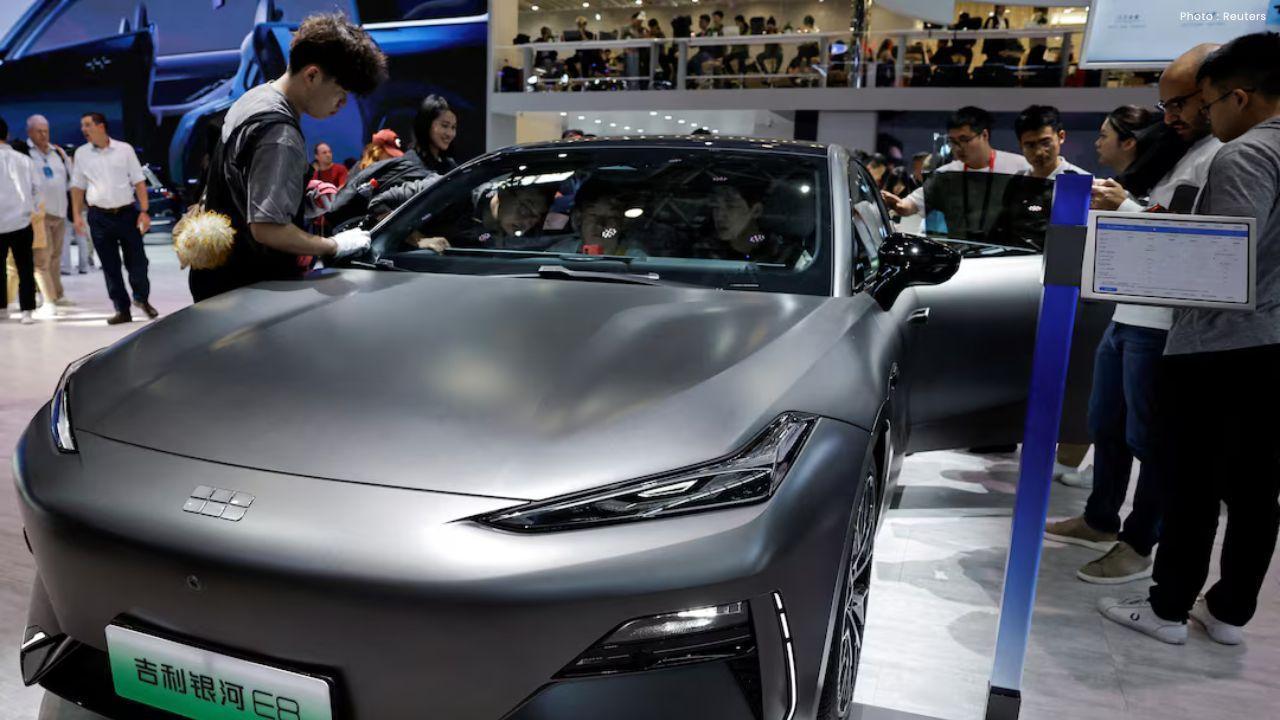
A growing number of car buyers in the United States are showing interest in affordable electric vehicles made in China. However, most of these vehicles are not available in the U.S., creating a gap between demand and access.
Many buyers are attracted to Chinese electric vehicles, often called EVs, because of their low prices and modern features. Some models from companies like BYD, Geely, and Zeekr are priced under $30,000 in global markets. They also offer advanced technology, stylish designs, and features that are usually found in more expensive cars.
In contrast, the average price of a new car in the United States is close to $50,000. This makes it difficult for many people to afford electric vehicles, especially as living costs continue to rise.
Despite this interest, Chinese EVs are largely blocked from entering the U.S. market. The government has placed tariffs of more than 100% on these vehicles. These measures are meant to protect American jobs and industries, as well as address concerns about data security.
Because of these restrictions, American consumers cannot easily buy or even test-drive these vehicles. Some car enthusiasts have looked for alternative ways, such as purchasing vehicles in nearby countries like Mexico, but this is not a practical option for most people.
Interestingly, Chinese EVs are becoming popular in other parts of the world. Countries in Europe, Latin America, and even Canada are opening their markets to these vehicles. In these regions, buyers are enjoying lower prices and modern features that make electric cars more attractive.
Surveys show that many American buyers are open to the idea of Chinese cars. Nearly half of potential buyers believe these vehicles offer good value for money. However, there are still concerns about safety standards, data privacy, and the impact on local industries.
From an industry point of view, there is strong resistance to allowing Chinese EVs into the U.S. market. Many car dealers and manufacturers worry that cheaper imports could hurt domestic companies. Political leaders from both major parties have also expressed caution about opening the market.
From an editorial point of view, this situation highlights a larger issue in the global auto industry. There is a clear difference between what consumers want and what policies allow. On one hand, buyers are looking for affordable and efficient vehicles. On the other hand, governments are trying to protect local industries and address security concerns.
The rise of Chinese EVs also shows how fast the global market is changing. China has become one of the world’s largest vehicle exporters, with strong growth in electric vehicle production. Its companies are able to offer lower prices due to efficient supply chains and large-scale manufacturing.
At the same time, American automakers are facing pressure to reduce costs and make EVs more affordable. High prices remain one of the biggest challenges for EV adoption in the U.S. If cheaper options are not available, many buyers may delay switching to electric vehicles.
There is also a larger environmental angle. Electric vehicles are seen as an important step in reducing pollution and fighting climate change. If affordable EVs are not easily available, it could slow down this transition.
However, opening the market to foreign competition is not a simple decision. Governments must balance economic, security, and environmental goals. This makes the issue more complex than just pricing.
In conclusion, the growing interest in affordable Chinese EVs among U.S. buyers reflects a changing global market. While these vehicles offer strong value, trade barriers and political concerns continue to limit access.
The debate is likely to continue as demand for electric vehicles rises. The key question remains whether policies will change in the future or if American buyers will continue to wait for more affordable options at home.
#trending #latest #ElectricVehicles #ChinaEV #USMarket #AutoIndustry #EVRevolution #AffordableCars #GlobalTrade #Technology #armustnews









Advances in Aerospace Technology and Commercial Aviation Recovery
Insights into breakthrough aerospace technologies and commercial aviation’s recovery amid 2025 chall

Defense Modernization and Strategic Spending Trends
Explore key trends in global defense modernization and strategic military spending shaping 2025 secu

Tens of Thousands Protest in Serbia on Anniversary of Deadly Roof Collapse
Tens of thousands in Novi Sad mark a year since a deadly station roof collapse that killed 16, prote

Canada PM Carney Apologizes to Trump Over Controversial Reagan Anti-Tariff Ad
Canadian PM Mark Carney apologized to President Trump over an Ontario anti-tariff ad quoting Reagan,

The ad that stirred a hornets nest, and made Canadian PM Carney say sorry to Trump
Canadian PM Mark Carney apologizes to US President Trump after a tariff-related ad causes diplomatic

Bengaluru-Mumbai Superfast Train Approved After 30-Year Wait
Railways approves new superfast train connecting Bengaluru and Mumbai, ending a 30-year demand, easi



