Post by : Avinab Raana
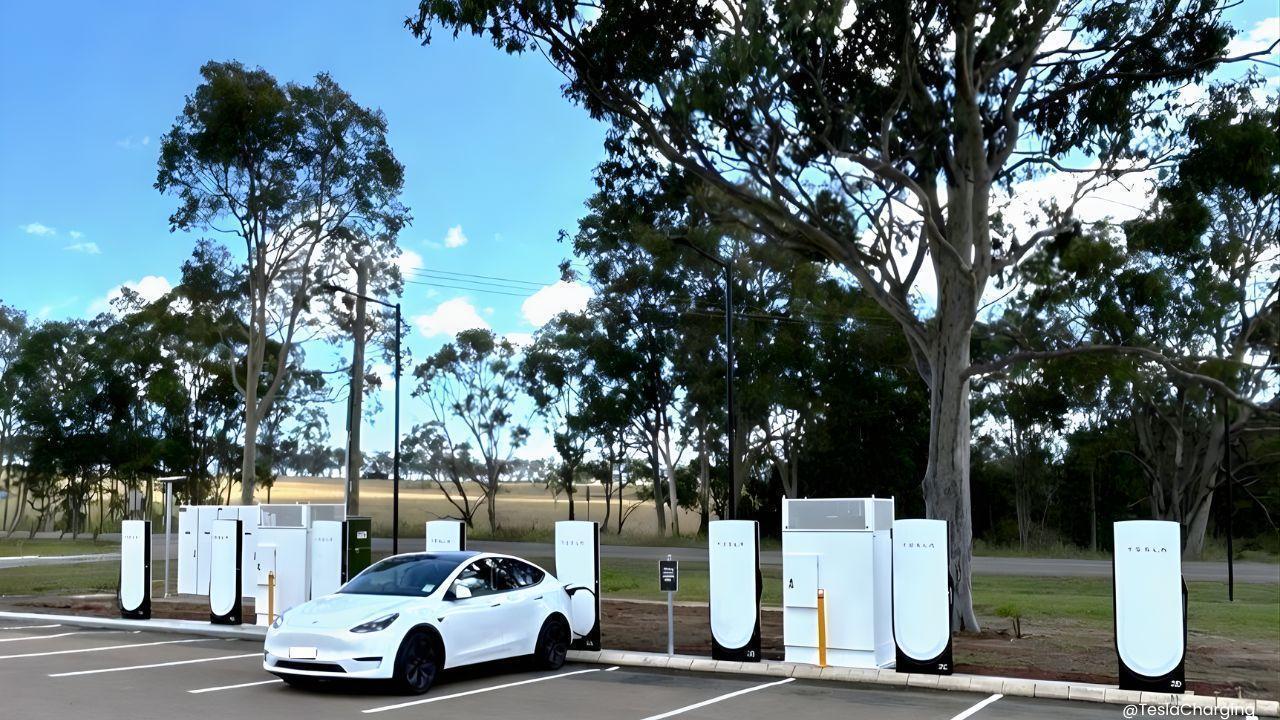
Photo : X / @TeslaCharging
In a landmark moment for electric mobility, Tesla has reached its 150th Supercharger site in Australia, marking a major step forward in the country’s transition toward a fully electrified transport ecosystem. This milestone is not just about numbers, it reflects the rapid evolution of EV infrastructure and the growing confidence among consumers in electric mobility. As charging networks expand beyond urban centers into regional corridors, the barriers that once slowed EV adoption are steadily disappearing.
The newly opened 150th Supercharger site in Pokolbin, located in New South Wales’ Hunter Valley, represents a strategic move toward strengthening regional connectivity. Designed with eight high-speed charging stalls, the site features next-generation V4 Superchargers capable of delivering up to 300 kW, significantly reducing charging times and enhancing convenience for drivers.
More importantly, the station is accessible not only to Tesla vehicles but also to non-Tesla EVs, signaling a shift toward a more inclusive and competitive charging ecosystem. By placing infrastructure in high-traffic and tourism-heavy regions, Tesla is addressing one of the biggest challenges in EV adoption range anxiety during long-distance travel.
Reaching 150 Supercharger sites in Australia within a relatively short span highlights the pace at which EV infrastructure is scaling. Just 18 months ago, the network stood at 100 sites, underscoring the aggressive expansion strategy being deployed to meet rising demand.
Today, the network supports nearly 1,000 individual charging bays across the country, offering drivers more flexibility and reliability than ever before.This rapid growth is a clear indicator that EV adoption is no longer a niche trend.It is becoming mainstream, driven by improved infrastructure, falling costs, and increasing environmental awareness.
One of the most significant aspects of Tesla’s Supercharger network is its focus on speed and efficiency. The introduction of V4 Superchargers brings faster charging capabilities, allowing drivers to add substantial range within minutes rather than hours.
This advancement is crucial in reshaping consumer perception of EVs. Charging is no longer seen as a limitation but as a seamless part of the travel experience. Strategically located near highways and key destinations, these stations enable long-distance travel with minimal disruption, making EVs a practical choice for everyday use.
Tesla’s decision to open its Supercharger network to non-Tesla vehicles marks a significant shift in the EV ecosystem. By allowing broader access, the company is not only increasing utilization of its infrastructure but also accelerating the overall adoption of electric vehicles.
This move creates a more competitive and collaborative environment, encouraging other automakers and charging providers to enhance their offerings. It also aligns with global trends where interoperability and accessibility are becoming key drivers of EV growth.
The expansion of Tesla’s Supercharger network highlights a fundamental truth charging infrastructure is the backbone of the electric mobility revolution. Without a robust and reliable network, even the most advanced EVs cannot achieve widespread adoption.
By investing heavily in infrastructure, Tesla is addressing this challenge head-on, ensuring that drivers have access to fast, reliable charging wherever they travel. This approach not only supports current EV users but also builds confidence among potential buyers considering the switch to electric.
Tesla’s 150-site milestone in Australia is more than a regional achievement, it is a reflection of the global shift toward sustainable transportation. As countries around the world accelerate their transition to EVs, the importance of scalable, high-performance charging networks cannot be overstated.
For Australia, this milestone signals a new phase of EV adoption, where infrastructure is no longer a bottleneck but a catalyst for growth. For the global automotive industry, it serves as a reminder that the future of mobility will be defined not just by vehicles, but by the ecosystems that support them. As Tesla continues to expand its network, the question is no longer whether EVs will dominate the future, it is how quickly infrastructure can keep pace with the demand.
#trending #latest,#TeslaSupercharger #EVInfrastructure #ElectricVehicles #ChargingNetwork #SustainableMobility








Advances in Aerospace Technology and Commercial Aviation Recovery
Insights into breakthrough aerospace technologies and commercial aviation’s recovery amid 2025 chall

Defense Modernization and Strategic Spending Trends
Explore key trends in global defense modernization and strategic military spending shaping 2025 secu

Tens of Thousands Protest in Serbia on Anniversary of Deadly Roof Collapse
Tens of thousands in Novi Sad mark a year since a deadly station roof collapse that killed 16, prote

Canada PM Carney Apologizes to Trump Over Controversial Reagan Anti-Tariff Ad
Canadian PM Mark Carney apologized to President Trump over an Ontario anti-tariff ad quoting Reagan,

The ad that stirred a hornets nest, and made Canadian PM Carney say sorry to Trump
Canadian PM Mark Carney apologizes to US President Trump after a tariff-related ad causes diplomatic

Bengaluru-Mumbai Superfast Train Approved After 30-Year Wait
Railways approves new superfast train connecting Bengaluru and Mumbai, ending a 30-year demand, easi



