Post by : Saif
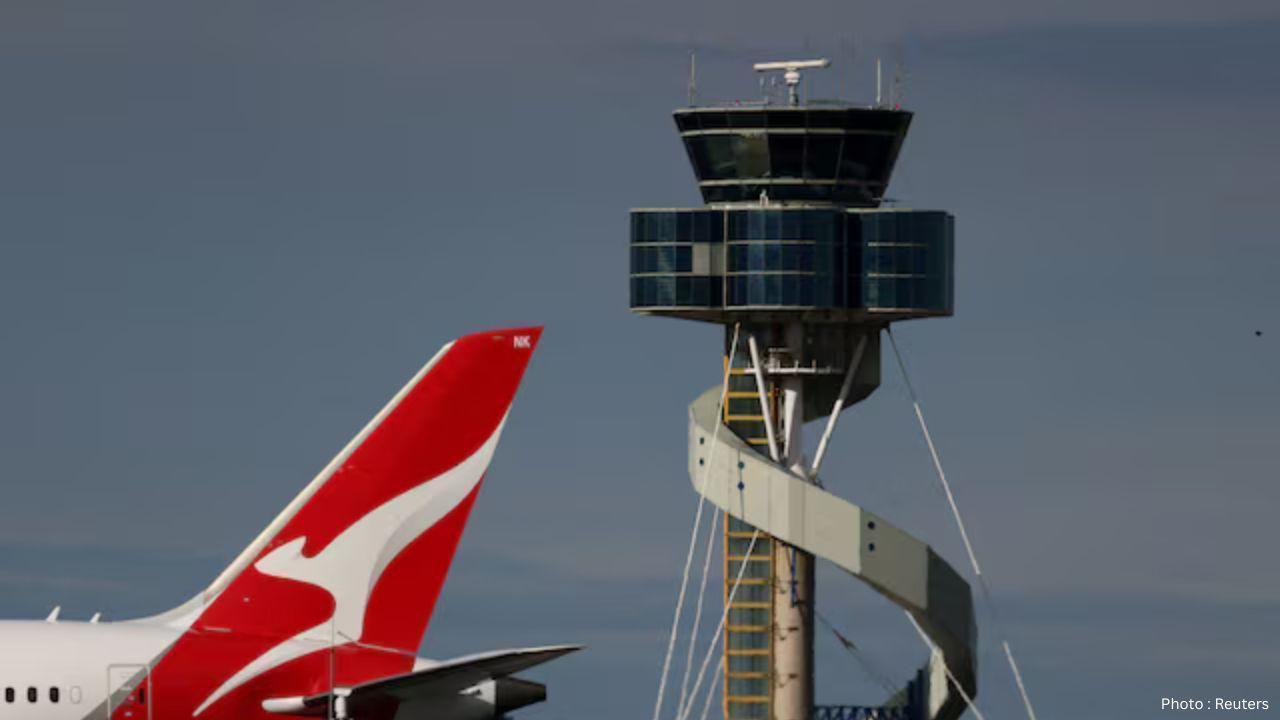
Sydney Airport’s July 27 near-miss between two Qantas aircraft has raised fresh concerns about air traffic controller fatigue and staffing shortages.
Internal records reviewed by Reuters show that five of the 10 controllers working during the incident were classified as having a high fatigue risk. One controller was rated at medium risk and another at low risk, while three were not classified as being at risk.
The incident involved a Qantas turboprop aircraft that was landing while a Qantas Boeing 737 had been cleared to cross the runway.
Two of the three controllers directly involved in the near-miss were rated as having a high fatigue risk. The third controller was classified as medium risk, according to the shift manager.
An internal call recorded after the incident also showed the manager expressing concern about the number of controllers facing high fatigue risks during the shift.
The manager said the situation was serious and noted that the aircraft had narrowly avoided a collision. Staff were reportedly shaken by what had happened.
Read more: Sydney Ashes Test to See Heightened Security After Bondi Beach Attack
The July 27 incident was reportedly the first of six near-misses at Sydney Airport within about a month.
Australia’s aviation safety authorities are investigating the incidents to determine whether they have common safety issues or contributing factors.
The Australian Transport Safety Bureau is examining all six incidents as concerns grow about air traffic control staffing and operational pressures.
Australia’s fatigue-management system does not directly determine whether an individual controller is physically or mentally fatigued.
Instead, an automated system evaluates factors such as working schedules and workload to estimate the potential risk of fatigue.
Controllers receiving higher-risk ratings can be subject to measures designed to reduce fatigue. These can include longer breaks, restrictions on traffic volumes or ending a shift earlier.
Air traffic controllers and their union have raised concerns that staffing shortages can make fatigue-management measures difficult to implement.
Civil Air President Scott Nugent said controllers are increasingly working longer hours and receiving less rest. He also said shortages can result in additional overtime, fewer days off and greater pressure on workers.
Airservices Australia said unusually high short-term staff absences in Sydney during the six weeks ending August 28 had significantly affected its ability to fill operational shifts.
Controllers who spoke to Reuters said workers are regularly asked to take additional shifts because of staffing shortages.
Some controllers said they receive calls and messages encouraging them to work overtime. They also expressed concern that refusing extra work could increase pressure on colleagues already working demanding schedules.
Two Australia-based controllers said staff can continue working even when their shifts have been classified as carrying high fatigue risks.
Australia’s enterprise agreement allows air traffic controllers to work up to 10 consecutive shifts, including additional and emergency duties, with a maximum of 80 hours during a continuous run.
By comparison, controllers in Canada can work up to eight consecutive days, while US controllers can work up to six, according to union officials.
Several Australian controllers and Civil Air said it was not unusual for controllers to work 10 days in a row before receiving a day off.
Staffing shortages are not limited to Australia. Air traffic control systems in several countries are facing workforce pressures, forcing some controllers to work additional hours.
In the United States, overtime spending for air traffic controllers increased by more than 300% between 2013 and 2024. Spending reached about $200 million in 2024, according to a report from the US National Academies of Sciences.
The situation has raised broader questions about whether stretched air traffic control workforces could create additional aviation safety risks.
Airservices Australia declined to comment on the specific fatigue ratings or internal recording, citing the ongoing investigation.
The Australian Transport Safety Bureau will continue examining the Sydney Airport near-misses to determine whether staffing, fatigue, procedures or other factors contributed to the incidents.
#trending #latest #SydneyAirport #Qantas #QantasNews #AviationNews #AirTrafficControl #ControllerFatigue #AviationSafety #SydneyAirportNearMiss #AirTrafficControllers #AirTrafficControlShortage #AustralianAviation #FlightSafety






Advances in Aerospace Technology and Commercial Aviation Recovery
Insights into breakthrough aerospace technologies and commercial aviation’s recovery amid 2025 chall

Defense Modernization and Strategic Spending Trends
Explore key trends in global defense modernization and strategic military spending shaping 2025 secu

Tens of Thousands Protest in Serbia on Anniversary of Deadly Roof Collapse
Tens of thousands in Novi Sad mark a year since a deadly station roof collapse that killed 16, prote

Canada PM Carney Apologizes to Trump Over Controversial Reagan Anti-Tariff Ad
Canadian PM Mark Carney apologized to President Trump over an Ontario anti-tariff ad quoting Reagan,

The ad that stirred a hornets nest, and made Canadian PM Carney say sorry to Trump
Canadian PM Mark Carney apologizes to US President Trump after a tariff-related ad causes diplomatic

Bengaluru-Mumbai Superfast Train Approved After 30-Year Wait
Railways approves new superfast train connecting Bengaluru and Mumbai, ending a 30-year demand, easi



