Post by : Avinab Raana
Photo : X / Financial Times
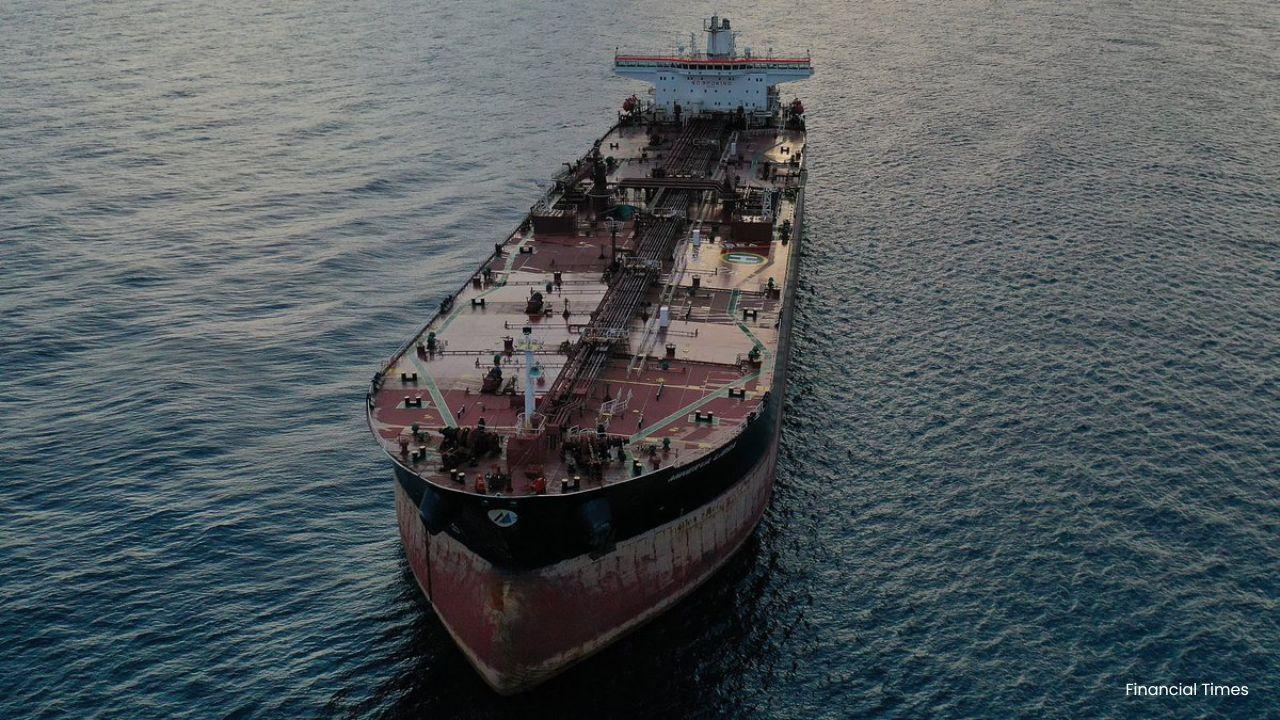
Saudi Arabia is accelerating its Red Sea oil exports as geopolitical tensions reshape shipping routes across the Middle East. The kingdom is increasingly relying on its western export infrastructure to maintain steady crude shipments to international markets. This shift allows Saudi oil to reach global buyers without depending heavily on traditional Gulf shipping corridors that have recently faced rising security concerns. The strategic pivot reflects the country’s effort to ensure uninterrupted energy supplies while global shipping companies carefully monitor risks in key maritime chokepoints.
At the center of this strategy is the Yanbu oil terminal, located on Saudi Arabia’s Red Sea coast. The facility is connected to eastern oil fields through an extensive pipeline network that transports crude across the country. Once the oil reaches Yanbu, it is loaded onto large crude carriers that travel through the Red Sea toward global markets. The growing role of Yanbu has significantly increased tanker activity in the region, turning the port into one of the most important energy logistics hubs along the Red Sea corridor.
The shift toward western export routes has led to a noticeable rise in Red Sea tanker traffic. Large oil carriers are increasingly using this route to transport Saudi crude toward Europe and Asia. For shipping companies and maritime authorities, the surge in tanker movements requires careful coordination to ensure safe navigation through one of the world’s most strategically important waterways. Ports and logistics facilities along the Red Sea are now handling larger volumes of crude shipments as global energy flows adapt to the evolving geopolitical landscape.
While the Red Sea route offers an alternative to the Gulf’s vulnerable shipping lanes, it also presents new maritime security challenges. The region has experienced rising tensions and increased military presence, prompting shipping operators to remain cautious when planning tanker routes.
Insurance costs, risk assessments, and naval monitoring have all become part of the operational planning for vessels traveling through these waters. As a result, the maritime industry continues to closely watch developments that could affect the stability of global shipping routes.
Saudi Arabia’s decision to expand Saudi Red Sea oil exports highlights how geopolitical developments can rapidly reshape global energy logistics. By redirecting crude shipments through western ports, the kingdom is demonstrating its ability to adapt supply chains and maintain steady export volumes despite regional uncertainty. This logistical flexibility is critical for global energy markets, where consistent oil supply plays a major role in stabilizing prices and maintaining economic activity.
The increasing use of the Red Sea as an oil export corridor reflects a broader shift in how energy producers manage geopolitical risk. For Saudi Arabia, strengthening its western export infrastructure ensures that crude can continue flowing to international markets even during periods of instability.
As tanker traffic grows and maritime routes evolve, the Red Sea is becoming an even more important energy corridor—one that will likely remain central to global oil logistics in the years ahead.
#trending #latest, Saudi Red Sea oil exports, Yanbu oil terminal, Red Sea tanker traffic, Saudi crude shipping, Middle East maritime security, global oil tanker routes, Red Sea energy corridor









Advances in Aerospace Technology and Commercial Aviation Recovery
Insights into breakthrough aerospace technologies and commercial aviation’s recovery amid 2025 chall

Defense Modernization and Strategic Spending Trends
Explore key trends in global defense modernization and strategic military spending shaping 2025 secu

Tens of Thousands Protest in Serbia on Anniversary of Deadly Roof Collapse
Tens of thousands in Novi Sad mark a year since a deadly station roof collapse that killed 16, prote

Canada PM Carney Apologizes to Trump Over Controversial Reagan Anti-Tariff Ad
Canadian PM Mark Carney apologized to President Trump over an Ontario anti-tariff ad quoting Reagan,

The ad that stirred a hornets nest, and made Canadian PM Carney say sorry to Trump
Canadian PM Mark Carney apologizes to US President Trump after a tariff-related ad causes diplomatic

Bengaluru-Mumbai Superfast Train Approved After 30-Year Wait
Railways approves new superfast train connecting Bengaluru and Mumbai, ending a 30-year demand, easi



