Post by : Avinab Raana
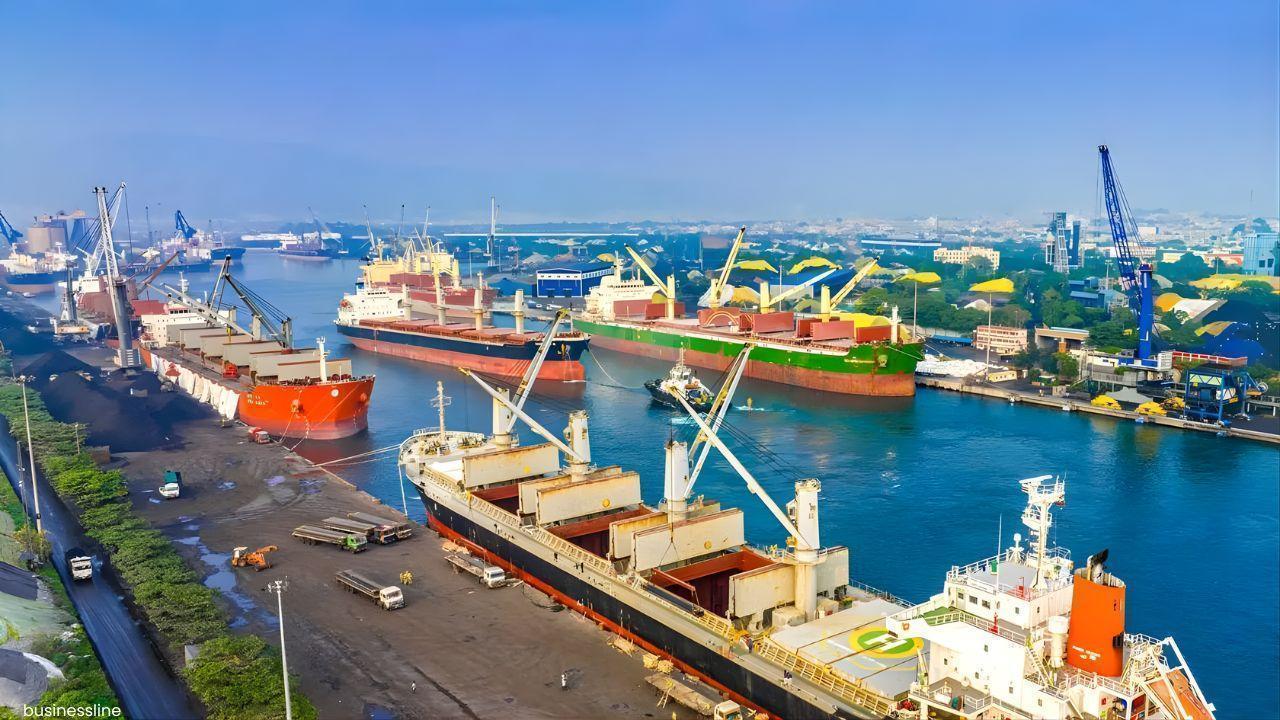
Photo : X / businessline
India’s maritime ambitions have taken a significant step forward with the approval of the ₹48,862 crore Galathea Bay International Container Transshipment Port, a project poised to redefine the country’s position in global trade. Located strategically on Great Nicobar Island, this mega infrastructure development is not just another port—it represents India’s bold attempt to emerge as a dominant transshipment hub in Asia. At a time when global supply chains are undergoing rapid transformation, this project signals a decisive shift toward strengthening domestic logistics capabilities and reducing reliance on foreign ports.
What makes Galathea Bay a game-changing project is its unmatched geographic advantage. Positioned close to the Malacca Strait—one of the world’s busiest maritime corridors handling a massive share of global trade. The port is ideally located to capture transshipment traffic between Asia, Europe, and Africa.
Currently, a large portion of India’s container cargo is routed through foreign hubs such as Singapore, Colombo, and Klang. By developing a deep-draft port with natural depths exceeding 20 meters, India aims to bring this traffic back to its shores, saving significant logistics costs while improving efficiency and turnaround times.This shift has the potential to transform India from a cargo origin-destination market into a global logistics powerhouse.
The Galathea Bay project is designed as a multi-phase development with an ultimate capacity of around 11.8 million TEUs, placing it among the largest ports in the region. Phase I alone will handle 5.6 million TEUs, while Phase II will expand capacity further, ensuring scalability aligned with future trade growth.
The infrastructure blueprint includes multiple container berths, POL (petroleum, oil, and lubricants) facilities, and advanced cargo handling systems, all integrated within a long-term concession framework of 50 years. This phased approach ensures that the project remains financially viable while accommodating evolving trade demands. Beyond infrastructure, the port is being developed as part of a larger economic ecosystem, positioning Great Nicobar as a critical node in India’s maritime and logistics strategy.
The project will be executed through a joint venture structure, with a majority stake held by an Indian-controlled entity and the remaining share owned by state-run ports. This ownership model ensures national control over a strategically sensitive asset while still leveraging private sector efficiency.
With a 70:30 debt-equity structure and significant viability gap funding support proposed, the project highlights the financial complexity of building large-scale greenfield infrastructure. The initial years are expected to be capital-intensive, with returns materializing only after long-term operational stability is achieved.This underscores the government’s willingness to invest heavily in infrastructure that delivers strategic rather than immediate financial returns.
One of the most critical outcomes of the Galathea Bay port will be its ability to reduce India’s dependence on foreign transshipment hubs. At present, a substantial portion of Indian cargo is handled outside the country, leading to revenue losses and logistical inefficiencies.
By capturing this traffic domestically, India can enhance supply chain resilience, reduce transit times, and improve export competitiveness. The project is also expected to generate employment, attract investments, and stimulate economic activity across the maritime sector.
The approval of the Galathea Bay International Container Port marks more than just an infrastructure milestone, it represents a strategic pivot in India’s global trade ambitions. As the project moves toward Cabinet approval and eventual execution, it carries the potential to reshape shipping routes, redefine logistics efficiency, and position India as a central player in global maritime trade.
In the coming decade, as global supply chains become more regionalized and efficiency-driven, ports like Galathea Bay will determine which nations lead the next phase of trade evolution. For India, this is not just a project, it is a statement of intent to lead from the front in the global logistics race.
#trending #latest,#GalatheaBayPort #IndiaLogistics #TransshipmentHub #PortInfrastructure #GlobalTrade







Advances in Aerospace Technology and Commercial Aviation Recovery
Insights into breakthrough aerospace technologies and commercial aviation’s recovery amid 2025 chall

Defense Modernization and Strategic Spending Trends
Explore key trends in global defense modernization and strategic military spending shaping 2025 secu

Tens of Thousands Protest in Serbia on Anniversary of Deadly Roof Collapse
Tens of thousands in Novi Sad mark a year since a deadly station roof collapse that killed 16, prote

Canada PM Carney Apologizes to Trump Over Controversial Reagan Anti-Tariff Ad
Canadian PM Mark Carney apologized to President Trump over an Ontario anti-tariff ad quoting Reagan,

The ad that stirred a hornets nest, and made Canadian PM Carney say sorry to Trump
Canadian PM Mark Carney apologizes to US President Trump after a tariff-related ad causes diplomatic

Bengaluru-Mumbai Superfast Train Approved After 30-Year Wait
Railways approves new superfast train connecting Bengaluru and Mumbai, ending a 30-year demand, easi



