Post by : Avinab Raana
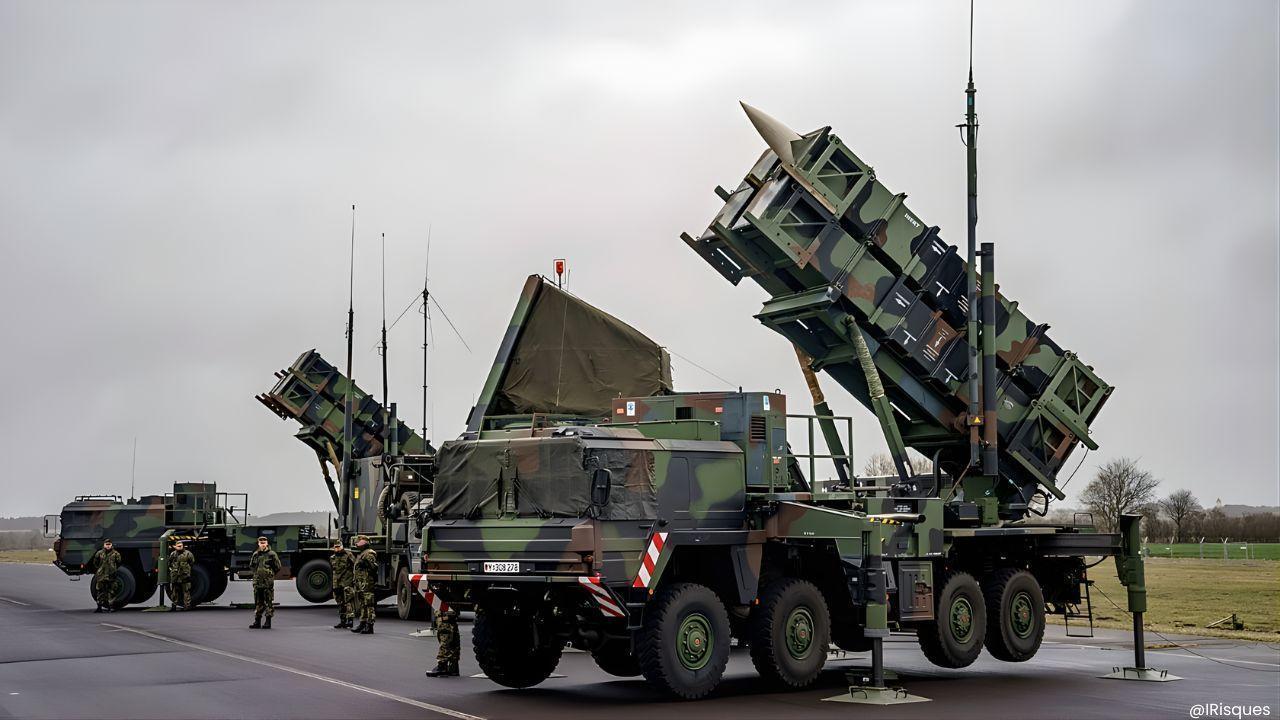
Photo : X / @IRisques
A major geopolitical shift is underway as the Pentagon weighs diverting air defense missiles originally allocated for Ukraine to the Middle East, reflecting the mounting pressure on global military resources. As conflicts intensify across regions, defense strategies are no longer operating in isolation but are increasingly interconnected, forcing rapid recalibration of priorities. This potential move highlights how escalating tensions in the Middle East are beginning to reshape global military commitments and resource distribution. The development signals a turning point where defense planning must simultaneously address multiple high-intensity zones, exposing the limitations of even the most advanced military supply chains.
At the core of this decision lies a growing shortage of advanced interceptor missiles, critical for countering modern aerial threats such as drones and ballistic projectiles. These systems have seen extensive deployment in recent operations, particularly in the Middle East, where ongoing military activity has significantly increased demand. As a result, defense planners are being forced to consider redistributing existing inventories rather than relying solely on new production. This shift underscores a broader reality global defense supply chains are being stretched to their limits, and allocation decisions are becoming increasingly strategic and politically sensitive.
Ukraine’s air defense network, heavily dependent on Western support, could face new vulnerabilities if the missile diversion proceeds. These interceptor systems form a crucial shield against persistent aerial threats, and any delay or reduction in supply could impact operational readiness. While support for Ukraine remains a key priority for Western allies, this development illustrates the growing complexity of sustaining long-term military assistance in a multi-conflict environment. It also raises questions about how defense commitments will be balanced if global tensions continue to escalate simultaneously.
The urgency behind this potential redirection is driven by the rapidly evolving security landscape in the Middle East. Increased military engagements and heightened threat levels have created an immediate need for reinforced air defense capabilities. This shift reflects how the region has emerged as a critical focal point for military operations, requiring swift deployment of advanced systems to maintain stability and protect strategic interests. The intensity of recent developments has effectively repositioned the Middle East as a priority theater, demanding immediate and substantial resource allocation.
The Pentagon’s deliberation highlights a defining moment in modern defense strategy, one where multiple global conflicts are competing for the same pool of finite resources. This situation underscores the growing importance of agile decision-making and strategic flexibility in military planning. As geopolitical tensions continue to rise, the redistribution of critical assets like air defense missiles may become more common, signaling a shift toward a more dynamic and responsive global defense framework. The outcome of this decision could set a precedent for how future conflicts are managed in an increasingly interconnected security landscape.
Pentagon Ukraine missiles, Middle East air defense, Patriot missile diversion, global defense strategy, NATO military aid, Iran conflict impact










Advances in Aerospace Technology and Commercial Aviation Recovery
Insights into breakthrough aerospace technologies and commercial aviation’s recovery amid 2025 chall

Defense Modernization and Strategic Spending Trends
Explore key trends in global defense modernization and strategic military spending shaping 2025 secu

Tens of Thousands Protest in Serbia on Anniversary of Deadly Roof Collapse
Tens of thousands in Novi Sad mark a year since a deadly station roof collapse that killed 16, prote

Canada PM Carney Apologizes to Trump Over Controversial Reagan Anti-Tariff Ad
Canadian PM Mark Carney apologized to President Trump over an Ontario anti-tariff ad quoting Reagan,

The ad that stirred a hornets nest, and made Canadian PM Carney say sorry to Trump
Canadian PM Mark Carney apologizes to US President Trump after a tariff-related ad causes diplomatic

Bengaluru-Mumbai Superfast Train Approved After 30-Year Wait
Railways approves new superfast train connecting Bengaluru and Mumbai, ending a 30-year demand, easi



