Post by : Amit
Photo : X / CNX Software
NXP's EdgeReady MCU Brings AI Voice & Face ID to Cars
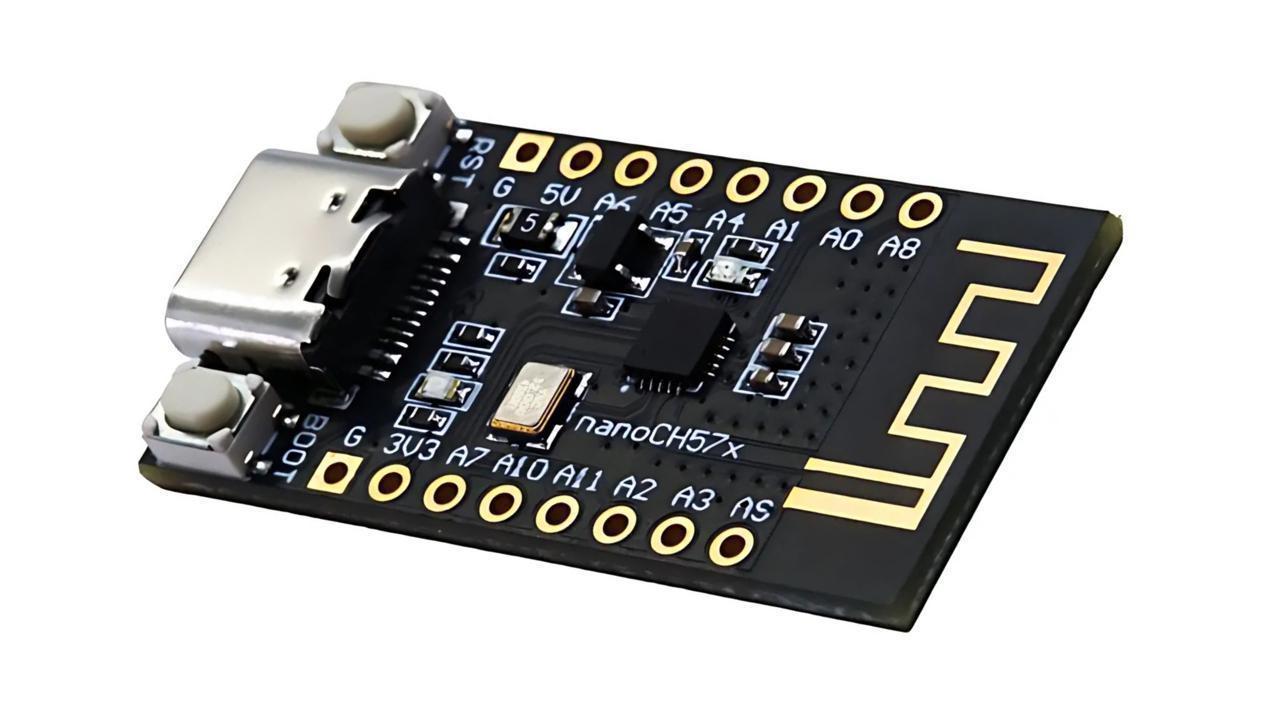
NXP Semiconductors has introduced a new EdgeReady microcontroller unit (MCU) engineered to bring voice and facial recognition capabilities directly into automotive cockpit systems. Built for seamless, secure, and real-time interactions, this new solution is poised to accelerate the rise of intelligent, personalized in-car environments—without needing a cloud connection.
The Cockpit as a Personalized, Secure Interface
The EdgeReady MCU transforms the cockpit into a smart command center. It does this by processing voice commands and facial recognition data locally, at the edge, with near-zero latency. That means no internet dependency, no lag in authentication or response, and no privacy tradeoffs.
Traditionally, features like facial authentication and voice assistants required expensive processors or offloaded data to cloud services—raising security, cost, and performance concerns. NXP’s EdgeReady changes this by integrating low-power neural processing directly into the MCU, capable of simultaneously handling voice wake-up commands, spoken intent recognition, and facial ID tasks.
How Edge AI is Powering the Future of Mobility
The real revolution lies in how edge AI is changing what’s possible inside the car. By embedding intelligence right into the vehicle’s electronic systems, NXP’s platform eliminates the need for external processing units or network latency.
In practical terms, the driver can now unlock the car using facial authentication, start it with a voice command, adjust cabin temperature, or launch a favorite app—all without touching a single button. The AI model is trained to work in diverse lighting and noise conditions, even when wearing sunglasses or speaking softly. This is crucial for real-world applications where drivers need technology to adapt to them, not the other way around.
A Solution Built for the Harshest Conditions
NXP’s new MCU is built from the ground up to meet automotive-grade reliability standards. It meets the AEC-Q100 Grade 2 qualification, allowing operation in temperatures ranging from -40°C to 105°C. It also supports ASIL-B compliance under ISO 26262 functional safety standards, essential for safety-critical systems in modern vehicles.
This makes it robust enough for use in everything from passenger car dashboards to commercial vehicle systems and electric scooters. Whether embedded in the infotainment system, the driver-side pillar, or integrated into seat headrests, the MCU can handle it.
Biometric Data Security Built Into Hardware
Given the sensitive nature of voice and facial data, cybersecurity is a non-negotiable element in today’s cockpit systems. NXP's MCU includes a hardware root-of-trust and support for secure boot, encryption, and authentication protocols to ensure that biometric data never leaves the vehicle unprotected.
Rather than outsourcing security to software layers, NXP has baked protection into the silicon itself. This approach not only safeguards users from spoofing or hacking attempts but also complies with evolving global regulations for biometric privacy and data protection.
Wake Words, Voice Commands, and Driver ID in One Chip
At the heart of the EdgeReady platform is its dual-mode AI capability. It can run vision-based face recognition and audio-based wake-word or command recognition either separately or together. With this setup, the MCU supports use cases such as driver personalization—automatically adjusting seat position, music, and navigation preferences based on who is in the driver’s seat.
The platform is also designed to support custom wake words, meaning carmakers and Tier 1 suppliers can brand their cockpit experiences with names like “Hey Stellantis” or “Hello Skoda,” much like smartphones with “Hey Siri” or “OK Google.” These voice triggers operate entirely offline, ensuring quick responses even when the vehicle is out of network range.
Reducing Cost, Power, and Complexity
One of the key selling points of the EdgeReady MCU is its ability to consolidate multiple functionalities into a single, compact, and energy-efficient component. Traditional systems required multiple chips or complex software stacks to perform similar tasks.
With NXP’s MCU, the entire stack—audio capture, signal pre-processing, neural inference, and system-level response—is integrated into one processor. This dramatically reduces bill-of-materials cost, power consumption, and system complexity for OEMs, making it easier to scale these advanced features across vehicle models—including mid-range and entry-level cars.
Applications Beyond Just Luxury Cars
While luxury car manufacturers have pioneered advanced HMI features, NXP’s design philosophy is built around democratization. By reducing the hardware burden and development costs, this MCU opens the door for mass-market adoption of AI-powered cockpit features.
From compact cars to electric commercial vans, automakers can use this MCU to implement intuitive, intelligent interfaces that don’t just mimic smartphones—but surpass them in context-awareness and responsiveness. And because the platform is so compact and scalable, it can even be integrated into two-wheelers, agricultural equipment, and fleet vehicles.
Developer-Friendly Platform and Ecosystem Support
To support faster adoption, NXP is launching the EdgeReady MCU with a complete software development kit (SDK), pre-trained AI models, and reference hardware designs. Developers can integrate the MCU into their cockpit platforms without starting from scratch. It supports standard automotive interfaces like CAN, LIN, Ethernet, and I²S, as well as cloud extension options where needed.
In addition, NXP has partnered with leading automotive software ecosystems to ensure the MCU is compatible with existing middleware, OS-level software, and third-party HMI frameworks. This plug-and-play design reduces time-to-market while allowing room for future over-the-air (OTA) updates.
A Vision of the Smart, Human-Centric Vehicle
The EdgeReady MCU represents a shift from vehicles being mechanical machines to becoming intuitive partners. As mobility evolves into a software-defined, user-experience-driven space, solutions like this MCU provide the technical backbone for human-centric innovation.
It enables vehicles to recognize their drivers, understand commands without shouting, and react intelligently—even without cloud connectivity. It also allows automakers to build trust by keeping biometric data secure, responsive, and private.
NXP’s Role in the New Automotive Era
With decades of experience in automotive electronics—from microcontrollers and power management to radar and secure communication—NXP is strategically positioned to shape the in-cabin experience for the next generation. The launch of this MCU fits neatly into the company’s broader portfolio, which includes processing platforms for digital clusters, telematics, and electrified powertrains.
But perhaps most importantly, it shows that innovation is no longer about flashy displays or gimmicks—it’s about seamless intelligence that empowers drivers to feel in control, secure, and connected.
Redefining the Car Interior Experience
As vehicles become more autonomous and connected, the in-cabin user experience will be the main frontier of brand differentiation. Consumers no longer just want vehicles that move them from point A to B—they want vehicles that understand them, anticipate their needs, and respond in real time.
NXP’s EdgeReady MCU is a critical enabler of this future. By embedding AI-based facial and voice recognition into a cost-effective, secure, and scalable platform, it’s offering carmakers the ability to build smarter, safer, and more personalized cockpits—not just in luxury models, but across the automotive spectrum.
In doing so, NXP isn’t just launching another chip. It’s launching a vision for what the cockpit of tomorrow should be—human-first, voice-activated, and always ready.
NXP, Microcontroller, Semiconductors, Microchips








Advances in Aerospace Technology and Commercial Aviation Recovery
Insights into breakthrough aerospace technologies and commercial aviation’s recovery amid 2025 chall

Defense Modernization and Strategic Spending Trends
Explore key trends in global defense modernization and strategic military spending shaping 2025 secu

Tens of Thousands Protest in Serbia on Anniversary of Deadly Roof Collapse
Tens of thousands in Novi Sad mark a year since a deadly station roof collapse that killed 16, prote

Canada PM Carney Apologizes to Trump Over Controversial Reagan Anti-Tariff Ad
Canadian PM Mark Carney apologized to President Trump over an Ontario anti-tariff ad quoting Reagan,

The ad that stirred a hornets nest, and made Canadian PM Carney say sorry to Trump
Canadian PM Mark Carney apologizes to US President Trump after a tariff-related ad causes diplomatic

Bengaluru-Mumbai Superfast Train Approved After 30-Year Wait
Railways approves new superfast train connecting Bengaluru and Mumbai, ending a 30-year demand, easi



